Protein is a crucial macronutrient that supports muscle growth, recovery, and overall health. Whether your goal is fat loss, muscle gain, or body recomposition, ensuring you hit your daily protein target can make a significant difference. In this post, we’ll look at seven strategies that can help you reach your daily protein goal 💪
How Much Protein Do You Need?
Experts recommend at least 10% of your daily calories come from protein to maintain health.
For muscle-building and fat loss, it’s a good idea to eat even more than the minimum recommendations.
A good rule of thumb is to get between 0.7 g and 1 g of protein for every 1 pound of your body weight every day (or 1.5 - 2.2 grams per kilogram of body weight).[1, 2]
Good Sources of Protein
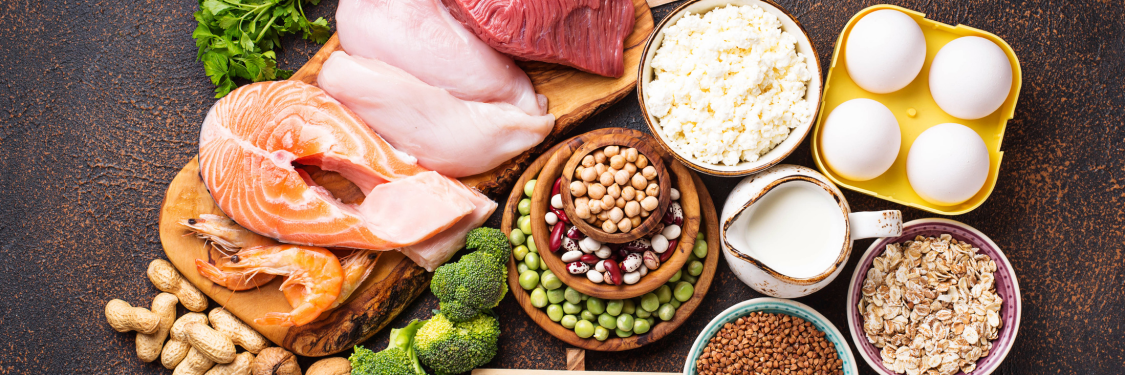
Animal products are by far the most concentrated sources of protein. Foods like meat, poultry, fish, eggs, and low-fat dairy products (e.g., Greek yogurt & cottage cheese) have high amounts of protein per ounce.
Most of the time, you should aim to eat lean sources of protein. These are foods that have little or no saturated fat, which will help to keep your heart healthy and your LDL “bad” cholesteral levels low. Lean sources of protein include white meat (chicken breast & turkey breast), egg whites, fish, plant protein sources (tofu, tempeh, & edamame), and lean cuts of red meat.
Experts also recommend eating 8 ounces of cooked seafood per week to benefit from omega-3 fats, which help fight heart disease.[3]
Vegetarian sources of protein like beans (especially soybeans), tofu, tempeh, seitan, nuts, seeds, and legumes have less concentrated protein, so you’ll need to eat more total volume of these foods to reach your daily protein goals.
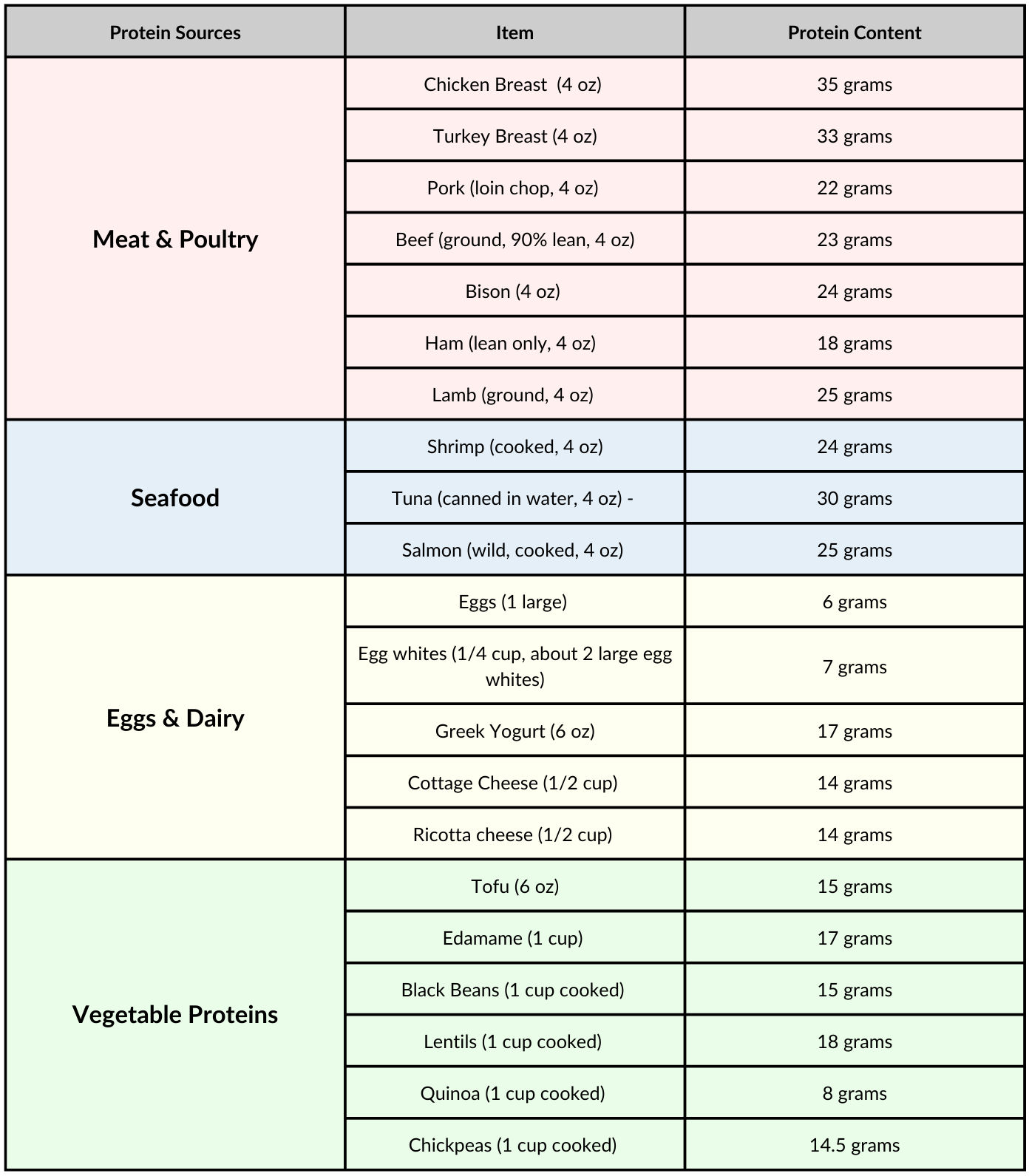
Here’s a quick reference guide of the protein per serving of the best sources of protein to keep on steady rotation in your diet:
7 Tips for Maximizing Protein Intake
If you struggle to get enough protein, try the practical strategies below to boost your intake every day.
1 Track Your Intake
It’s hard to reach your daily protein goal if you’re not aware of how much protein you’re getting. For this reason, I recommend using a food-tracking app like MyFitnessPal to keep an eye on your total intake throughout the day. This will also help you get familiar with how much protein is in the foods you eat often, which will allow you to eat more intuitively in the future. Tracking is one of the best strategies you can use to get your diet on track with enough protein, even if you only use it for a few weeks.
2 Plan Meals Around Protein
Start each meal by focusing on a high-quality protein source (save the image above to use as a quick reference). After you have decided what protein source to include in your meal, build the rest of the meal around it. This may be backward from your normal approach towards meals, but trust me—it makes a huge difference. By making protein the centerpiece of your meals, you’ll naturally increase your daily intake.
If the meal you’re planning doesn’t already have a source of protein in it, think about a type of protein food that you can pair with it.
3 Choose High-Protein Veggies
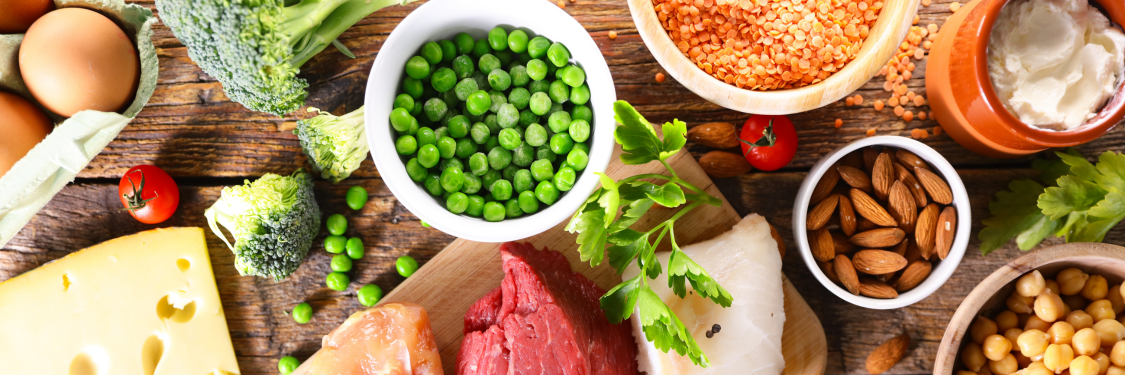
Another great way to maximize your protein intake is to ensure that other parts of your plate also have a little bit of protein as well. Many vegetables contain small amounts of protein, so adding them to the “veggies” portion of your healthy plate can help you reach your protein goal. Great options include:
4 Choose High-Protein Alternatives
You can find higher-protein versions of many traditionally carb-heavy foods like bread & pasta in your local grocery store:
Opt for protein-enriched pasta or pasta made with chickpea, peas, or lentils
Protein-enriched bread (Dave’s Killer Bread is my favorite)
Choose cottage cheese or Greek yogurt over regular yogurt
High-protein cereals (Magic Spoon)
Use almond flour or chickpea flour in baking
5 Make Your Snacks Protein-Rich
If you’re feeling snackish, use it as an opportunity to sneak in extra protein! Foods rich in protein will keep you more satiated between meals than carbohydrate-dense foods like chips and sweets. They’ll also help you reach your daily protein goal more easily. So make sure to snack on good sources of protein like:
Greek yogurt or cottage cheese
Hard-boiled eggs
Protein bars or shakes
Nuts and seeds (with mindful portions)
Jerky (chicken, turkey, or beef)
6 Supplement Your Protein Intake
Protein powders (whey, casein, plant-based) can be an easy way to supplement your intake, especially if you have a busy schedule. Blend them into smoothies, mix them with oatmeal, or simply shake them up with water or milk for a quick boost.
For more info on different protein supplements that I recommend, check out my post “Which Protein Powder Should You Use?”
7 Get Creative with Recipes
Boost the protein content of your meals with creative ingredient choices, like:
Adding protein powder to pancakes, muffins, or smoothies
Stirring egg whites or protein powder into oatmeal
Blending cottage cheese into sauces and dressings
Sprinkling nutritional yeast on vegetables or popcorn
Stay Consistent
Building the habit of prioritizing protein takes time, but consistency is key. Small, sustainable changes will add up over time, leading to improved body composition and performance.
By implementing these strategies, you can easily hit your protein targets and fuel your body for success. Which tip will you try first? Let me know in the comments!
Resources:
[1] Phillips SM, Van Loon LJ. Dietary protein for athletes: from requirements to optimum adaptation. J Sports Sci. 2011;29 Suppl 1:S29-38. doi: 10.1080/02640414.2011.619204. PMID: 22150425. https://pubmed.ncbi.nlm.nih.gov/22150425/
[2] Schoenfeld BJ, Aragon AA. How much protein can the body use in a single meal for muscle-building? Implications for daily protein distribution. J Int Soc Sports Nutr. 2018 Feb 27;15:10. doi: 10.1186/s12970-018-0215-1. PMID: 29497353; PMCID: PMC5828430. https://pubmed.ncbi.nlm.nih.gov/29497353/
[3] Fish: Friend or Foe? Nutrition Source. Harvard T.H. Chan School of Public Health. https://www.hsph.harvard.edu/nutritionsource/fish/