Slow Down Your Reps 🏋️♀️
A common mistake I see gymgoers make is speeding through reps at a quick pace, spending only 1 second on the eccentric and 1 second on the concentric phase. While there are certain phases of your training where moving quickly with explosive power is good (i.e., a power block), most of the time you should move at a slow, controlled pace.
When it comes to resistance training, how you move matters just as much as how much you lift. If you’ve ever caught yourself rushing through a set or powering through reps just to get them done, you’re definitely leaving gains on the table. Slowing down your reps is the key to maximizing muscle growth, building strength, and minimizing your risk of injury.
Let’s break down why you should be focusing on slow, controlled reps in your training — and how it will benefit your fitness goals.

✅ Better Muscle Activation and Mind-Muscle Connection
Moving too quickly through your reps allows momentum to take over, shifting the focus away from the intended muscle group. On the other hand, slowing down allows you to engage the target muscle more effectively.
Moving slowly forces you to control the weight through the full range of motion, which improves the mind-muscle connection (the ability to consciously engage and contract the muscle).
Better activation leads to more balanced muscle development and reduces the risk of compensating with other muscles.
Example: During a lat pulldown, if you pull too quickly, your biceps or shoulders might take over. Slowing down ensures your lats are doing the work.
✅ Increased Time Under Tension (TUT) = More Muscle Growth
While in a hypertrophy (muscle-building) block, it’s important to keep in mind that your muscles need more time under tension (TUT).
Muscle growth (hypertrophy) happens when your muscle fibers experience stress and tension during resistance training. The longer your muscles are under tension, the more muscle fibers you recruit and fatigue — which is exactly what stimulates growth.
When you slow down your reps, you increase time under tension (TUT). This forces your muscles to work harder for longer.
The longer your muscles are under tension, the greater muscle fiber breakdown you’ll get. This is necessary for rebuilding and growth during recovery.
Example: Instead of blasting through a bicep curl in 1 second, try lifting the weight in 2–3 seconds, pausing at the top, and then lowering it over 3–4 seconds. That’s how you maximize TUT 💪
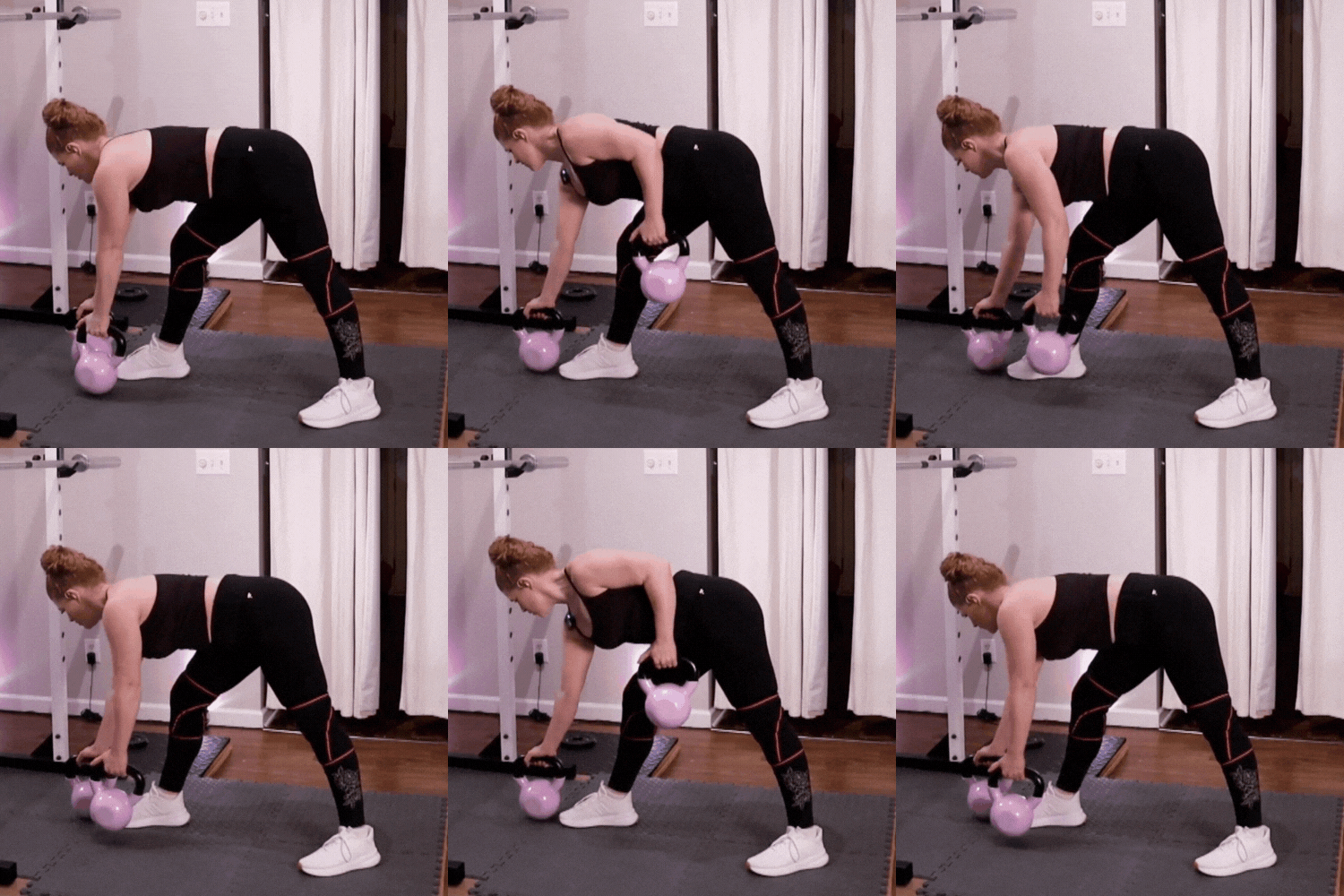
2 sec up, 2 sec down
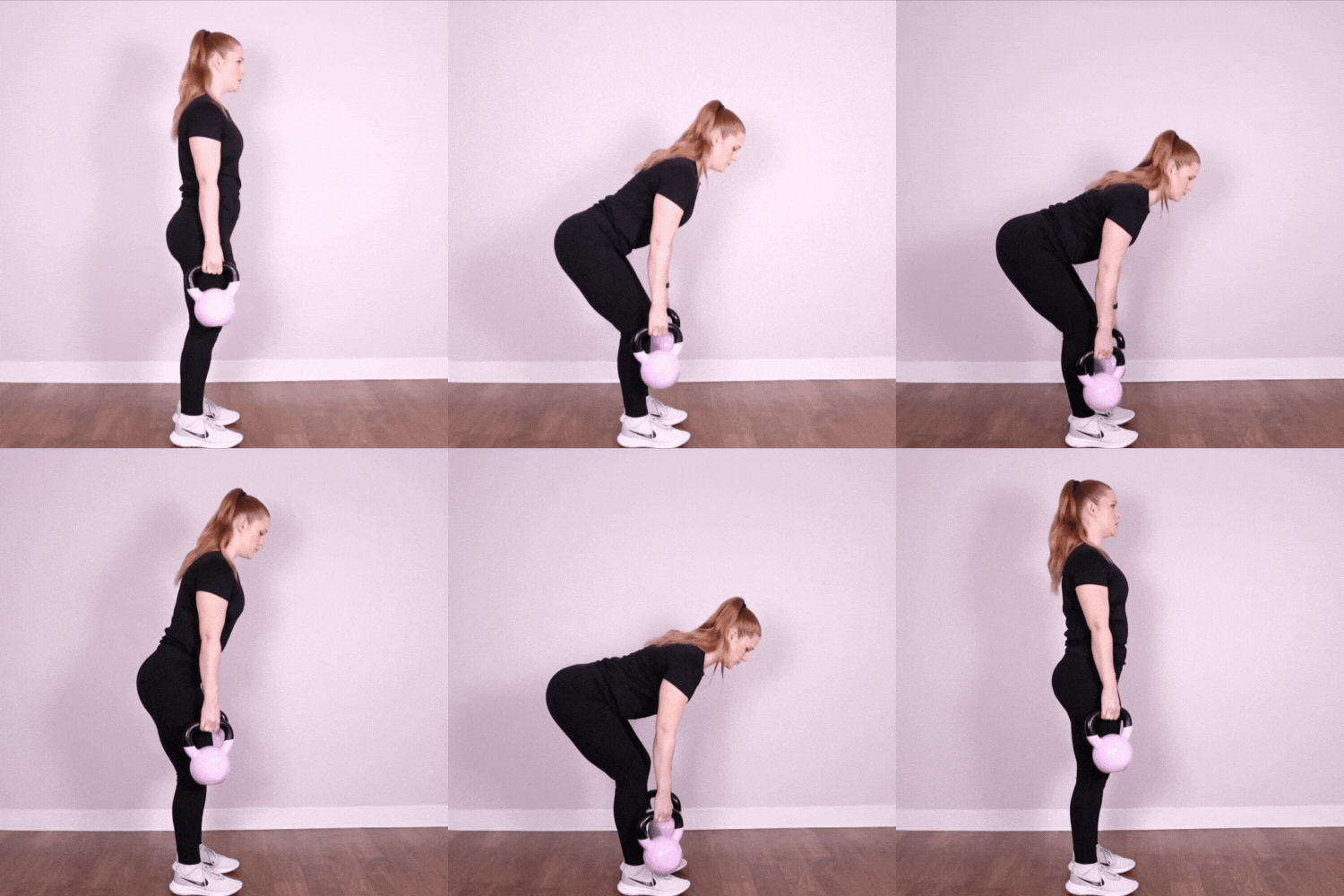
4 sec down, 2 sec pause, 1 sec up
✅ Increased Muscle Damage and Growth During the Eccentric Phase
Muscles experience the most growth during the eccentric (lengthening) phase of an exercise — for example, lowering the bar in a bench press or lowering your body during a squat. So most of the time, you should practice moving slowly through the eccentric phase of an exercise (at least 2 seconds).
Spending more time during the eccentric phase increases muscle damage, which triggers your body’s repair and growth process.
Slower eccentrics also improve strength by reinforcing control and technique.
Example: During your squats, aim to lower yourself over 3–4 seconds before driving back up. That increased eccentric stress will pay off in strength and size gains.
✅ Improved Control = Lower Injury Risk
Fast, uncontrolled movements can increase your risk of injury by compromising form and putting excess strain on your joints and connective tissue. If you’ve experienced a lot of nagging aches and pains, definitely check out the speed of your lifts. Are you going too fast? If so, that may be part of the problem.
Slowing down ensures that you’re using proper form and controlling the load through the entire range of motion.
It also helps you identify any muscular imbalances or weaknesses since you’re not relying on momentum to carry you through the movement.
Example: A slow, controlled deadlift helps protect your lower back by reinforcing proper bracing and spinal alignment.
🚀 When to Use Fast, Explosive Reps
Fast, explosive movements do have their place in training — especially during power training blocks (when the goal is to build strength and speed). Olympic lifts, plyometrics, and power-focused exercises like kettlebell swings are meant to be performed with speed and intensity.
However, if your goal is muscle-building (hypertrophy) or strength-building, your default should be to practice your reps at a slow and controlled pace. Explosive training recruits fast-twitch muscle fibers and develops power—but it doesn’t provide the sustained tension and muscle damage necessary for maximum growth.
🔥 How to Slow Down Your Reps
If you’ve been training fast, it can take some time to adjust to a slower tempo — but the payoff is worth it. Here’s how to make the shift:
👉 Use a tempo count: Try a 3–1–3 tempo: 3 seconds to extend (eccentric), 1-second pause, 3 seconds to contract (concentric).
👉 Focus on the eccentric: Make the lowering phase slower than the lifting phase to maximize muscle stress. For this, try a 4-2-1 tempo: 4 seconds to extend (eccentric), 2 second pause, and 1 second to lift (concentric).
👉 Stay mindful of your form: Engage the target muscle throughout the entire movement — if you feel other muscles taking over, slow down and adjust your form.
👉 Reduce the weight if needed: You might need to lighten the load at first to stay controlled — that’s okay! Muscle-building comes from tension, not ego-lifting.
💪 Slow and Steady Wins the Muscle-Building Race
If you’ve been feeling stuck in your progress or not seeing the muscle definition you expect, try slowing down your reps. Controlled, intentional movement increases time under tension, improves muscle activation, and leads to more strength and size over time. Save the explosive reps for power days — and for everything else, slow it down and feel the burn!
Let me know your thoughts in the comments below!