Troubleshoot Your Romanian Deadlift (RDL)
What is the most intimidating weight-training exercise for you?
If you’re like many of my clients and followers, you probably answered: deadlifts!
You probably do this movement multiple times every day, regardless of whether you’re aware of it or not.
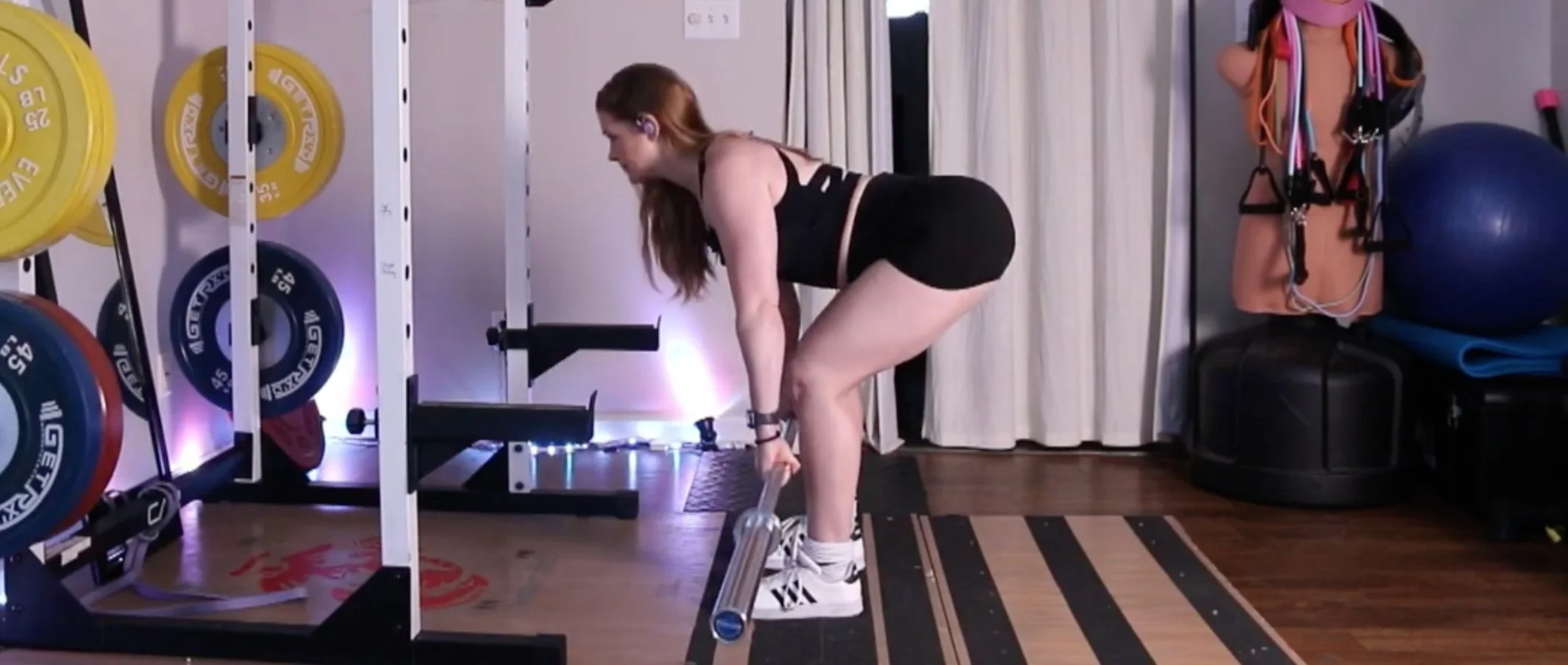
What is the Deadlift?
The deadlift is the movement of picking something up from the ground in a standing position.
Deadlifts are one of the more tricky exercises to master and perform safely. Most adults that I see have poor mobility and movement patterns, which puts them at risk of straining their backs whenever they pick something up from the ground (both in and outside the gym).
There are a lot of moving pieces involved in safely lifting weight from the ground—you have to keep your spine in alignment, monitor the degree of hip hinge to knee bend, engage the lats, and stay balanced, among other things.
Another thing that makes deadlifts difficult to master is the many variations. Some variations rely more on hinging the hips than bending the knees (e.g., Romanian deadlifts and conventional deadlifts). Others incorporate more knee bending and a more upright posture (e.g., sumo and frog stance).
Most people have a preferred variation according to their individual strengths, body shape (i.e., length of torso, arms, and leg bones), and individual preferences. However, it’s a good idea to master the correct technique of all deadlift variations for a well-rounded physique and mobility.
Let’s take a look at how to do one of the most common forms of the deadlift—the Romanian deadlift (RDL). We’ll also troubleshoot some common errors with the technique so that you can practice the movement with perfect form.
Romanian Deadlift (RDL)
The basic variation of the deadlift that I like to begin with is the Romanian deadlift (RDL). This variation starts from a standing position holding a band, hand weights like dumbbells or kettlebells, or a barbell.
RDLs are an incredibly useful exercise for a number of reasons, which is why I try to get my students performing it as soon as possible in their programs:
The RDL is a great exercise for practicing the hip hinge movement, which is foundational to nearly all “big lift” exercises (i.e. squats and conventional deadlifts).
Holding the weight throughout the entire set is a great way to boost your grip strength. This will allow you to train with heavier weight in this and other exercises over time.
Practicing the exercise with good technique while keeping your back in alignment is a great way to challenge your core strength and stability. Your abdominals, obliques, transverse abdominis, and pelvic floor muscles have to stay engaged to keep your torso rigid while the weight is in motion—similar to what happens when you’re holding a plank.
People who struggle with weak, tight hamstrings find this exercise helpful for improving the strength and mobility of their legs.
If you have a weak back and poor posture, this exercise will strengthen the muscles in your back while training your shoulders to stay back. This can help you to sit and stand taller even when you’re not training, and can even reduce instances of chronic back pain.
To Perform Romanian Deadlifts/RDLs:
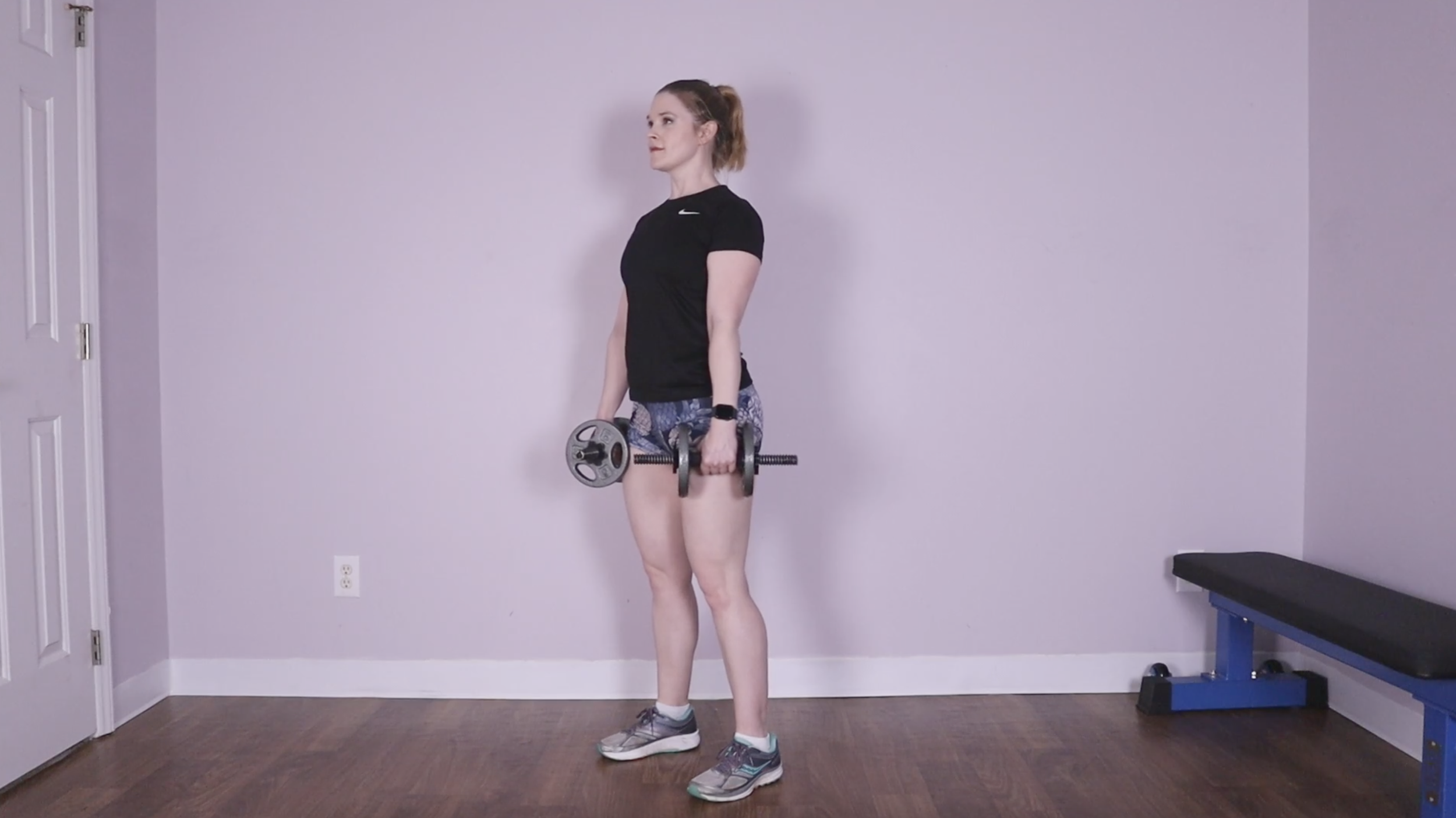
Start by standing with your feet shoulder-width apart, toes pointing slightly outward, and the weight in your hands with your arms straight and hands just outside your hips.
Maintain a slight bend in your knees and a neutral spine position throughout the movement.
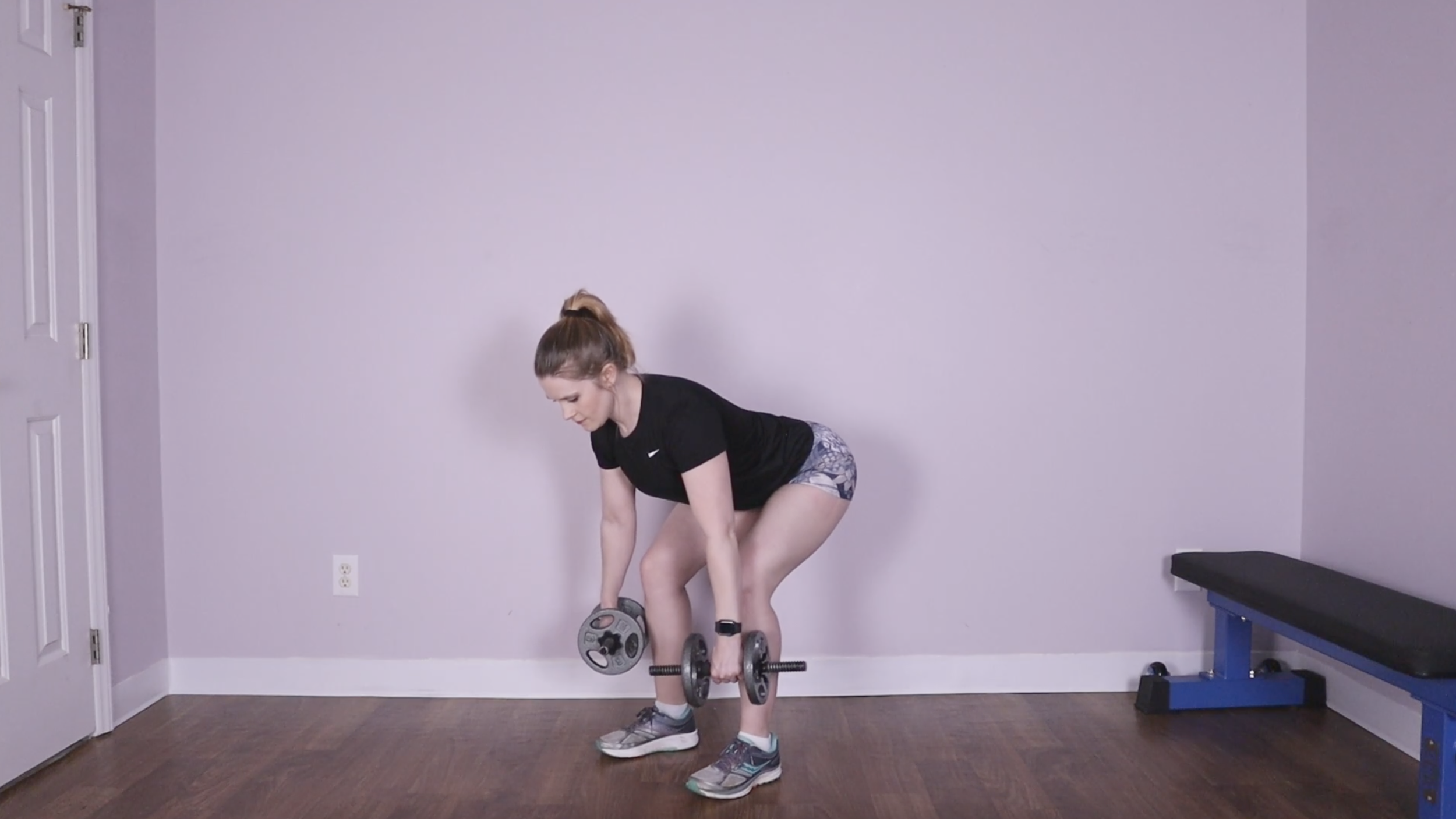
Brace your core, squeeze your armpits to engage your back, and push your hips back while keeping your back straight and your chest up.
Push your hips back until either you feel a stretch in your hamstrings or the weight is resting just below the level of your knees.
Push your hips forward by squeezing your glutes and return to the starting position, standing tall.
Repeat for the desired number of repetitions, ensuring proper form and control throughout the exercise.
I find that practicing this exercise with a mini band, tube resistance band, or superband is helpful for learning hand placement and priming before adding free weights.
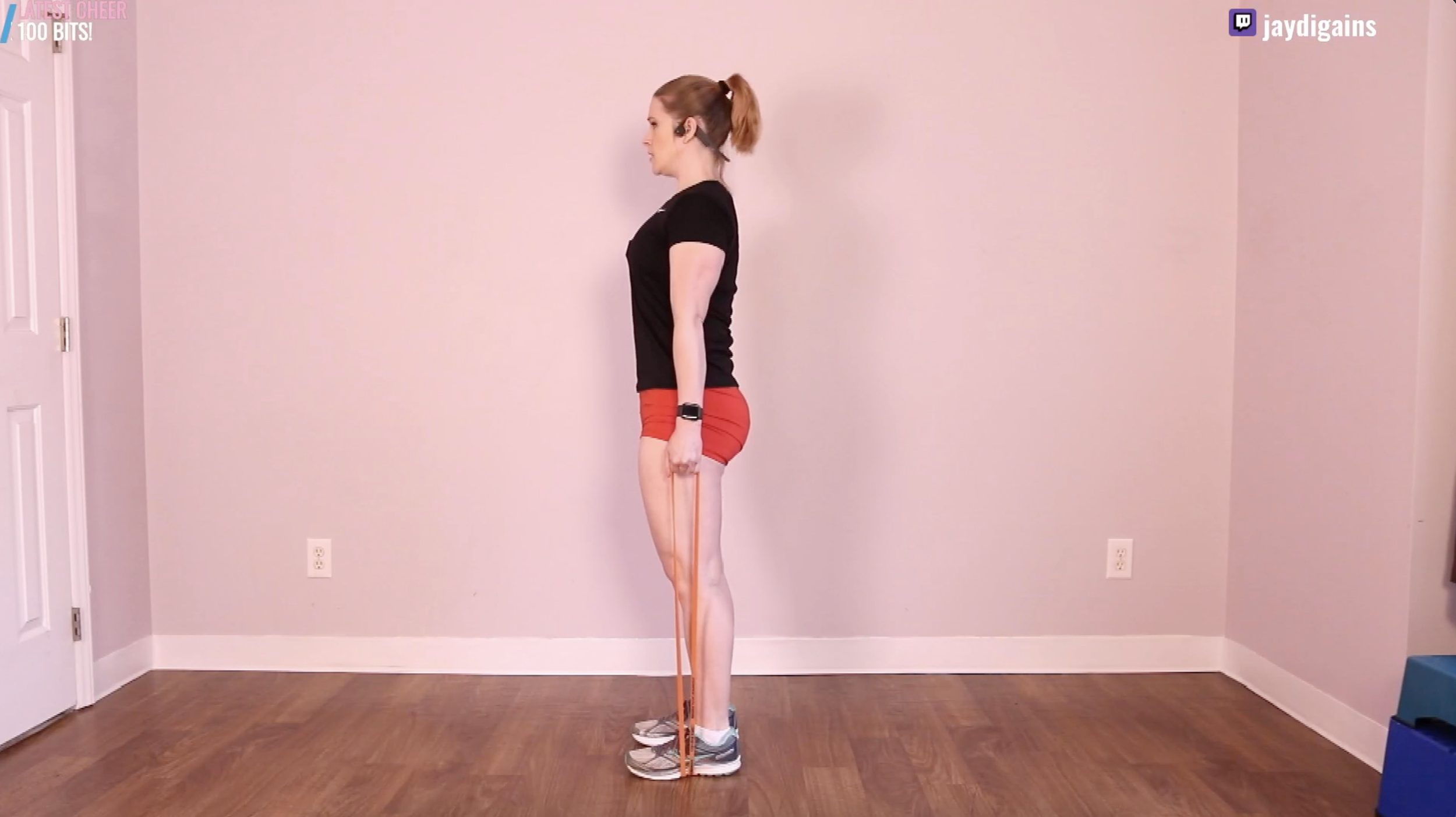
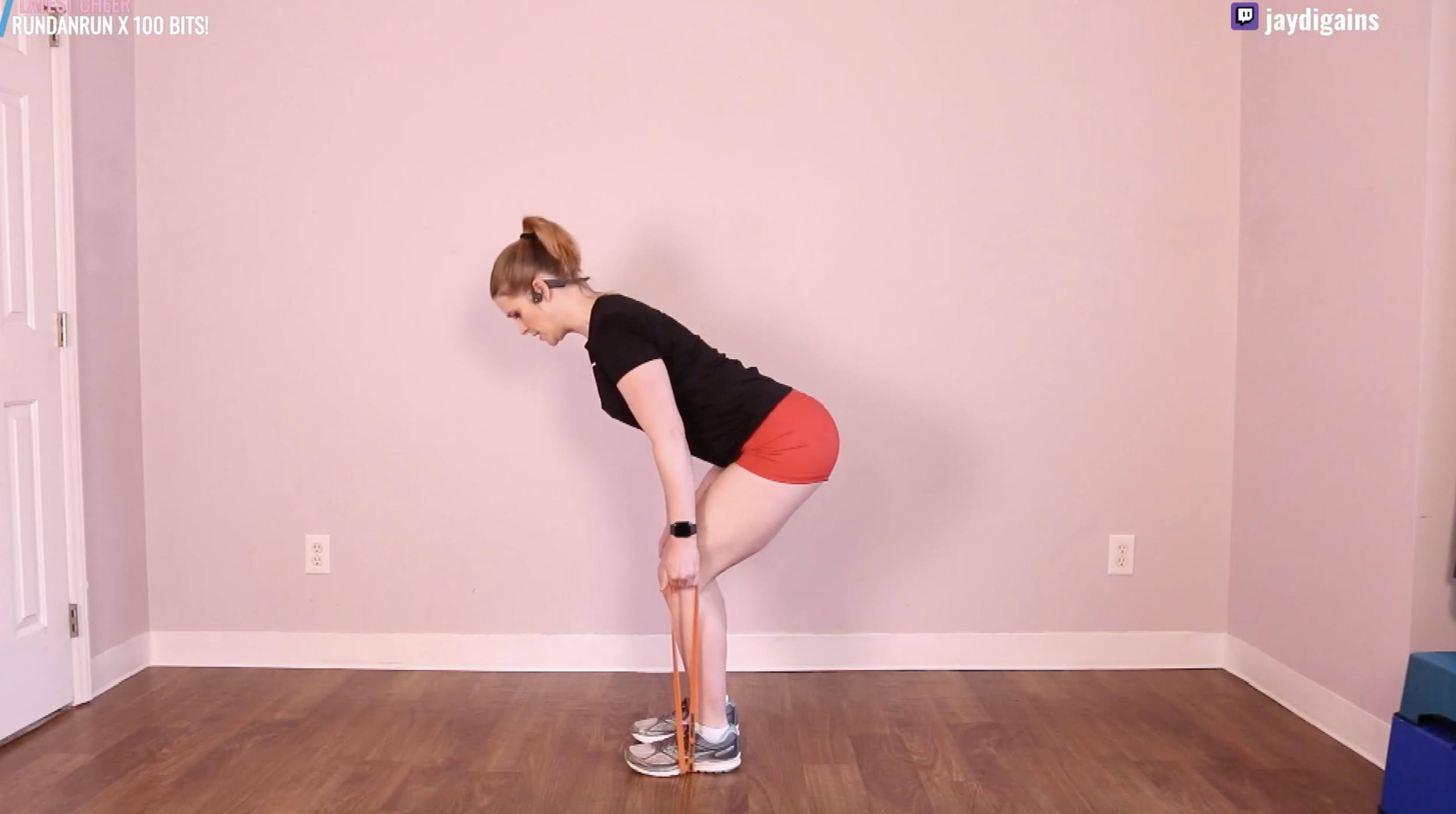
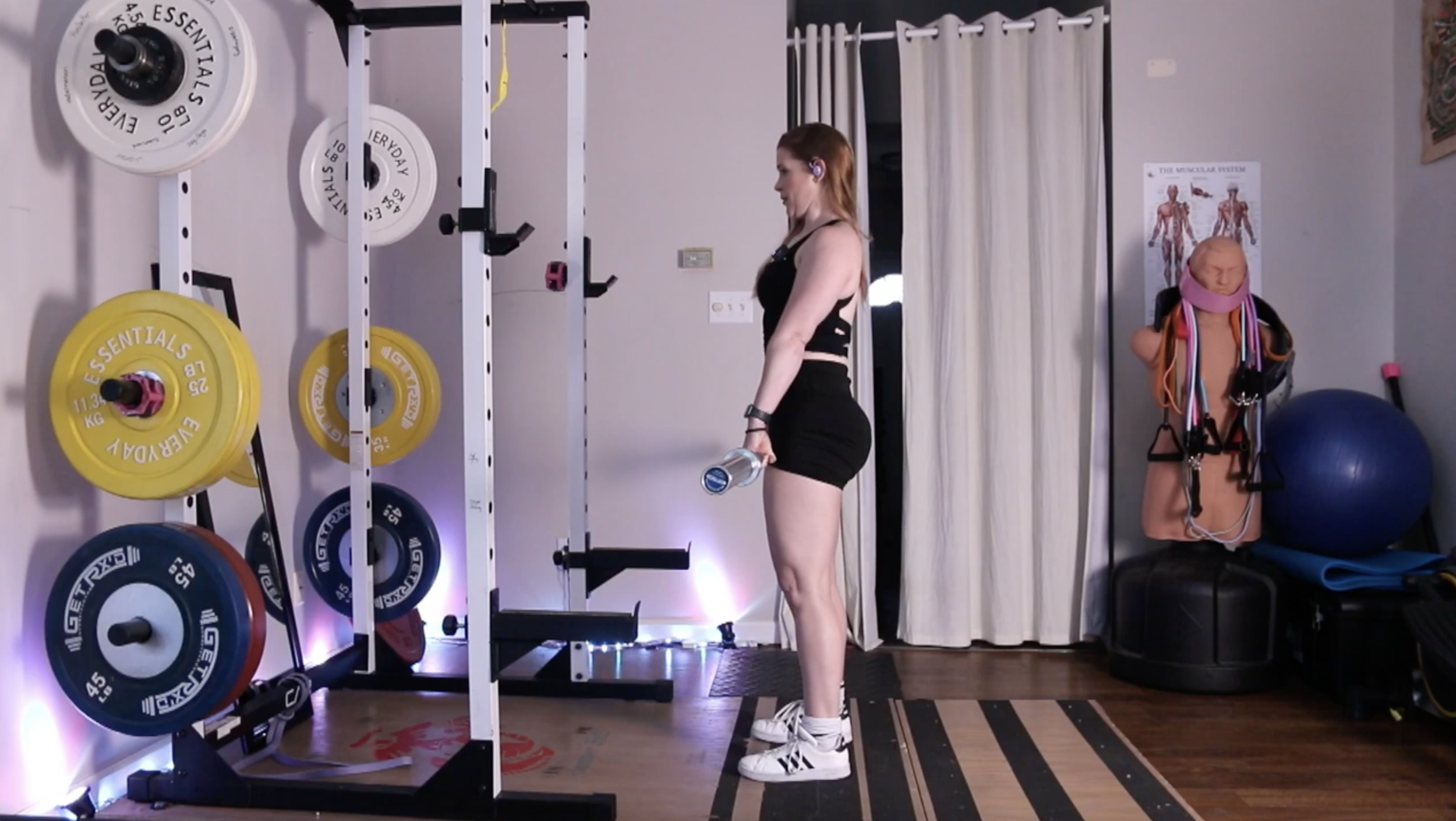
A more advanced variation of this exercise is using the barbell with plates for heavier resistance:

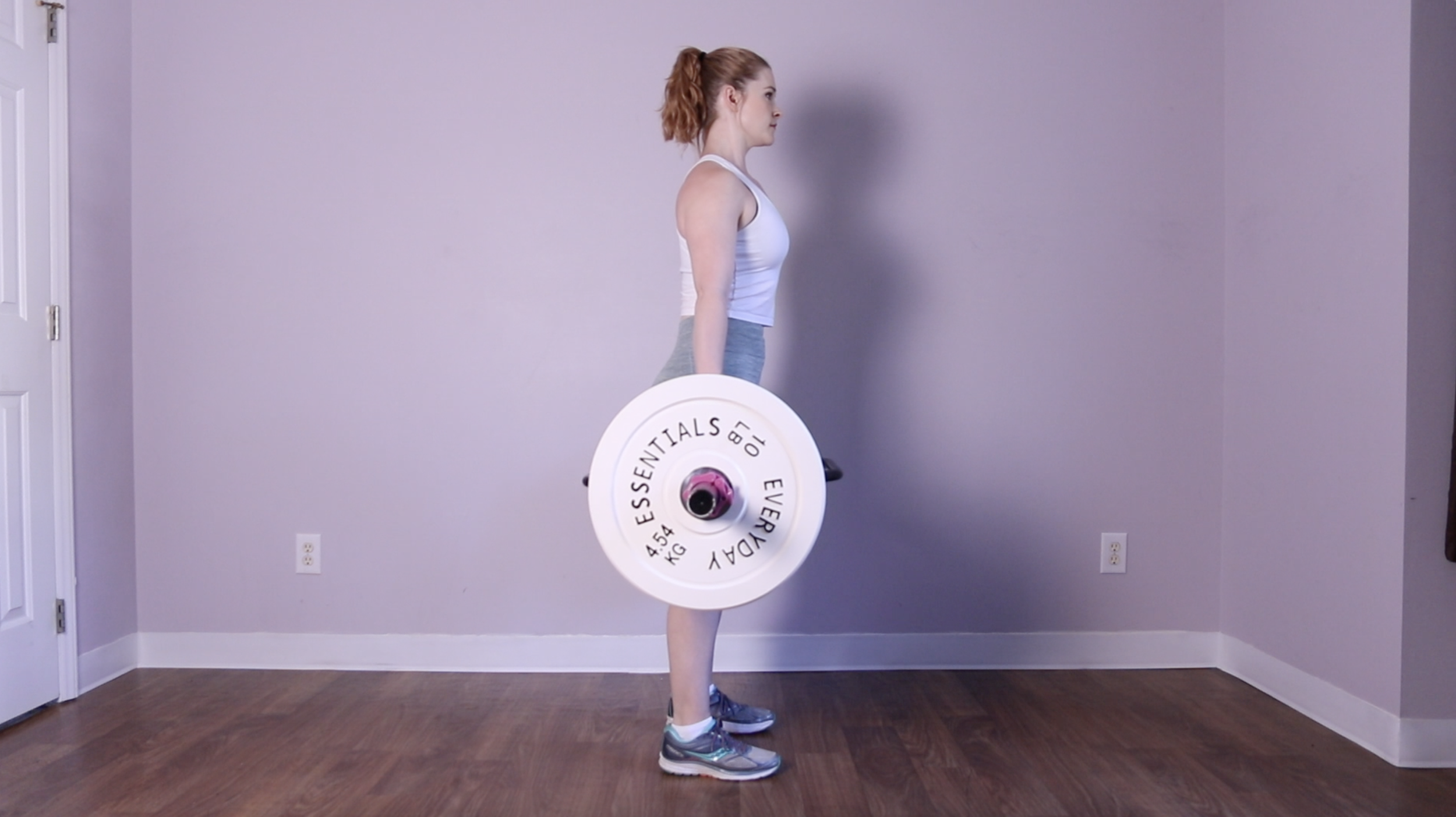
You can also do this exercise with a trap bar:
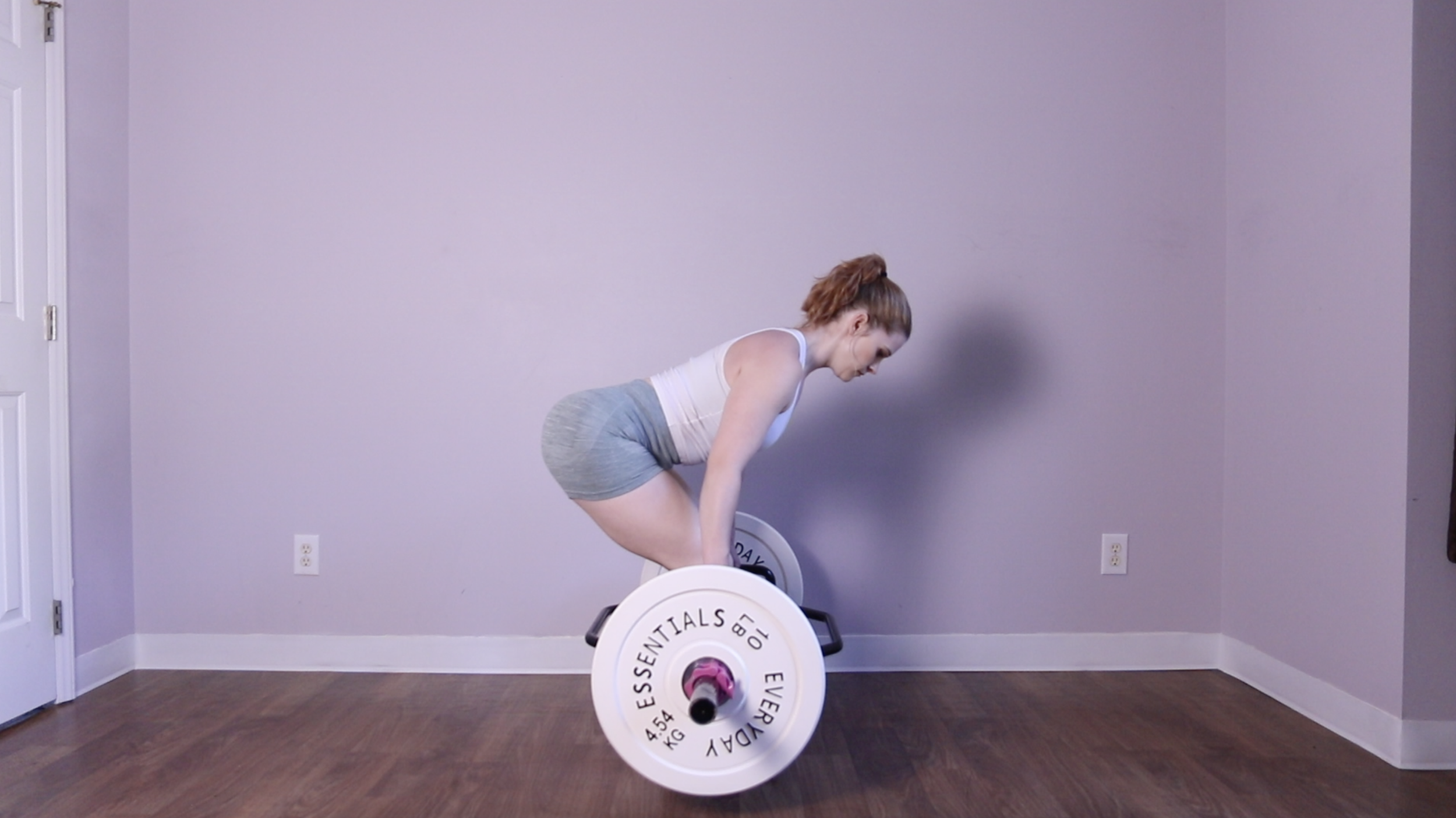
Important cues to keep in mind for performing RDLs:
Maintain a neutral spine throughout the movement to protect your lower back. Avoid rounding or excessively arching your back.
Initiate the movement by pushing your hips back rather than bending forward from your waist.
Keep the weight close to your body throughout the exercise to minimize stress on your lower back.
Focus on engaging your hamstrings and glutes while maintaining tension in these muscles during the eccentric and concentric phases.
Control the movement and avoid using excessive momentum or bouncing the weight off the floor.
How to Assess Your Romanian Deadlift (RDL) Technique
Take Video
The best way to assess your deadlift technique is to take a video of yourself performing the exercise from the side, front, and back. This allows you to focus on performing the exercise and avoid injury from turning your head or craning your neck to look in a mirror.
Set up your smartphone or camera facing the profile (side) of your body. Make sure your whole body is in frame from the beginning to the end of the movement. Your feet, head, hips, and knees should all be within the picture for the entire video. You can need to prop your camera up using another piece of gym equipment, or you can use a tripod. You can also ask a friend or fellow gymgoer to hold your phone/camera and film for you.
Once the camera is set up, perform a set of your deadlifts like you normally do—recording the entire set from picking up the weight until you put the weight down.
Afterward, watch the video of your deadlift and assess it for the technique cues outlined above.
Warning Signs
Another important way to assess your technique is to listen to your body while performing the exercise. Key questions to ask yourself are:
Do I feel any pain or discomfort anywhere at any point of the movement?
Do I keep my balance throughout the entire range of motion?
Are there parts of the movement where I move slower?
Is there any point of the movement where I change my positioning (i.e., rounding the spine and/or shoulders forward, weight shifting to one side, weight shifting forward or back, weight coming forward instead of straight down)?
The answers to these questions can give you a clue to where your RDL technique is breaking down. This, in turn, can help you decide what to do to improve your deadlifts.
Common Mistakes
Mistake 1: Reaching the Weight Towards the Floor
It’s super common for people to view the RDL as an “up and down” movement because the weight moves down and up. But thinking about the exercise this way can lead to the mistake of rounding the spine and shoulders and reaching the weight towards the floor—which puts a lot of pressure on the back and can lead to injury.
Instead, think of the RDL as a “back and forth” movement—this movement is all about the hips going back behind you and then returning forward to the starting position.
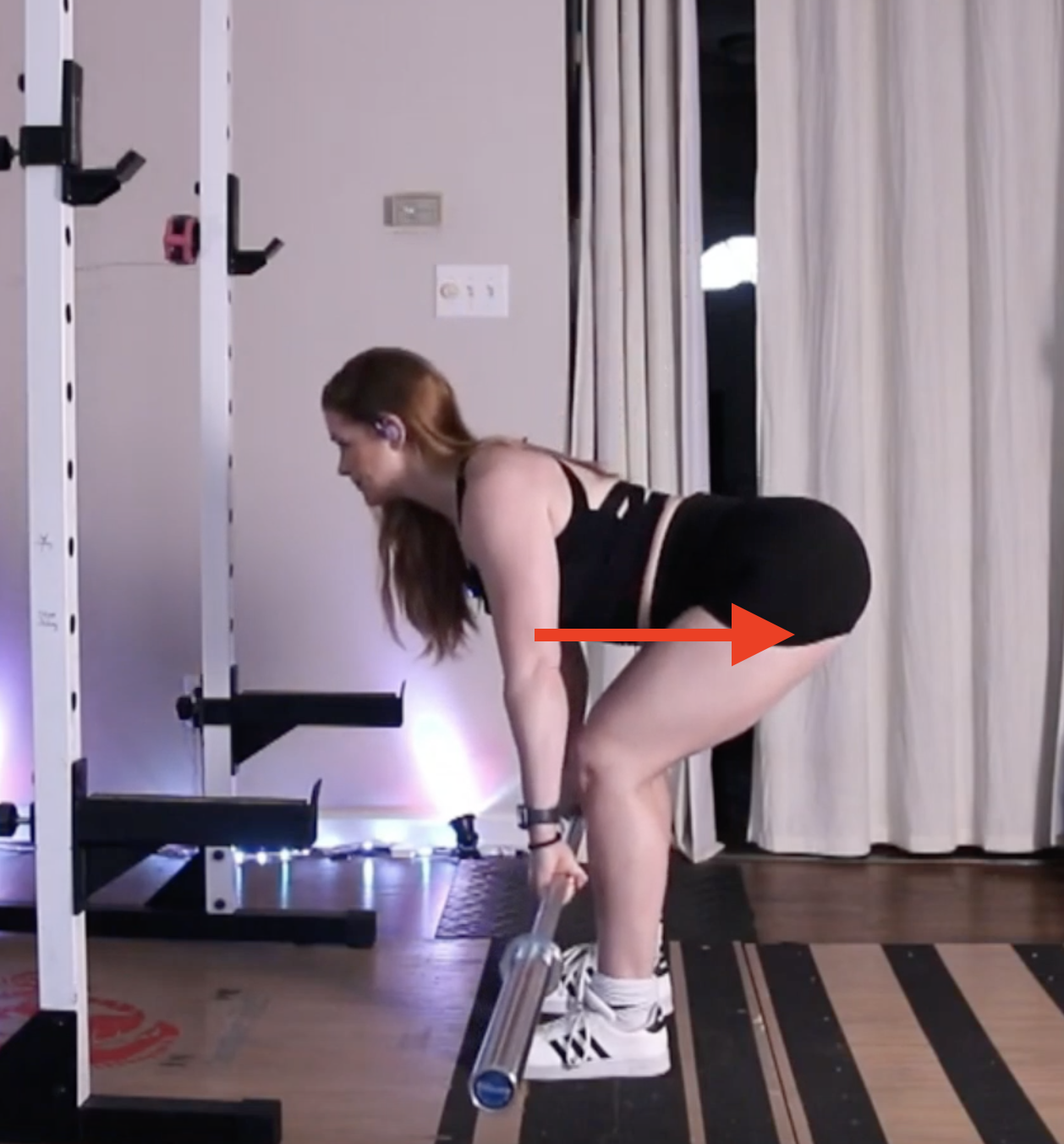
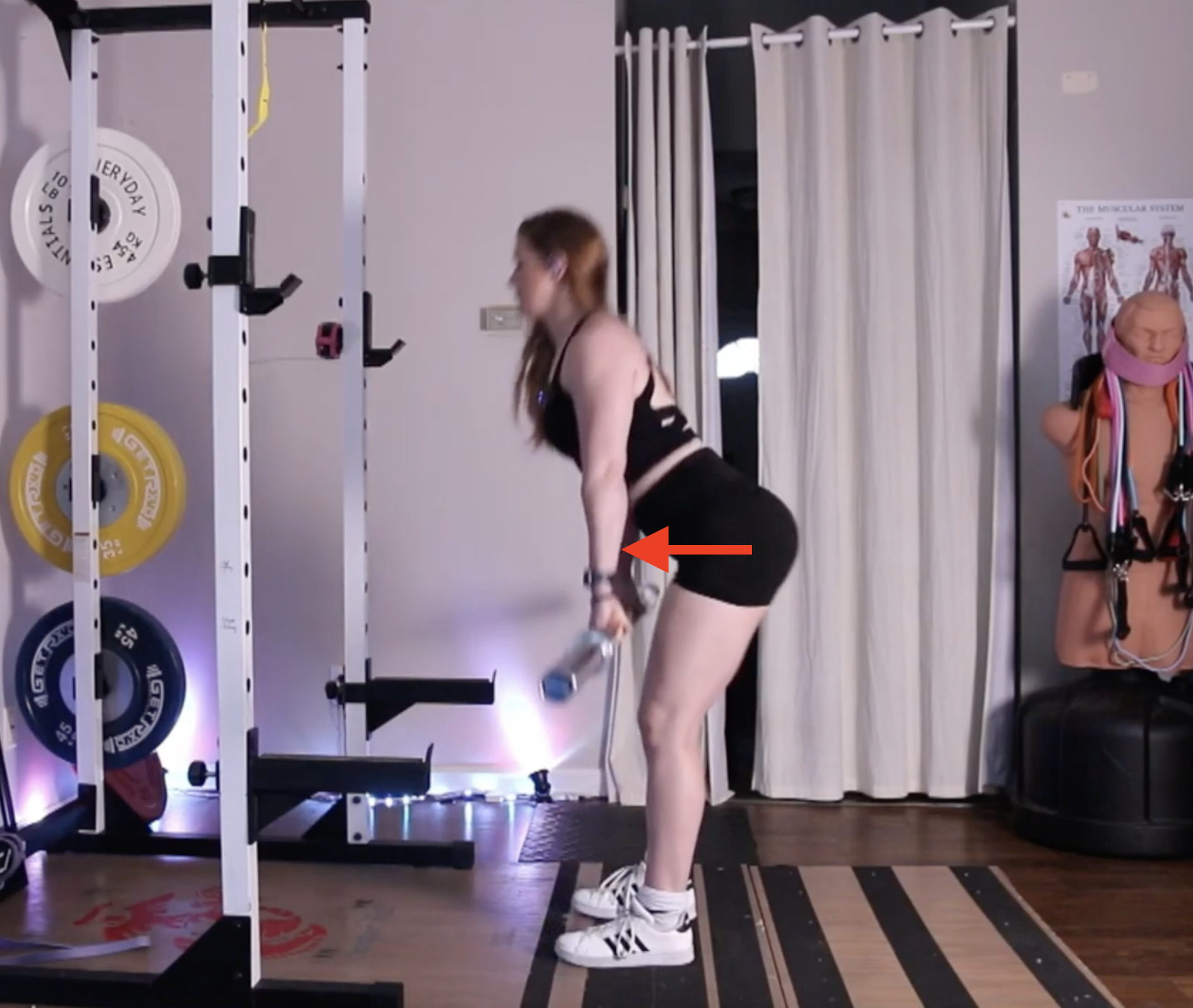
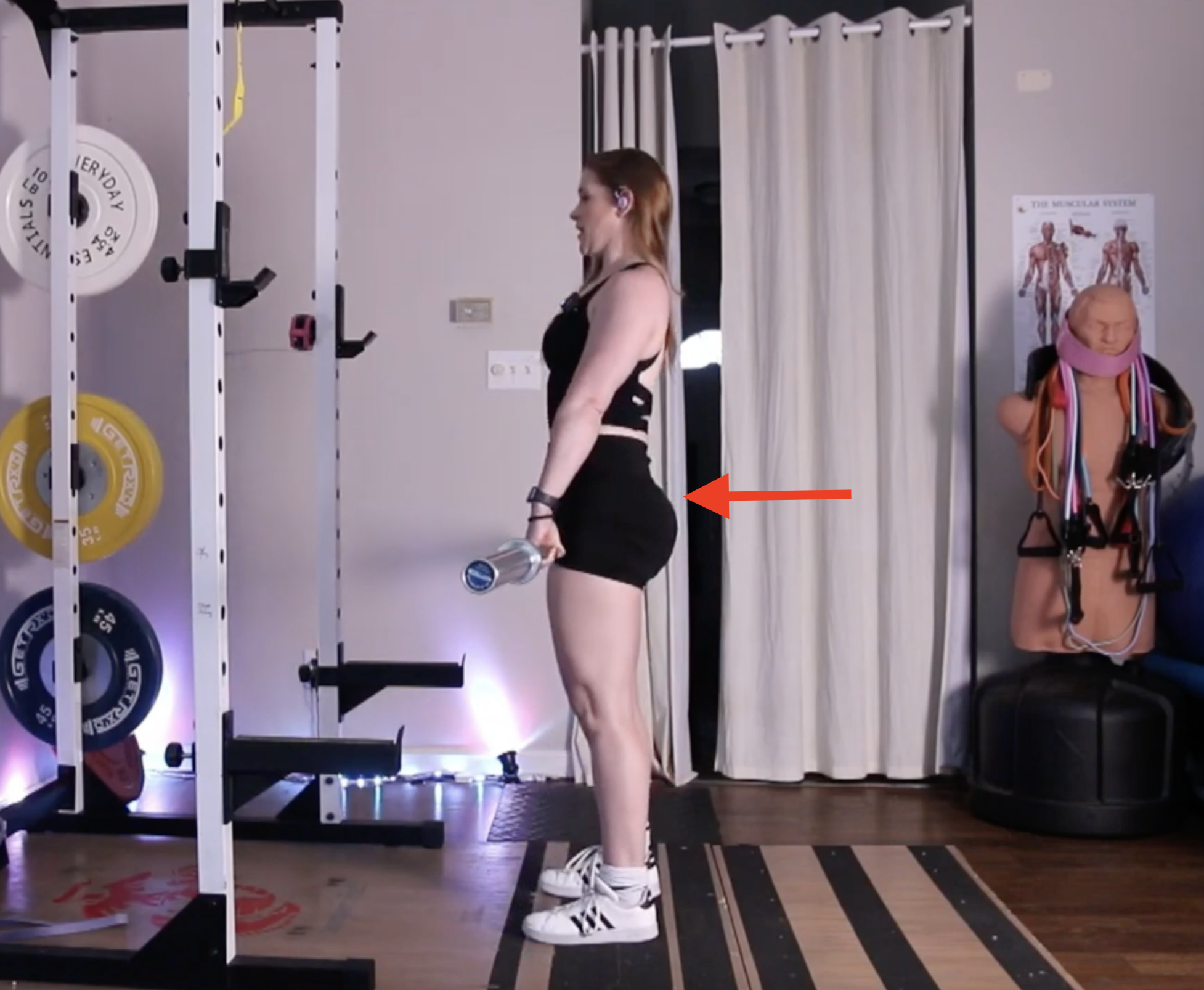
How to fix it:
While performing the exercise, focus on keeping your torso rigid. Squeeze your armpits to engage your lats, and actively push your chest forward—try to keep this engagement throughout the entire movement. As you push your hips back, stop the movement when you feel your hamstrings stretch and stop all movement of the weight and your torso once your hips stop moving. To come back up, engage your glutes, drive your heels down into the floor to bring your hips back forward, and straighten up to standing. Imagine holding a plank while you do the exercise—you should keep your torso rigid and your core muscles engaged in the same way as you perform the exercise.
Mistake 2: Hyperextending the spine
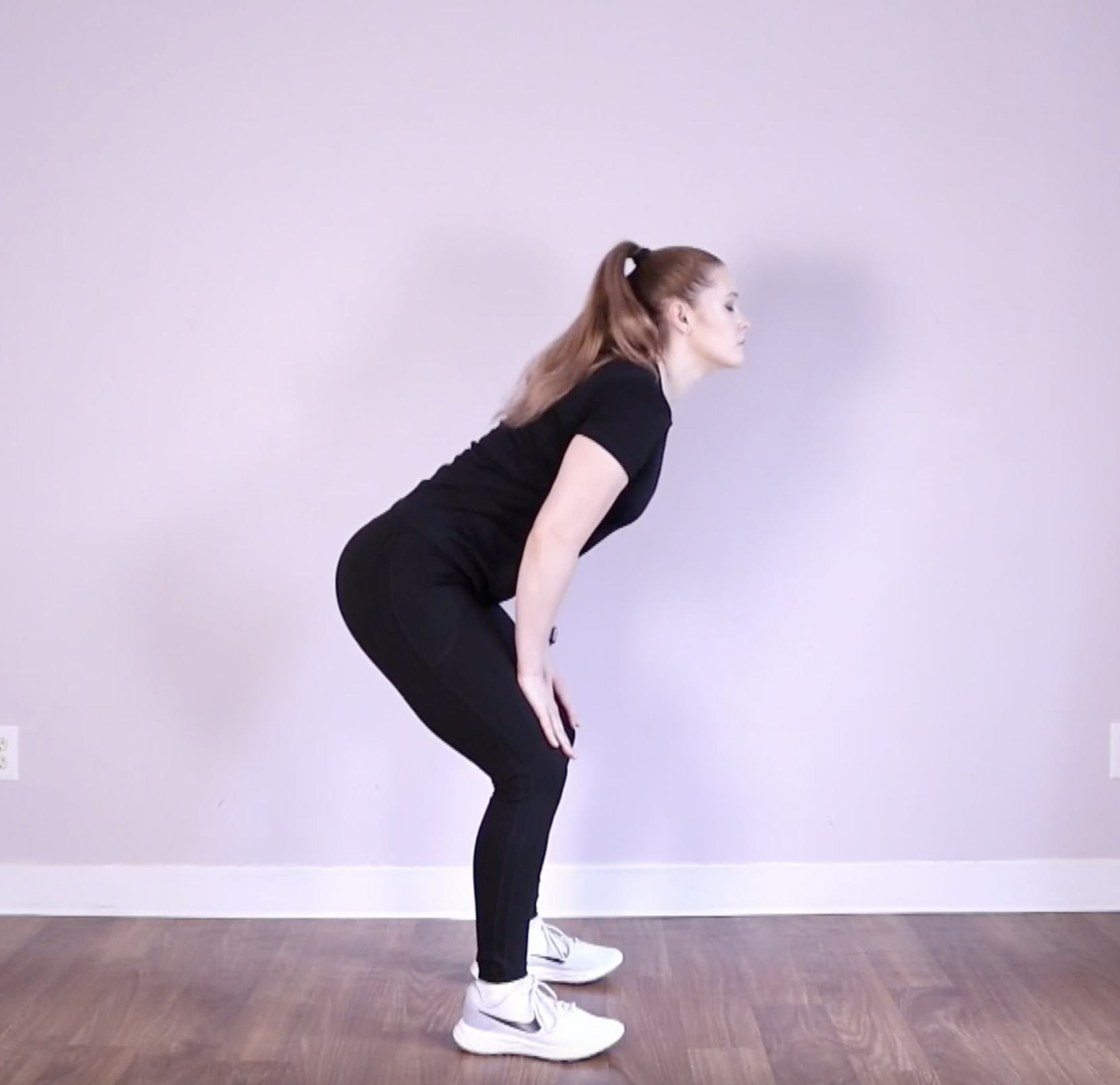
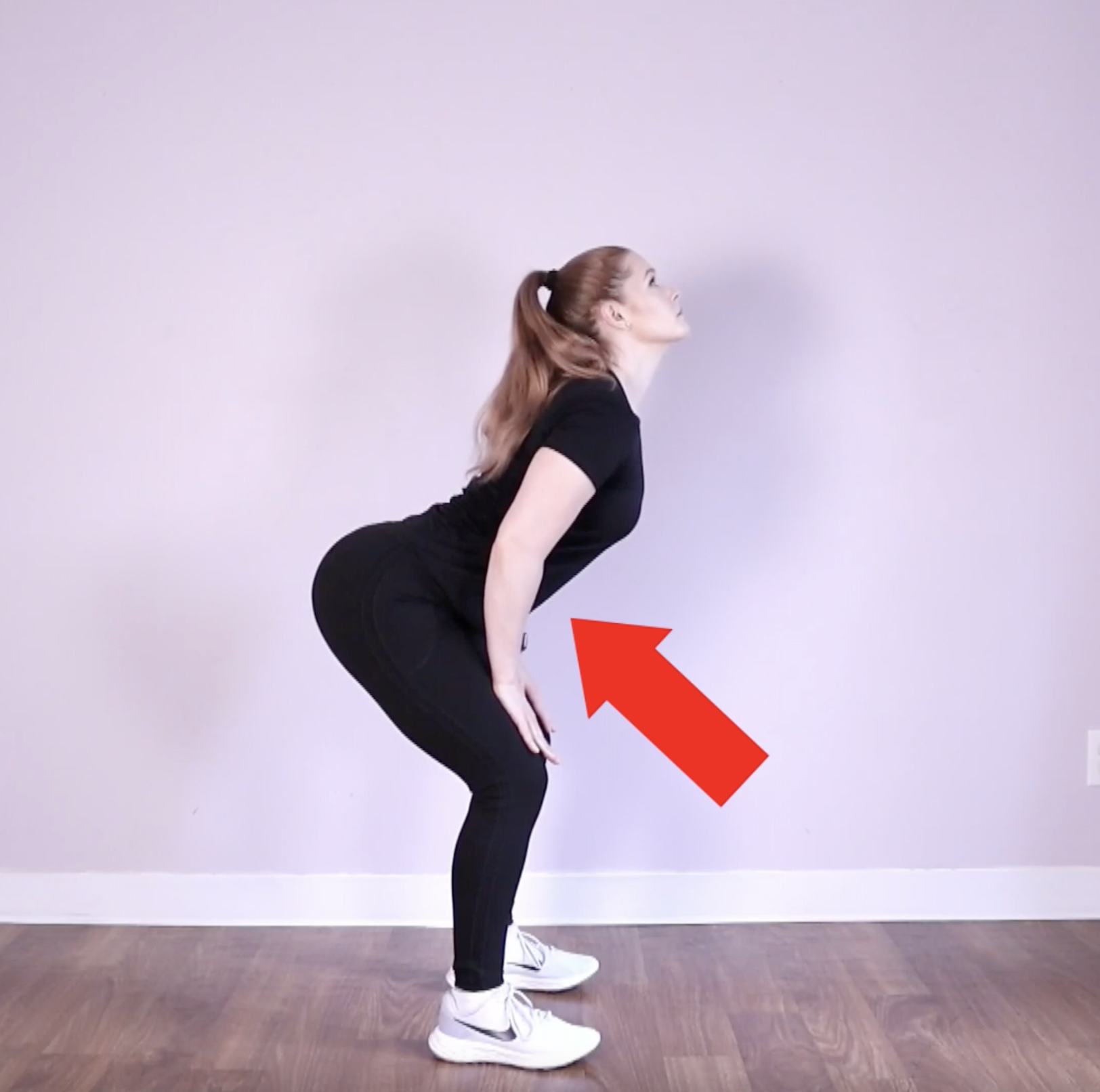
Sometimes people over-correct for a rounded spine by arching the back in the opposite direction. This makes the back look like you’re doing a standing cow pose from yoga. Telltale signs of a hyperextended spine are lower back pain or strain while lifting and a head tilted up with eyes forward. If you take a picture or video from the side, you’ll notice a bend in the back.
How to fix it:
Before you practice your deadlifts, warm up your core with some hip tilts and core stabilizing exercises like dead bugs and bird dogs. These will help you to become more aware of your spinal alignment so that you can actively correct it as you lift. As you perform the deadlift, actively engage your abdominals to keep your hips in a neutral position.
Mistake 3: Too Much Knee Bend
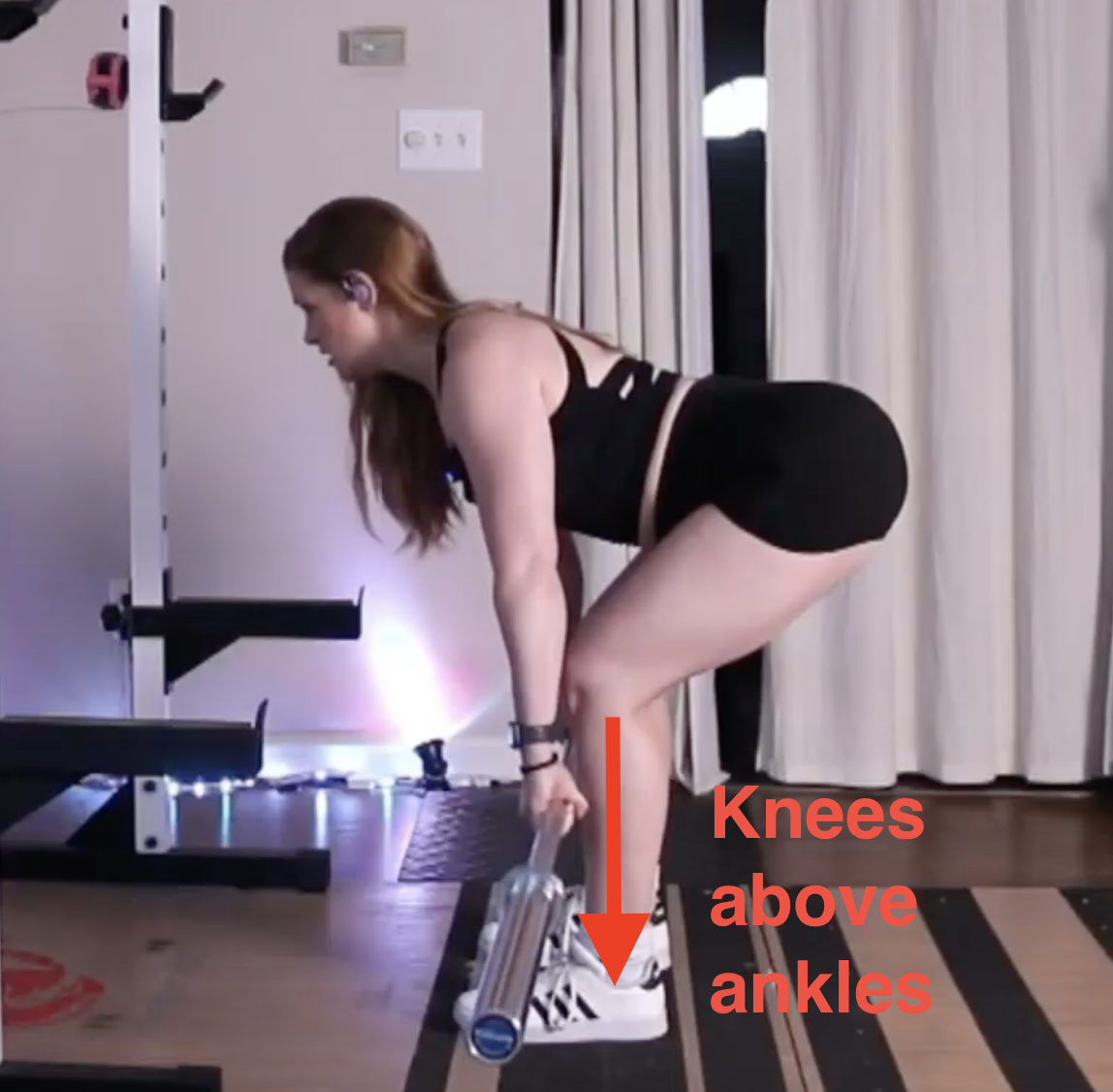
People often have trouble figuring out the degree of knee bend to hip-hinge needed to perform a RDL correctly. You don’t necessarily have to keep your knees completely straight (unless you’re trying to perform a stiff leg deadlift), but you only want to bend your knees enough to allow your hips to move back. At the bottom of the movement, your knees should not go past your toes, and ideally, they should stay right above your ankles.
How to fix it:
Take a video of your form from the side as you perform the RDL. At the bottom, if your knees are over your toes or past them, that’s a sign that you’re squatting your deadlift. Continuing to train this way will minimize the gains you get in your glutes and hamstrings (which is, like, the point of this exercise).
To fix this, as you descend into the bottom of the exercise, try to keep your knees more straight—not locked out, just straighter. Keep pushing your hips back until you feel a stretch in your hamstrings (back of the thighs) and allow your weight to shift back into your heels a bit more. Stop all movement once you can’t push your hips back anymore due to the stretch in your hamstrings. Then engage your glutes to come back up.
Mistake 4: Ramping the Weight Up the Legs
Sometimes, you may get “stuck” on the way back up from the bottom of a deadlift and it becomes very difficult to finish standing up. Some lifters will “hitch” the weight up to get to the top of the lift by bending their knees and using their thighs as a “ramp.” They may either slide the weight up the thighs (ramp) or use the legs to “bump” the weight up the thighs (hitch).
Neither of these techniques is good for proper RDL form. Ideally, you should be able to pull the weight up to standing without having to use your thighs as a ramp or hitch. If you keep getting stuck halfway up in the RDL, then you may be using more weight than you should. Only use the amount of weight that you can execute the movement with good technique throughout the entire range of motion.
Also, use the same tips as above regarding “squatting the deadlift” to keep your legs more straight and your body weight back.
More Tips to Improve Your Romanian Deadlift
Warm Up Properly
I’ve said it before, and I’ll probably say it in every technique post: don’t skip your warmup!
Skipping the warmup can lead to injury—since tight muscles and stiff joints can lead to sharp pains in the joints or even a pulled muscle.
Always take 5-10 minutes to do some moderate-intensity cardiovascular exercise (like walking on a treadmill, using a rowing machine, or riding a stationary bike) before you train. Also make sure to do some dynamic stretches to loosen up tight muscles and prep your body for more intensity.
If you have any tight muscles that don’t loosen up during the cardio and dynamic stretches, you can try applying pressure to the muscles using a foam roller or medicine ball on your legs or upper body.
Depending on the intensity of your workout, you may also include what are called “priming” exercises at the end of your warmup. These are exercises that allow you to activate the muscles that you’ll be using during the challenge portion of your workout. These also give you a chance to rehearse the challenge movement using less weight or intensity.
Good priming exercises for the RDL are things like bridges, hip thrusts, and band good mornings.
2 Go Slow
The number one adjustment for improving your deadlift technique is to slow down your reps and add a pause at the bottom. This is why many of my training programs include deadlift variations using the 4:2:1 reps (4 seconds down, 2-second pause, 1 second up).
Practicing this way allows you to correct any slight errors that may occur without noticing during faster reps. It also helps you improve strength by developing control of the entire range of motion. Slow eccentric training is also a super effective way to grow more muscle, especially in the hamstrings and glutes.
I recommend including at least one set of slow eccentric RDLs in each deadlift workout, either as the main exercise or as a priming exercise during your warmup.
3 Reduce the Weight
If you’re having trouble performing the RDL with good technique, try using less weight and see if your form improves.
Only use as much weight as you can control, keeping your body in good alignment throughout the entire range of motion. Using too much resistance can cause pain and also lead to form failure. It’s not worth it to risk injury only to add a few more pounds or kilograms onto the bar.
4 Improve Core Stability
Having poor core strength can lead to back pain or tiredness in the back muscles while deadlifting. It can also lead to difficulty keeping your spine in alignment (i.e., “straight”) throughout the movement, and you might find yourself caving forward.
To strengthen your core stability, first get into the habit of firing up your core at the beginning of your training sessions by practicing imprinting on the floor.
Core stabilizing exercises like planks & plank variations and standing balance exercises like step back to single leg balance, step ups, and lunges can also help you to develop core stability.
5 Improve Grip Strength
Once you master the basic technique of the RDL, you may find that your legs and back need more weight than what your hands can hold for the duration of your sets. This is a sign that your grip strength is weaker than your legs, and it’s one of the most common problems my clients have with their RDLs.
One way to address this is to work on building your grip strength by only using the weight that your hands can handle for your RDLs. This means your glutes, back, and hamstrings won’t get as fatigued during your sets—so you should incorporate other exercises in your training routine that target these muscles (i.e., hip thrusts, step-ups, kickbacks, and bridges).
You can also add other exercises that challenge grip strength to your workout routine, like farmer carries, rows, assisted pullups, and pulldowns.
The Bottom Line
If you are unsure about your RDL technique and would like some guidance, reach out to me when I’m live on Tuesdays on Twitch. I do Technique Tuesdays on the second Tuesday of each month for people who post their exercise videos to the #technique-reviews channel of my Coaching Corner Discord server (click here to access). If you aren’t able to attend live, don’t worry! I’ll save the Technique Reviews as a highlight and repost it to my Youtube channel to watch whenever you get the chance :)