Let’s define what we mean by eating a “healthy” diet.
Some people use the label “healthy” to talk about eating a low-calorie diet for fat loss. Others use it to talk about eating lots of protein or vegetables. For many people, healthy eating means avoiding processed foods that use preservatives. All of these various definitions can make it hard to know where to start as a beginner.
When I teach my clients to eat healthy, we focus first on eating a nutrient-dense diet. In general, you should prioritize eating nutrient-dense foods and avoid what we call “empty calories.”
Nutrient-dense foods are things that have vitamins, minerals, and other nutrients that our bodies need to stay healthy. Eating plenty of nutrient-dense foods can help you to reduce the risk of getting sick or experiencing gastrointestinal problems.
“Empty calories” are foods that are high in sugars and fats–which makes them high in calories. They don’t really offer the body much more nutritious benefit other than that. These often include deep-fried food, desserts, chips, candy, and many highly processed and packaged foods.
The easiest way to eat nutrient-dense foods and avoid empty calories is to follow what I call the Healthy Plate Model. This is a modified version of the USDA’s MyPlate model that was published in 2015, and it shows what your plate should generally look like at meal times:
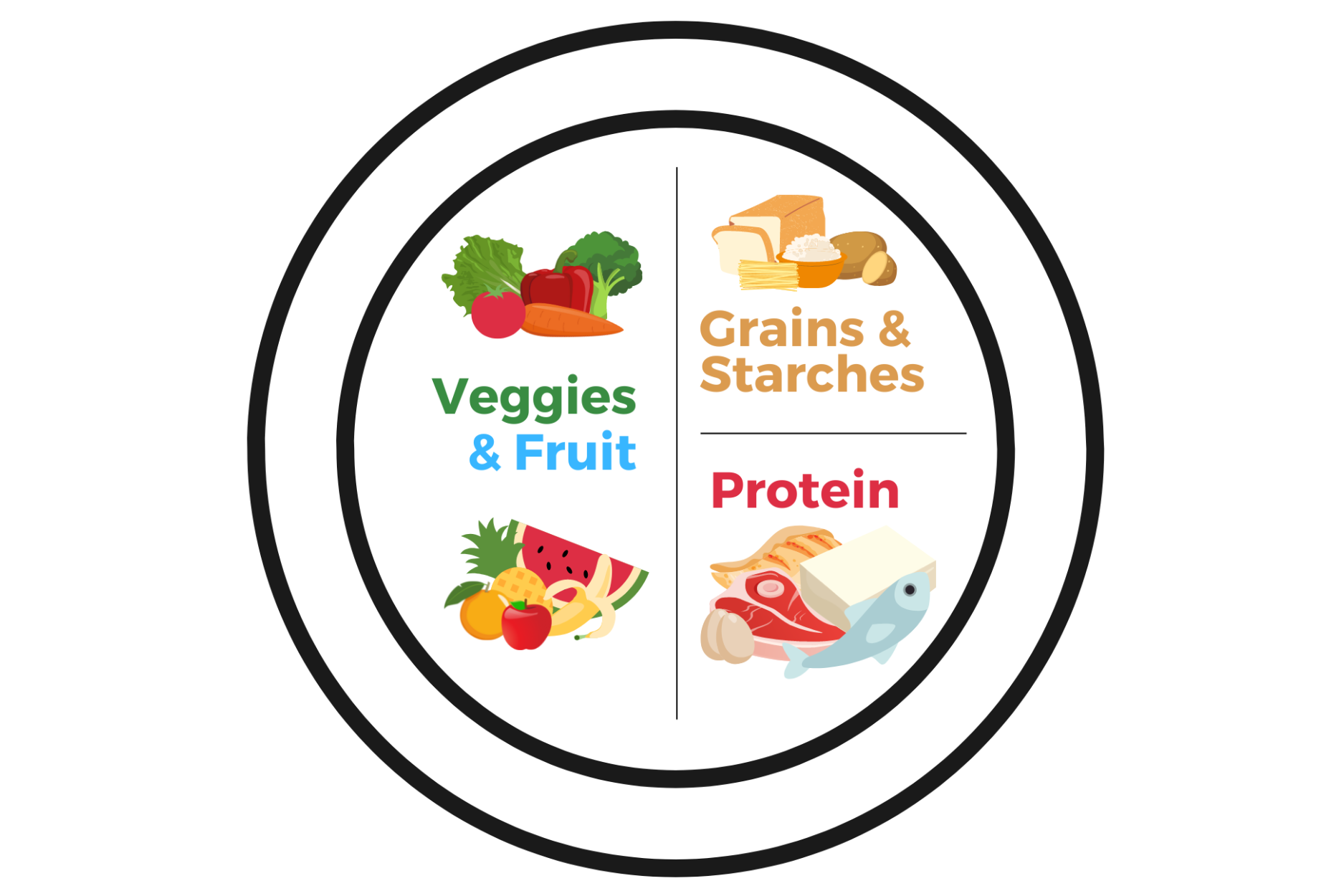
The Healthy Plate model is centered around 4 major food groups:
Protein: On at least a quarter of your plate, include a lean source of protein. Protein is both a source of energy for your body and a building block for your body tissues (like muscle). Eating a high-protein diet will help your body to more efficiently build muscle and keep your metabolism boosted. Prioritize lean sources of protein–items that come with little to no saturated fat like white meat (chicken breast & turkey breast), egg whites, fish, plant protein sources (tofu, tempeh, & edamame), and lean cuts of red meat.
Veggies: On half of your plate, include 1-2 servings of veggies. Veggies (or vegetables) are plants (or parts of plants) that you can eat. Fruits and grains are also plants, but we usually reserve the term “vegetable” for specific parts of the plant like the roots (like carrots and turnips), leaves (like lettuce and spinach), stems (like celery), bulbs (like garlic and onion), and flowers (like broccoli). Veggies are a great source of carbohydrates and healthy fats (i.e., unsaturated fats).
Grains/Starches: On the remaining quarter of you plate, include a grain or starchy food. Grains are essentially seeds and include foods made from wheat (bread & pasta), rice, quinoa, and oats. Try to include whole grains as much as possible (things like brown rice, oatmeal, whole wheat, quinoa, etc) in place of refined grains (white wheat, white bread, or white rice). Whole grains are more generally more nutritious, having more vitamins, minerals, and dietary fiber than refined grains.
Some vegetables (like potatoes, corn, yuca, and plantains) are high in Starches (complex carbohydrates). Starchy vegetables tend to be high-calorie, and may not be suitable for every diet (for example, people with Type II Diabetes may want to avoid them). These kinds of vegetables should be limited to no more than a quarter of your plate, especially if you are trying to burn fat.
Fruit: Fruits are plant products that tend to be higher in sugar content, giving them a sweet taste. This group is optional and can take up 1 portion of the vegetables side of your plate. They include things like berries, cherries, apples, grapes, pears, and mangoes. The higher sugar and calorie content of fruits make them a food to be eaten in moderation–no more than a quarter of your plate at meal times.
There are a few other principles to keep in mind when following the healthy plate model to maximize its benefits:
Healthy fats: Make sure to include healthy (unsaturated) fats like olive oil, canola oil, avocados, nuts, and seeds in your diet. Try to reduce your intake of saturated and trans fats to keep your heart healthy.
Stay hydrated with water: Drink water instead of sugary beverages. Water is the best choice for staying hydrated and avoiding unnecessary added sugars.
Be mindful of portion sizes: Also be mindful of portion sizes and not overeating. When filling your plate, start with smaller portions and listen to your body's hunger and fullness cues.
Limit refined carbohydrates: Try to limit your consumption of refined sugars coming from sweets, processed snack foods, white bread, and sugary drinks (like soda and fruit juices).
Following the Healthy Plate model is a great place to start when cleaning up your eating habits.
Its simplicity makes it generally easy to follow and remember. The visual representation of the plate with clear divisions makes it straightforward to understand the recommended proportions of different food groups. By simply filling half of your plate with vegetables and fruits, dedicating a portion to whole grains, and incorporating healthy sources of protein and fats, you can create balanced meals without the need for complex calculations or restrictive rules.
The Healthy Plate is also quite flexible and adaptable to individual dietary needs and preferences. In following the general guidelines, you have a lot of room for personalization. Whether you follow a vegetarian, vegan, or omnivorous diet, you can tailor the model to suit your specific requirements, preferences, and cultural influences. This adaptability makes it more sustainable and enjoyable, increasing the likelihood of long-term adherence to a healthy eating pattern.
Regardless of your fitness goals (whether you’re trying to lose weight, build muscle, or just improve your overall health), you can depend on the Healthy Plate model to roughly meet your daily calorie and nutrient goals.
If you’re trying to lose weight, following this model can help you to eliminate many of the foods that can cause you to eat too many calories every day while increasing your intake of lower-calorie, nutrient-dense foods. You’ll also boost your metabolism and immune system by getting the vitamins and minerals that your body needs to function properly to build muscle. By prioritizing whole foods, healthy fats, and good hydration, the Healthy Plate model also promotes good digestion, heart health, brain function, and reduced risk of heart disease and type 2 diabetes.
While you may use other strategies such as calorie tracking and meal planning, keep in mind that you can always fall back on the Healthy Plate model in any situation to roughly meet your healthy diet goals.