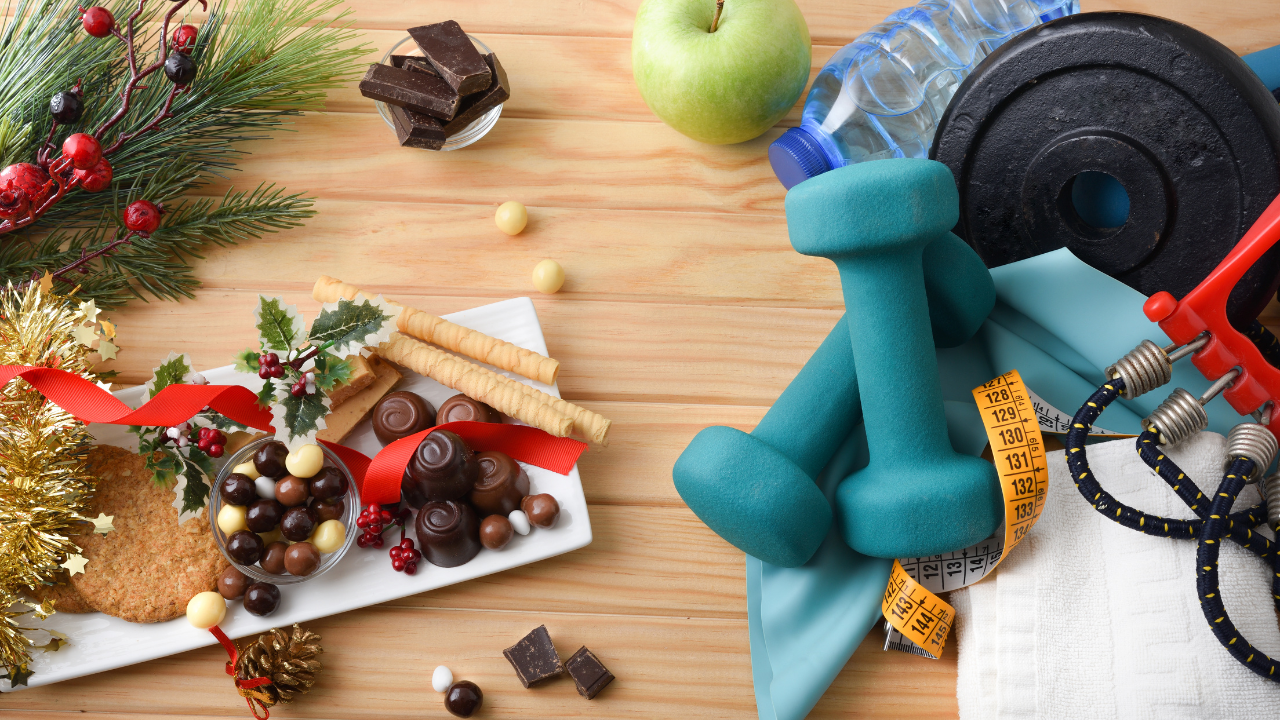
Many of you have expressed some worries about the upcoming holidays and the impact that they may have on your diet.
Remember that a healthy lifestyle is as much about your state of mind as it is about your physical state.
The holidays are supposed to be a time of celebration, a time for us to enjoy. They speak to our psychological and social health--and our need to have fun and enjoy our time connecting with other people.
This is just as important an aspect of your overall health and wellness as the food you put in your body and the exercise you do!
I don’t think it’s healthy for us to approach the holiday season focused on all the negative things that give us anxiety. Holidays for us grown-ups can be stressful enough as it is (with all the planning, cooking, buying presents, etc).
Focus on the positive parts--such as having some vacation time from work, spending time with loved ones, and yes, even that delicious calorie-packed holiday food. You know ahead of time that there are going to be a lot of yummy temptations coming at you during this season.
Rather than getting yourself worked up in anticipation of this, create a plan for navigating the season.
Here are my top tips for staying healthy during the holidays:
1. Load up on veggies.
Remember that according to the MyPlate model, half of what you eat every day really should be vegetables. Follow the same guidelines during your celebrations.
There are a lot of great holiday-worthy vegetable recipes out there. My personal favorites are two squash recipes that I got from The Complete Vegetarian Cookbook: one is the Roasted Acorn Squash with Browned Butter and Sage and the other favorite is Roasted Butternut Squash with Goat Cheese, Pecans, and Maple. These dishes are a delicious and nutritious addition to the holiday spread.
Try to include as many veggie-based recipes in your family’s celebrations as possible (if it’s within your control).
For example, if someone else is preparing the food for your celebration, check with your host and ask what’s on the menu. Are there going to be veggie dishes? If not, see if you can bring your own dish to contribute to the feast.
When you’re at the celebration, fill your plate up with the vegetable dishes, and eat these first before moving on to the other options.
2. Eat at home first.
If you’re headed to a party or celebration where you know there won’t be great healthy options, you can always just fill up on your own healthy food at home before you go. Then while you’re at the event, eat very light or very little. This will cut down a great deal on your unwanted extra calories.
3. Limit yourself when you indulge. If you know you’re going to be splurging a lot during the holiday season, then try to minimize the impact of those splurges by controlling your portion sizes.
You can also minimize the impact of your splurges by making more healthful choices for your “treats.” When you want to eat something sweet, for example, instead of eating a cookie or piece of cake, try instead to eat a piece of fruit. You can also make your Christmas cookies using Stevia as sweetener instead of sugar. Chocolate-covered fruit and nuts are also a great alternative to something like fudge.
Continue to track everything you eat and drink, and try to stick to your calorie and macronutrient intake goal even with the treats included.
4. Remember the 80/20 rule.
If none of the above options are available to you, then try to do your best and remember that it’s JUST. ONE. DAY. If this one day or this one meal of splurging is just a blip for you--if most of the time you are living a healthy lifestyle--you’re going to be okay! The impact of splurges here and there are pretty minimal when you’re doing what you should be doing most of the time.
Remember that the healthier and fitter you are overall, the more “wiggle room” you have for treat days and treat meals (your body is going to reflect what you do 80% of the time).
The most important thing is to monitor the formation of habits with what should be special occasion behaviors towards food.
Eating two slices of cake on your birthday is one thing. Eating two slices of cake every day for three months is another thing entirely!
When you notice an undesirable behavior forming around food or if you begin to habitually overshoot your calories--correct yourself through tracking your intake and getting yourself back on track by focusing on following the MyPlate model. Restart the Healthy Diet Makeover as needed!
5. Adjust your training.
If you’re like me, and you’re honest with yourself and admit that your calorie intake is just going to be higher right now, then we must have a plan ready for that too.
For this reason, many people plan a bulk phase in their training (in which they eat higher amounts of calories and focus on building muscle) during the holiday season.
This doesn’t mean that they go all-out with no restrictions on their holiday treat consumption. It just means that the focus of their training is shifted towards staying active and building muscle more than actively reducing fat.
Be creative! And use all these tips to ensure you’re eating a healthy diet during your holidays.