
Episode 11: The Ultimate Guide to Starting Your Fitness Journey
Getting in shape can be overwhelming! In today’s episode, I’ll share the 3-step process that I use to help my clients get started on their fitness journeys.
Personal trainer Jayd Harrison gives step-by-step guidance for building a body that you love.
Getting in shape can be overwhelming, but I’ve broken down the process into 3 steps that you can add to your life at your own pace:
👉 Step 1: Get More Active
👉 Step 2: Clean Up Your Diet
👉 Step 3: Work Out Effectively
I’ve used this 3-step process to help my clients over the last 10 years to make meaningful and sustainable changes to their body composition.
One of the things that makes this process so powerful is that it incorporates habit stacking. This involves attaching a new desired healthy habit to something you already do every day. Once something becomes firmly settled as a habit in your life, you “stack” another healthy habit on top of the existing one. This process repeats again and again as you build your healthy lifestyle.
This slow reshaping of your lifestyle is an effective way to change your body composition because it works with your body and brain—not against it. We humans are creatures of routine and habit. Any changes to our routines (no matter how healthy) are going to be resisted. This is why so many people struggle to lose weight and keep it off in the long run.
However, when we take the time to slowly integrate healthier behaviors into our daily routine by attaching them to already-existing habits, it makes the transition to a healthier lifestyle a lot less stressful on our systems. Although this method may be slower than the “quick fixes” that short-term diets, cleanses, and extreme workout problems may promise, in the long run, you’ll end up losing more weight, building more muscle, and maintaining your physique for a much longer time.
For this process to work most effectively, I suggest starting with the easiest-to-implement behaviors and attaching them to already-existing routines. From there, you can add on more pieces over time as your new healthy habits settle into place.
Step 1: Get More Active
One of the easiest healthy habits to start adding to your life is everyday movement. Our bodies are built for movement, and so they look and feel their best when we get up and moving frequently every day.
To stack this habit, I suggest incorporating things like going on short walks or doing some light stretches to something that you know you’re going to do on most days. For example, you could go for a 10-20 minute walk on your lunch break at work. Or add a short yoga stretch session to your bedtime routine to help you relax. Check out the list below for more “stackable” activities to increase your everyday movement:
Ways to Get More Active:
Take the stairs
Take the long route
Walk or bike to work or to the store
Desk exercises
Active breaks
Lunchtime walks
Use a standing desk
Standing meetings
If you’re a goals-driven person, you could set either a daily steps goal or a total-minute goal of activity each week.
> Daily Steps Goal: Use a pedometer, a fitness tracker, or your smartphone to track your steps every day:
Level 1: 3,000 and 5,000 steps (for sedentary individuals)
Level 2: 5,000 and 7,000 steps (for individuals who have some activity already)
Level 3: 7,000 and 10,000 steps (for individuals who are already somewhat active)
> Weekly Activity Goal: The American Heart Association recommends getting a total of between 150 and 300 minutes of moderate-intensity activity each week to be healthy and maintain a healthy body weight. Moderate-intensity activity is anything that gets your heart rate elevated in a moderate-intensity zone (between 64% and 76% of your max heart rate). Wear a fitness tracker or heart rate monitor to keep an eye on your heart rate as you do your daily movement.
Step 2: Clean Up Your Diet
Another easy “stackable” healthy habit that will help you clean up your diet is to follow what I call the Healthy Plate model. This is my take on the MyPlate & Harvard Plate models for healthy eating.
Whenever you sit down to plan a meal, keep in mind the following graphic:
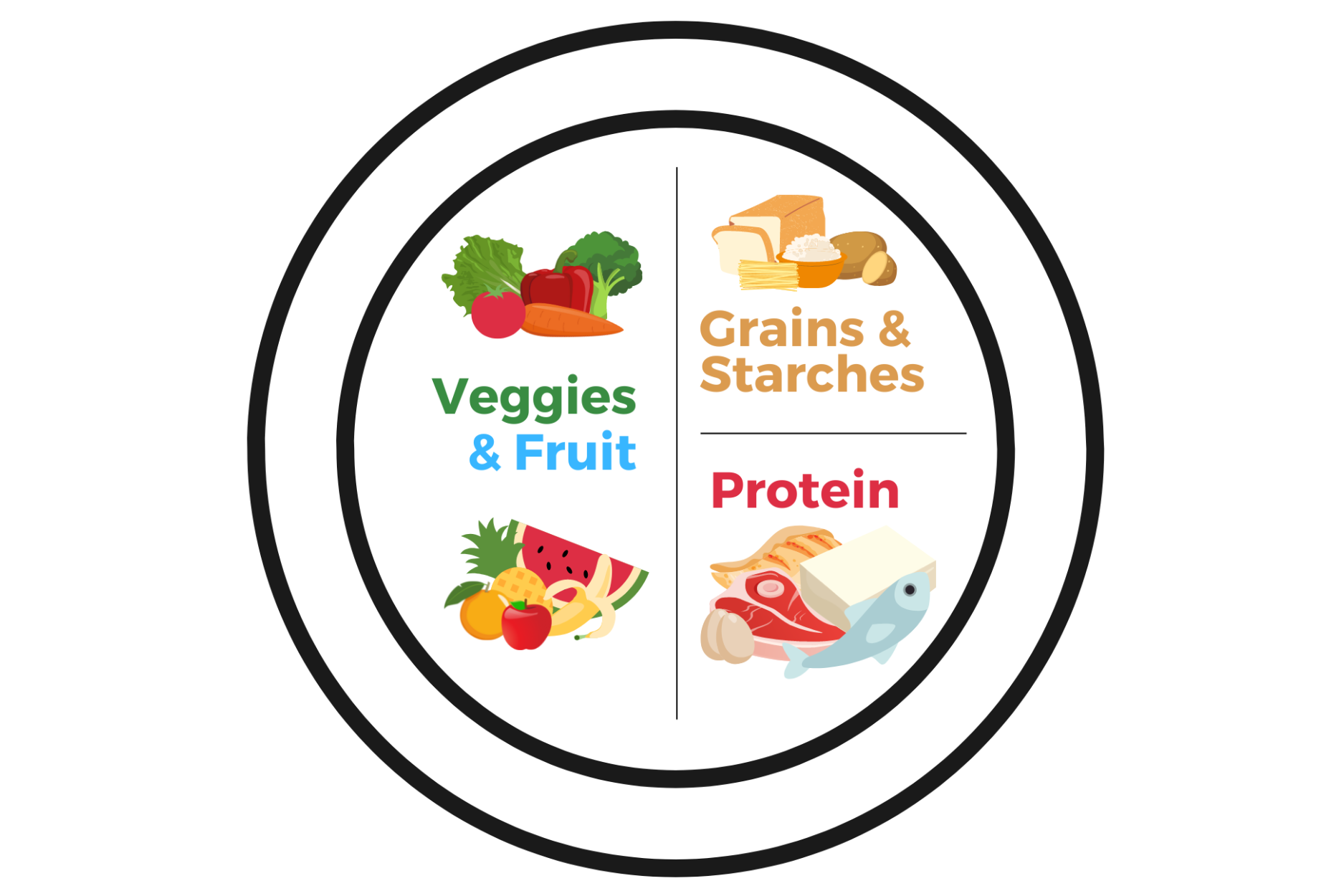
On half of your plate, fill it up with 1-2 servings of vegetables. On the other half of the plate, split the plate between a lean source of protein and either a grains-based food or starchy vegetable.
What I love most about the Healthy Plate model is its simplicity and adaptability. The Healthy Plate model encourages you to “plug and play,” using what you have available. Keeping the Healthy Plate graphic in mind, there are infinite combinations of healthy meals that you could create. All you have to do is know your food groups:
🍖 Protein: On at least a quarter of your plate, include a lean source of protein. Protein is both a source of energy for your body and a building block for your body tissues (like muscle). Eating a high-protein diet will help your body to more efficiently build muscle and keep your metabolism boosted (high-protein in this context means 20% of your daily calories come from protein). Prioritize lean sources of protein–items that come with little to no saturated fat like white meat (chicken breast & turkey breast), egg whites, fish, plant protein sources (tofu, tempeh, & edamame), and lean cuts of red meat.
🥦 Veggies (Vegetables): On half of your plate, include 1-2 servings of veggies. Veggies (or vegetables) are plants (or parts of plants) that you can eat. Fruits and grains are also plants, but we usually reserve the term “vegetable” for specific parts of the plant like the roots (like carrots and turnips), leaves (like lettuce and spinach), stems (like celery), bulbs (like garlic and onion), and flowers (like broccoli). Veggies are a great source of carbohydrates and healthy fats (i.e., unsaturated fats).
🌽 Grains/Starches: On the remaining quarter of your plate, include a grain or starchy food. Grains are essentially seeds and include foods made from wheat (bread & pasta), rice, quinoa, and oats. Try to include whole grains as much as possible (things like brown rice, oatmeal, whole wheat, quinoa, etc) in place of refined grains (white wheat, white bread, or white rice). Whole grains are more generally more nutritious, having more vitamins, minerals, and dietary fiber than refined grains.
Some vegetables (like potatoes, corn, yuca, and plantains) are high in Starches (complex carbohydrates). Starchy vegetables tend to be high-calorie, and may not be suitable for every diet (for example, people with Type II Diabetes may want to avoid them). These kinds of vegetables should be limited to no more than a quarter of your plate, especially if you are trying to burn fat.
🍎 Fruit: Fruits are plant products that tend to be higher in sugar content, giving them a sweet taste. This group is optional and can take up 1 portion of the vegetables side of your plate. They include things like berries, cherries, apples, grapes, pears, and mangoes. The higher sugar and calorie content of fruits make them a food to be eaten in moderation–no more than a quarter of your plate at meal times.
Give yourself time to practice and master building a Healthy Plate at every meal. If you feel overwhelmed, I suggest starting with just one meal a day. For example, you could say “At lunch time I’m going to follow the Healthy Plate model and eat like I normally do for breakfast and dinner.” Once you feel more comfortable with following the Healthy Plate at lunchtime, then you can begin to work on making your dinners follow the Healthy Plate model.
Another way to gradually “stack” this behavior is to break the Healthy Plate model down into its different food groups and work on adding just one at a time gradually to your daily diet. For example, you could say “I’m going to add a serving of vegetables at lunchtime” every day until it becomes a habit. After that, you could say, “I’m going to focus on getting a good source of protein in my lunch every day.” Once that habit is established, you could say “Now I’m going to focus on getting whole grains into my lunch every day.” So on and so forth.
The Healthy Plate model is a great place to start when it comes to cleaning up your diet. It will allow you to give your body the much-needed nutrition it needs to look and feel its best.
Many people make a ton of progress in their fat loss journeys by following the Healthy Plate model alone. However keep in mind that if you hit a plateau (i.e., stop making progress), then it may be time to consider tracking and managing your calories and macros.
When you’re ready to dive into calories and macros, you’ll need to track what you eat every day. But don’t feel like you have to track what you eat if you don’t feel ready for that yet! Just focus on the Healthy Plate model first.
If you’d like more support, check out my Healthy Diet Makeover program where I’ll walk you step-by-step through cleaning up your diet in more detail. In this program, I’ll teach you how to incorporate the Healthy Plate Model, set a calorie & macronutrient goal, and plan your meals around your goals. Click below to learn more:

Healthy Diet Makeover
Clean up your diet in 5 simple steps with nutrition coach Jayd Harrison.
Step 3: Add Workouts
Once you have a well-established routine of getting active every day, you can take your activity to the next level by turning some of that activity every week into workouts.
“Workouts” are just sessions of focused exercise. There are many different types of workouts, and some are better than others at helping your body to burn fat and build muscle.
I suggest turning 2 or 3 of your activity times each week into mobility & resistance training workouts. These workouts will help to improve your coordination, balance, and flexibility while combating the loss of lean muscle tissue that often happens when you lose weight.
Check out my series of guided workout videos on my vimeo channel if you’d like to learn how to tone your body and get strong:

Body Sculpt
Build strength and tone your body with expert-guided workouts by Jayd Harrison.
It takes a lot of brain power to incorporate new habits—so give yourself time in each step. With enough time and consistency, you’ll reach a point where you’ll be able to do each thing without having to think about it too much or push yourself to show up as much.
You’re not going to be perfect, but you don’t have to be. Just focus on doing 1% better every day 😊
And remember—I’m here to help. Come hang out with me while I’m live on my Twitch channel throughout the week. You can also connect in the Coaching Corner Discord server to find community and get your questions answered there. Check out the programs mentioned above if you’d like more help on eating better or working out.
-
(00:00):
If you don't make lifestyle changes and you're not constantly being aware of how you're eating and if you're not constantly managing an active lifestyle and living an active lifestyle, what happens with a lot of people is they finish their program, they reach their fat loss goal, and then they go back to what they were doing before they went on their program. That is why so many people end up gaining all of the weight back, they end up gaining all of the weight back, or even worse, they gain the weight back and then they end up heavier than when they lost all of that weight. And the problem is that they go back to the lifestyle that yielded a body that they weren't happy with. So again, there's no quick fixes. You can't just go on a fat loss diet or get into this workout program for a year, finish it, and then just go back to where you were before and expect your body to stay what you just earned. If you continue to engage in the types of lifestyle choices that yield weight gain or that make your body unhealthy, then of course the weight is going to come back.
(01:20)
Hey there, I'm Jayd Harrison, AKA Jaydigains, and welcome to the Coaching Corner Podcast. I'm really excited about today's episode because in it I'm going to share with you the three steps that I use with my clients to help them to achieve sustainable fat loss and build a body that they love for life. If you have tried to get in shape in the past, you've probably gone on a short-term diet that has you eating a super low number of calories, or maybe you've tried a cleanse that had you eating a super restricted diet of just a handful of things, or maybe you have tried a really extreme workout program that had you killing yourself in the gym and working really, really hard to get a sense of having a good workout and getting your butt kicked. I have been a personal trainer for 10 years and I'm here to tell you that there is another way You do not have to starve yourself or kill yourself in the gym to achieve a body that you love.
(02:17)
So today I'm going to share with you the three main action items that you need to take to build a life that supports a body that you love. Remember that your body is a reflection of your lifestyle. So if you go on and off extreme diets, on and off workout programs, you're going to really struggle to see sustainable progress. But if you followed these three steps that I lay out in today's episode, you're going to set yourself up for success. And not only that, you're going to keep that success for a longer period of time. This episode was recorded while I was live on my Twitch channel, which you can check out at twitch.tv/jaydigains. I go live throughout the week in the fitness and health category, and I also play some games there. So come and hang out anytime. Also, keep in mind that I do have an email newsletter. Make sure that you sign up for that at jaydigains.com to get notified when I post new episodes to the podcast, and you'll also get some discounts and news about different services and products that are coming this way. And without further ado, let's get into this episode and learn the three steps to set up the ultimate fitness journey.
(03:31)
A super common problem that a lot of people experience when they first try to start their fitness journey is they try to just do all the things at once. They try to do too much too soon, and this causes a lot of problems, like it can cause you to burn out, it can cause you to feel overwhelmed, and that overwhelm paralysis super, super common. So when people come to me to work with me as a personal trainer, a lot of times that's where they're coming from. Is this like I've been trying to do it on my own, I'm overwhelmed. I don't know what to do, I don't know how to sort through all of this stuff. I'm going to break down today, the framework and the process that I use to help my clients to go from never having worked out ever before in their lives to getting into a steady routine that's going to sustain them and help them reach their goals.
(04:20)
But when it comes to getting in shape, there are no quick fixes. Okay? There's a lot of fitness influencers out there. There's a lot of content out there that will kind of sell you this idea that, oh, you just do this one week detox or this one week cleanse, or you do this short workout plan that's only a couple of weeks and you'll burn all of your fat and you'll be good to go and you'll have a body that you love that is not the way to build a body that you love. That's a way to burn out, get injured. And a lot of times when people do these short-term detoxes or short-term cleanses or whatnot, a lot of times what happens is they might lose a lot of weight really, really quickly. Some of that weight is likely going to be water weight, especially if you're, if you've changed up how you eat drastically and you've cut out processed foods or simple carbs or high sodium foods, your body is going to retain less water, so it will weigh less and you may burn some fat.
(05:23)
But a lot of times with these crash diets where you drastically reduce what you're eating, they're not sustainable for the long run, and that's the problem with them. They're not sustainable. And what happens to a lot of people is that they do the detox, they do the whole thing, they may lose some weight, and then they go off of the detox or the cleanse and then they go right back to what they were doing before. And for a lot of people, what this means is that all of the weight comes back, or worse, the weight comes back with more weight, then you end up heavier than what you started with. And this is a really common pattern. And then what people will do is like, oh no, I need to do that again. And so they'll go on their crash diet a couple weeks later and they'll do it again.
(06:05)
They'll lose a bunch of weight and then they'll go off the diet and then they go back to what they normally do, and it's just over time they are getting heavier in the long run. So if you want to break out of this kind of binge restrict pattern, the best thing that you can do is set yourself up with something that you can sustain without having to go on and off diets. So what you want to do is build up kind of an approach to eating and an approach to exercise that you can sustain most of the time without having to starve yourself or without having to go without your favorite foods or killing yourself in the gym to burn off the calories that you eat, which you want, is to build something moderate and sustainable, and I can help you with that. So this is the approach that I use to help people to build little bit by little bit step by step by step, a healthy lifestyle that will allow you over time to build a body that you love.
(07:04)
So the best way to do it is to slowly build out a lifestyle that supports health, wellness and your body weight being where it needs to be in order for it to be healthy. The first step to building a healthy lifestyle that actually sets your body up for success is to get active. This is one of the easiest, quickest things that you can start to incorporate in your day-to-day life that can yield pretty substantial results. I know a lot of people who are able to just incorporate more walking into their life, just get moving, or they go for a walk for 30 minutes a day, something like that. And if you have just been doing no activity, if you just sit all day for work and then you sit when you come home from work or you get off work and you start building in some activity, what you're going to do is you're going to get your body burning more energy and you know what body fat is, it's your stored energy.
(07:58)
So as your body energy expense goes up, it's going to be more likely to tap into its energy stores. So a lot of people without making any other changes, are able to make substantial progress in their fat loss by just getting up and getting moving every day. So get active is what I recommend as the first step because this is also going to help you to build this sense of daily habits. Daily habits and lifestyle are what build up to a body that you love. What are you doing every day or what are you doing every week? So you can start to kind of build in this sense of I do something every day for my health, even if it's just one time a day, I'm doing something for my health, which is going for a walk, going for a swim, walking my dog, going, putting on some music and having a little dance party in the living room.
(08:47)
Do something that gets you up and active, even if it's just once a day, because what we're going to do is what we call stacking habit. Stacking is when you're just trying to incorporate one habit at a time and allow it to become a habit, allow it to get fully immersed into your lifestyle and how you just run your life, and as it becomes a habit and you don't have to think about it as much anymore, then you can add other stuff rather than adding in everything at the same time and overloading your system. So it's kind of like a little bit by little bit adding more stuff into your life. So getting active can look like one of two main ways that I usually encourage people to start getting active. One is that you can set a daily step goal for yourself. A daily step goal is one where you're actually keeping track of how many steps you take.
(09:38)
So if your goal is to get up and moving more and go for walks or walk more in your everyday life, setting a steps goal can help keep you accountable to this. So you can use a fitness tracker. I have an Apple watch. A lot of my clients use Garmin or Fitbits, right? You can also just get a cheap little pedometer that clips on your pants and it will count your steps, and if you have a smartphone, you can actually set your smartphone to track your steps. If you keep your phone on you, it's not going to be quite as accurate as using a fitness tracker device or a pedometer, but it's something. So track your steps in some way and set a daily goal for yourself of how many steps you want to take. If you are completely sedentary and you don't get any exercise at all, or you're very out of shape or very overweight when you first start getting active, remember that a little bit is going to go a long way here.
(10:35)
Okay? Initially I would say figure out how many steps you take on an average day first. So kind of get a sense of go ahead and get your fitness tracker or set your smartphone or use a pedometer to track your steps, get a sense of what your daily step intake is to start off with, and then I would set a goal of doing more than what you do right now. I typically will break it down in three different levels. For level one, your goal is going to be to get 3000 to 5,000 steps a day, somewhere between 3000, 5,000 steps a day. That's going to get you to the point where you are at the minimal requirement recommendations. Find out for yourself how many steps you take, and if you are getting 1000 steps a day, I would start with that level one goal, 3000 to 5,000 steps.
(11:23)
If you're already getting somewhere between 3000 and 5,000 steps, then shoot for between 5,000 and 7,000 steps a day. A level two goal, if you are already somewhere between 5,000 and 7,000 steps, then you can set a level three goal, which is between 7,000 and 10,000 steps a day, right? So you're setting a goal for yourself to move more than we already are, and this is a great way to do it. Give yourself at least a month to practice this to try to reach these step goals, this step goal every day, try to give it at least a month and that alone, you'll already notice that you're able to improve your health. You might be feeling more energized. You might start to lose some fat from that as well. You might also be sore. You might build some muscle from that because if you're going from very little activity, anytime you add in more activity, you're going to be challenging your muscles.
(12:15)
So you're going to be getting a little bit of strength in there as well by getting active more. So that's one way. Another way is to set a total minutes goal, and you can do this for every day or for every week total. The American Heart Association recommends getting a minimum of a 150 minutes total per week of moderate intensity activity or exercise. So moderate intensity activity or exercise is any activity or exercise that gets your heart rate up. Specifically if you're tracking your heart rate, you want it to be 64 to 76% of your maximum heart rate, and you can break up these 150 minutes, however works best for you. You can set a daily movement goal of getting 15 to 20 minutes in every single day, or you can say, on five days a week, I'm going to get my heart rate up for 30 minutes.
(13:04)
If you only have three days that you can exercise, then you'll say, okay, I'm going to go on a walk for 50 minutes, five, zero or almost an hour, and you can break it up however you like. Again, you want to kind of figure out what your starting base level is and kind of set your goal to something that's a little bit above that so that you're reaching a little bit further above what you already are doing. So I would start with 150 minutes total and try to get that in every day or a couple days a week. I'm going to tell you one thing to keep in mind is the more frequently you move, the better it's going to be for your health. You could technically do all 150 minutes in one day by going on this big walk over the weekend, but it's actually going to be better for your long-term health.
(13:44)
If you spread those minutes out and you get moving and get active a little bit every day, that's going to be best because especially when it comes to building habits, we're trying to build habits into your everyday life. Setting a movement goal for five to seven days a week is going to much better help you incorporate the future healthy habits that are going to help you build that body that you love. I have a little list of ways that you can increase your steps or just get more active if you usually use the elevator, if you live on a top floor of an apartment building or if you work in a higher floor, try taking the stairs instead of taking the elevator. That's going to help get your heart rate up. It's also going to give you more steps in your day-to-Day life. You can also park further away from the store or from work so that you get more steps in as you're going to the place between the place and your car.
(14:37)
If you do commute to work and it's close enough, you could also try an active way to get there. If it's close enough for you to walk or bike or skateboard, then start considering other modes of transportation that are more active. And the same goes for going to the grocery store or somewhere else that you frequent. If you can walk there or cycle there, if it's safe, if you live in a safe place for you to be able to do that, then try to do that more. That will get you more activity in your day-to-Day. Life Desk exercises is another one. I encourage my clients to break up their workday throughout the day. Set a timer for an every hour, hour and a half to two hours. When that alarm goes off, you can step up and just pace a little bit, do some stretches, get moving just at your desk just to get some blood flowing.
(15:26)
That's going to help increase your daily calorie burn. It's also going to help you to get more active. Take some walks throughout the day as well. You can take a break if you can from your work. Take a break and every hour or two get up. Go for a little five minute walk or on your lunch break, eat your food, and then go for a 20, 30 minute walk afterwards. That's going to help you. Let's see. You can play with your pets. That's one of my favorite ones. Or garden. Just try to look for ways to when you get off of work or when you're not working to do activities that keep you up and moving for fun. So gardening is one of my favorite activities that gets me active where I'm moving around a bunch or playing video games that are movement games or rhythm games like Beat Saber.
(16:11)
Nintendo has a bunch of fitness games as well. You could also join a kickball league or a softball league. I have clients who play cricket. That's a great way to socialize, but be active. Using a standing desk can be helpful, but only if you're moving around a little bit here and there. Again, whether you're doing a seated or a standing desk, you want to get moving and get that blood flowing every hour or two. You could also take some classes like some exercise classes or martial arts classes so that you learn a new active skill. Start learning a new active skill like Brazilian Jiu-jitsu. Why Thai boxing or some other skill that's active. Taking a class like a workout class is another great way to do this. However, I want you to keep in mind that you want to be careful of the intensity. Sometimes workout classes will make you work super, super hard.
(17:03)
I think body pump or bootcamps, these are the type of workouts that are really known for pushing you to the edge of your capacity, which can be really fun, but it's very easy to get hurt doing one of those. You don't necessarily need to do a crazy high intensity bootcamp style group fitness class. A cycling class might be good for you or a yoga class, something that's more gentle. You don't have to push yourself to the max in order to make gains. So just be mindful of that. If you are going to be taking some kind of high intensity class that really pushes you in the beginning, I would try to do that no more than once or twice a week. And then for the rest of your activity and exercise, do something that's more gentle. So go for walks, do yoga, swim or something like that, and then try to limit your really intense stuff to once or twice a week, otherwise you risk burning out or getting injured from overuse injuries because your body needs to be able to recover properly from the exercise that you're doing.
(18:07)
Your old pedometer feels like a lifetime ago. That was like a year and a half ago, right? That's when you started. Yeah, you crush it. PA grow. That was how you started your fitness journey, was just getting walking every day, right? I think I remember you walking to work and walking back from work, and that was the first step that you added in as well close to two years ago. Wow. How do you think starting with walking helped set you up for success for your fitness journey? In what way did that impact it's low impact? And if you're also monitoring how you eat, you can see the results. It demonstrates your actions matter. It shows you don't need to kill yourself to get results. Yes, yes. I love it. I love that for you. My personal favorite ways to get active, well, of course one is I love walking my dog.
(18:54)
I put on a podcast or a, what's it called, an audio book. So it is time that I don't feel like I am wasting. I'm not in front of my computer doing stuff. I don't feel not productive because I'm learning things that I need to learn in order to make progress in my business and be more effective. I mean, it's also a good brain break for me to be not in front of the computer. So that's my top favorite way to get active is walking my dog. And I try to do that for 30 to 60 minutes total a day, but I usually break it up in two or three different walks. I also love putting music on and just like dancing, especially if I'm cooking. If I'm cooking, I like to put music on and just kind of like dance as I cook. That's another favorite way to get active.
(19:39)
And also, I mean, my job is active. I train clients and I love it. I love training people. I love it. It's pretty low intensity, but it's constant movement because I'm demonstrating exercises. I'm standing, I'm walking around. I mean, I come alive when I'm teaching, which is one of the reasons why I think I will always have at least a handful of personal training clients always, because it does bring me so much joy. Even as my online business takes off, I so enjoy working with people and my online people too. I so enjoy helping people to get those wins and get those gains. But the one-on-one training sessions are, they're just so fun. They're fun. So activity, get your heart rate up, get moving. It all counts no matter what it is that you're doing because you don't necessarily need to even be in a gym to benefit your heart.
(20:29)
You don't necessarily need to go to the gym to actually start to build more activity into your life and become more healthy. And there's lots of reasons why different people don't like to go to the gym. So any activity that gets your heart rate up a little bit, think of it as a bonus. That's the place to start once you have kind of gotten into the groove of getting more active in your day-to-day life. Step two is cleaning up your diet because what you eat has a huge impact on how your body feels, how your body looks, your energy levels, how you recover from your workouts, and ultimately just the overall results. I mean, you can work out super, super hard every day of the week, and if you are not minding what you eat, your weight is going to go nowhere. You're not going to see results.
(21:23)
You're not going to see those muscles coming in because you're not being mindful of what you eat. So it's really important not only for the sake of getting into a calorie deficit for fat loss, but also just making sure that your body has the nutrients that it needs to stay healthy, because ultimately this is the goal is to build a healthy lifestyle. Our bodies look and feel their best when they're healthy. So health is the foundation here. So to clean up your diet, one easy peasy, lemon squeezy way to get started doing that is just to follow the healthy plate model. The healthy plate model is my take on the MyPlate or the Harvard plate model. So you can see here, this is from my blog. The healthy plate model is a picture of what your plate should look like when you sit down to eat a meal.
(22:11)
So this is something you can do without having to track your calories or track your macros. Generally, if you follow this model, you're going to be able to eat roughly the amount of nutrients and calories that your body needs to be healthy, which is a good place to start with the healthy plate model. You divide your plate in half at meal times and on one half of the plate, you fill it up with one to two servings of vegetables. And you want these vegetables to be like a variety, right? You don't want to eat the same vegetables every meal, every day, every meal. Variety is key here. So we can get a variety of nutrients. So we're talking broccoli, kale, dark green veggies is part of it, but also don't forget about beans, legumes, lentils, chickpeas, these kinds of things. Cucumbers, bell peppers. Think about eating the rainbow when it comes to your vegetables.
(23:08)
We want to eat the rainbow. We want to eat a variety of colors. We don't want to always be eating the same thing. Bodybuilders are notorious for eating, just like chicken, rice and broccoli every day for dinner or for lunch every single day. You don't need to do that, okay? You don't need to do that. Make it a variety. That's going to give you a variety of nutrients. You can do one to two servings of vegetables, or you can do one serving of vegetables and one serving of fruits. Fruits are things like grapes, cherries, strawberries, banana apples, oranges. So they have a higher sugar content. They taste sweeter. They are going to be a little higher calorie than most vegetables. So if you are specifically concerned with fat loss, I would keep this side of the plate just vegetables and only do fruit maybe once a day or twice a day, maybe no more than that on the other half of the plate.
(24:00)
You want to divide it between a good lean source of protein and either grains or a starchy vegetable. So lean sources of protein are going to be lean cuts of meat, white meat, poultry, right egg whites and vegetable proteins like edamame, tofu, Tempe, black beans. These are protein rich foods that are very low in saturated fats. Unsaturated fats are fine, but just keep in mind that we want to limit our intake of saturated fat with the grains you want to most of the time shoot for things that are whole grains. They're usually going to be labeled if it's made with whole grains. It's usually going to be on the label. These are things like whole wheat, quinoa, barley, and then starchy vegetables, which you can do instead of grains, which would be like potatoes or yams, squash, that kind of thing. So this is kind of an image of what you want your plate to look like.
(24:57)
And in general, if you follow this initially, after you have maybe been not eating so well, maybe you eat a lot of processed or packaged foods, a lot of high sugar foods, a lot of high sodium foods. If you switch to this model, it can help to improve your nutrition and your nutrient intake, and it might also help you. It's likely that it will also help you to burn fat because you'll probably reduce your calorie intake and give your body the nutrients that it needs and just the right amount of energy to be its healthiest. So this is a good place to start. Now, for some people, just by getting more active and following the healthy plate model, they're able to make a lot of progress in their fat loss journey, but also just like getting healthier. But especially if your concern is fat loss, eventually it may become important for you to consider your caloric intake, your calories.
(25:54)
This is not for everybody, and especially it can be really intimidating initially if you're a beginner to track your calories and then shoot for eating a specific number of calories. For a lot of people, that's very overwhelming and intimidating. In that case, I would say just try to follow the healthy plate model and just try to focus on increasing your veggies, increasing your protein, usually the parts that people struggle with the most. But eventually, you're probably going to reach a point where in order to continue making progress, you're going to need to consider how much energy you're bringing into your body every day, and is that energy matching up with your goals? I can walk you through the process of figuring out how many calories you should be eating every day and how to track your calories and how to plan your eating around your calorie goal.
(26:42)
In my Healthy Diet Makeover program, which is live now, you can find it, oh, stream elements, learn to eat better stream Elements. Just posted it in the chat. Learn to eat better with Jade's Healthy Diet Makeover program, which is live on Vimeo right now. So I go into much more detail in the lesson in the lessons calories count. So the first part of this program is how to eat the healthy plate model. And then once we get to get past that point and you want to go a little bit deeper, that's where we start to talk about calories. So the calories count intro, how to find your maintenance level, how to set a new calorie goal, how to reverse diet if that's something that you need to do, and then everything else kind of builds on that. So if that's something that you're interested in and you want to take that next step, I would suggest going to the Healthy Diet Makeover program.
(27:32)
But I'm going to leave it at that because what we're talking about is getting started as a beginner. So get the Healthy Plate model settled first, I would say. And then when you're ready to take that next step, you can join the Healthy Diet Makeover program and learn how to figure out how many calories you should be eating and balance your calorie intake. So those are the first two pieces. Get moving more, build a little bit more activity into your life, and then start cleaning up your diet little bit by little bit. You don't have to go crazy and do all the things. Just try your best to follow the healthy plate model. Try your best to get up and moving every day at your level. As long as you're doing a little bit more than what you were doing before, you're going to make progress.
(28:10)
I promise you, you'll make progress if you just start to do a little bit more than what you did before. And this is a huge mindset shift that you want to incorporate. If you want to have success and you want to build a body that you love for life is 1% better every day. You want to do 1% better than what you did the day before. Okay? If every day you try to do 1% better, make 1% better choices for your health, what you eat, 1% better choices for how much you get up and get moving, and by the end of the year, you're going to be 365% better than how you started. So try not to get too overwhelmed with this and just step by step by step, okay? And I got you. Okay? That's why I'm here. If you're feeling overwhelmed, that's why I'm here.
(29:00)
So let's continue to break this down into easy peasy, actionable step-by-step framework. Once you've got those two pieces in place and it's settled, it's a habit. You don't have to force yourself to show up as much because it's just part of what you do. It's just part of what you do. You get active every day. You go on a walk at lunchtime. It's just what you do. You don't even have to really sit with yourself and push yourself to do it. You just do it. It's just part of what you do. And also, you don't have to force yourself to eat vegetables or force yourself to put protein on your plate. It's just what you do. It's just how you think about food, right? Once you're at that place, you've got those first two steps in place. It's all a matter of refinement. From there, it's all a matter of turning up little knobs here and there, depending on what's easiest for you to manage at a given point and also according to what's important to you.
(29:59)
So the next little thing that I would suggest as your step three to building a fitness lifestyle and building a body that you love is to start incorporating actual workouts. Now, I know workout, but the word workout or fitness may seem like I don't want to do that because maybe your association with working out is super hard fitness classes like bootcamps or beach body type of thing. Maybe you've done group fitness for a while and you burned out on it. You don't need to do that. You don't need to kick your own ass. Remember, you just have to do 1% better. You just have to do a little bit more than what you did before. So when I'm talking about adding in workouts, for most people when they come to me, they're saying, I just want to burn fat and I want to be toned.
(30:47)
And by be toned, it means that they want to look like they've got some muscle. They want to look strong, but not like don't want to look like Arnold Schwarzenegger. They just want to look strong and healthy. So in order to be toned or look strong and lean, you don't have to work that hard. You really don't have to work that hard in the gym. In fact, a little bit goes a long way when you're doing resistance training. Resistance training is another secret elixir of building a body that you love. And resistance training is the type of workouts you're specifically trying to challenge your muscles to get stronger. Or I mean, you can do resistance training at home. You don't necessarily need to go to the gym. You can do it with body weight, you can do it with bands. A lot of times people do it with weights, weight training, or with machines.
(31:35)
But the whole point is that you're challenging your muscles to encourage them to get stronger. And resistance training, you don't need a whole lot of it to go pretty far, especially as a beginner, you only need to do two or three times a week. So you can take that activity time that you set aside for yourself as you've built up your activity levels for on two or three of those days, make your activity an actual resistance training workout. And for that, I have lots of resources for that. I would be careful about following along with just looking up workouts on YouTube, because a lot of times the workouts that you're going to find on YouTube are going to be more cardio than anything else. They're going to try to get you to burn a lot of calories. Our goal is not to burn a lot of calories within the space of the workout.
(32:20)
Our goal is to build muscle that is in the long run, going to make your body burn more calories. So it's kind of a time investment. It's kind of an energy investment. I have some programs that if you are interested in learning how to build muscle, I have my Vimeo guided workout videos. So you can go to my Body Sculpt program on my Vimeo channel. I also have workout plans on the Trainerize app. You can follow along with the workout plans that are specifically for teaching you how to do resistance training, and I have beginner level workouts that are available there regardless of what equipment you're using, whether you're just using bands, minimal equipment, or if you just want to learn with weights or if you have access to a full gym, there's several six month programs that will take you from zero to now on building muscle new workouts every single month.
(33:08)
The cool thing about those, especially working with the app, is that you can track your progress, which is something I encourage you to do is track your progress, track how much weight you're using for the different exercises or what bands you're using. Track how many repetitions you do in each set so that you can kind of see yourself as you make progress and get stronger, because that is going to be one of the key ways to keep you motivated as you build your healthy fit lifestyle, tracking your progress, seeing the data of like, oh, I was only able to use 10 pounds on my squat at the beginning of this, and now I'm squatting 60 pounds or something like that. Now I'm squatting 200 pounds maybe eventually. So seeing that progress can be very, very motivational. It's very helpful. So I have a bunch of information.
(33:56)
I have a bunch of programs that you can try, but the goal of resistance training is to challenge your muscles to stimulate muscle growth so that you get stronger and you can get that toned body. Don't be afraid that you're going to blow up and look really, really big and turn into a bodybuilder overnight. This is a common fear that a lot of women have. It's just not going to happen, okay? It's not going to happen. Even if you are trying to make it happen like me, even if you want big muscles like me, it's very, very hard. It takes a very, very long time. It takes eating a specific way, and it takes working out in a specific way, my friend. It is just not going to happen. Even if you want it to. It's hard even for men to build muscle and their bodies are the best equipped for that.
(34:44)
Their bodies are set up the most to be able to build muscle the best, and even men struggle with it. So if you're worried about getting too bulky, I promise you it's just not going to happen. If you do want to build big muscles, feel free to talk to me. I can help you with that. There's a specific way to do it, but you do need to get your foundation settled. So I would still go with one of my workout programs either on Vimeo or Trainerize, because you need to get your foundations first. You need to get a foundational level of strength and technique, and those programs will help you because that really is the next step. And once you start doing that, I promise you, you're going to be set for life if you can maintain this. Step one, step two, step three.
(35:24)
Step one, get more active. Step two, clean up your diet. Step three, do some resistance training. A couple times a week, you will be able to build a body that you love. Those are the foundations, and from there, it's just a of turning some dials up, turning some dials down, fiddling a little bit with the details, but this framework is going to sustain you for life, but you have to be ready to commit to maintaining this for life. It's not just that you add this step one, step two, step three, and then you just do that for a couple of months, and then you go back to what you were doing before. If you go back to what you were doing before, then your body is going to return to what it was before. Okay? Our bodies are smart, smart systems. They will yield results of whatever stimulus we give them.
(36:13)
So if you continue build a lifestyle where you're habitually giving your body the type of stimulus that it needs to build muscle, burn fat, have energy, fight off infection, which is what these three steps will allow you to do, if you commit to maintaining that for life, it's not actually that hard. It's hard initially because changing anything about our habits is always going to be hard, but once you get those habits established, you don't even have to think about it anymore. How awesome would that be to have a body that you love that you're able to maintain without feeling like you're depriving yourself or starving yourself or forcing yourself to do things that you don't want to do, because all of these things are just habits that you just do, just like going to work. Although I would say for a lot of people, going to work is something that you have to force yourself to do, but they become so ingrained into what you do that it doesn't become so much of a heavy weight.
(37:11)
So it may be overwhelming now, and if that's the case, I would say step one, just focus on one step at a time and have it stack just one thing at a time, step by step. Start with step one, one, step one feels like it's established. Then you move on to step two. Once step two feels like it's established, then you move on to step three. If you want to go crazy and you're super excited and you want to do all the things, feel free to try to do all three steps at the same time. Nobody's going to stop you. You're the hero of your journey. The world is your oyster. Do whatever you want. You're an adult, okay? Just keep in mind that the more things you try to do new at the same time, the less frequently you're going to be able to do it just right, right?
(37:56)
You're going to mess up a lot. Just know going into it that you're going to drop the ball a lot because you're learning and it's okay. Some people perform best when they feel overwhelmed or overloaded. They give themselves a lot to do. Just be patient with yourself. Let yourself be bad at it for a while. Just keep trying, keep trying, keep trying. Just give yourself, I say promise yourself for three months, you're going to try three months to incorporate this. Step one, step two, step three. Give yourself three months to try it before you say, this is garbage. This is not going to work for me. Give it three months of trying. Let yourself fail. Do something different. Okay? If you don't like what you see in the mirror, if you don't like how you feel in your body, then you have to do something different.
(38:47)
So give it a try. Let me know how it goes, and if you have any questions, thank you so much for watching or listening to this episode of The Coaching Corner podcast. I'm Jayd Harrison, AKA, Jaydigains. If you'd like more information on the content that I create or my coaching programs, check out jaydigains.com. You can also join the email newsletter to stay up to date on what I have going on in the Jaydigains community. And if you would like to join me while I'm live on my Twitch channel, make sure to follow me at twitch.tv/jaydigains. Now, I'll see you in the next episode. Make sure that in the meantime, you stay hydrated, drink some water, eat veggies, eat protein, and prioritize your self-care. I'll see you soon.

ABOUT JAYD HARRISON
Jayd Harrison (Jaydigains) is a personal trainer and content creator. She helps people to build muscle, burn fat, and clean up their diets with her online coaching programs and social media content. Check out some of Jayd’s coaching videos on Youtube, or join Jayd live on Twitch and follow on social media:
Sign up for updates ✉️
Sign up to get notified whenever new episodes drop. Opt in for more tips on training, fat loss, and nutrition by filling out the form below:
Your privacy is important to me! I will never share your information with any third party. Unsubscribe from the email list at any time.
Episode 10: Build a Healthy Mindset
In this episode, I talk about the essential mindset shift you need to make if you want to achieve long-term success in your fitness journey. Cultivate a mindset of body positivity that keeps you motivated as you build a body you love.
Kick negativity to the curb in this heart-to-heart mindset chat.
In this episode, I talk about the essential mindset shift you need to make if you want to achieve long-term success in your fitness journey. Cultivate a mindset of body positivity that keeps you motivated as you build a body you love.
Links:
-
(00:00):
I think that the first thing that you need to do is start to cultivate a mindset of body positivity in the sense that you tell yourself, I'm going to take the best care of myself that I possibly can.
(00:21)
Hey there, friend. Welcome back to another episode of the Coaching Corner podcast. It's been a minute since I last posted to this podcast and I want to let you guys know that I have been thinking about you every single day. Long story short, this has happened several times over my career as a personal trainer over the last 10 years, but I always reach this point where I'm maxed out in terms of how many clients I can take on, but I want to be able to serve my community with more resources that you guys can use to put your healthy fitness lifestyle into action. So I have been working on distilling my coaching that I give to my one-on-one clients into several different formats that you guys will be able to use to help move along in your fitness journey. So I've got courses coming along as well as follow along workouts on my Vimeo channel, as well as some books and workbooks that you guys can use.
(01:21)
All of that stuff has taken a lot of my time, so I apologize for not being more present here, but I promise the time has been well spent and we've got lots of goodies coming your way. So don't worry, we are getting back on track with regularly coming out with new episodes of the Coaching Corner podcast, and I am still showing up live on my Twitch channel a few times a week to answer your questions and create new content. Make sure though that you have subscribed to my email list because that is where I'm going to be sending a lot of the goodies and announcements as these things come out. You can go to jaydigains.com or jaydharrisonfitness.com. Make sure to also subscribe to this podcast wherever it is that you listen to your podcasts or subscribe on YouTube if you're watching me there.
(02:08)
Now, today's episode I'm super excited about because we are starting back up with a bang moving forward with the Coaching Corner podcast. I'm going to be giving you guys tons of tips on how to implement healthy habits into your life to improve your relationship with yourself and improve your relationship with your body as we move along. This episode was recorded when I was live on my Twitch channel. You can follow me on Twitch. That's twitch.tv/jaydigains. If you'd like to hang out with me while I'm live and ask your questions there. So without further ado, let's get into the episode.
(02:44)
I tell my clients, they always come to me with these ideas of like, I want my arms to look like this, and I want my belly to look like this, and I want my legs to look like this. Instead of focusing on trying to get our bodies to look a specific way, like that one fitness influencer or that one model, what I teach my clients is, first of all, let's focus on health.
(03:06)
A lot of things that you're doing right now that are not healthy and the result of those things is the way that your body looks and how it feels is in a lot of ways, things that you don't like. So I say, let's first focus on getting healthy, doing all of the things that your body needs in order to be its healthiest and however it is that your body looks when it is at its healthiest is how it should look, and your body will reveal to you what it's supposed to look like once you have all of those things in place where you are living your healthiest, when you're eating your healthiest, when you're exercising in a healthy way, when you are drinking plenty of water, when you're sleeping as much as you should, when you're managing your stress, what your body looks like at that point is how it should look when your body is at a healthy body fat percentage.
(03:58)
We can't tell our body where to store fat and where not to store fat. For some of us just genetically, we're going to be more predisposed to our body, storing more fat in our bottoms or up top, and we can't really change those genetics. But what you can control is the health of your lifestyle and how you eat and how you exercise. And I would challenge you to start trying to absorb the idea of I'm going to love my body and I'm going to appreciate my body and how it looks when I'm taking the best care of it that I can, and however it looks when I'm taking the best care of it that I can is how it should look. And I love it for that, right? I think that we need to approach it is more of a body positivity type mindset, but not the type of body positivity that says, oh, it's totally okay that I am unhealthy.
(04:58)
I mean, it is okay. I mean, at the end of the day, you're a grownup. Do whatever the fuck you want it is your life. But if you're unhappy with how, look, if you're unhappy with how you look now before you've made any healthy changes to your life, it's still very possible that you could be unhappy with how you look even when you are your healthiest because you may have a poor relationship with yourself and you may just always be wearing these lenses of looking at yourself, picking apart the things that you don't like. Because I'll tell you right now, there's bodybuilders who have gorgeous aesthetic bodies, and when they look in the mirror, they're looking for their faults and they've already decided in their mind to look for their faults. And so even though they had these beautiful bodies that are sculpted and amazing, they still don't like themselves very much because their relationship with theirselves has not changed.
(05:50)
So I can absolutely help you to change how your body looks by getting healthier, and I can help you to get the most toned or lean and just healthy looking. But if you don't do the inner work to change your relationship with yourself and to question and challenge the beliefs that you have about your body and about yourself, you're going to be right back where you started. Maybe you'll look different, but in terms of how you feel about yourself, nothing will have changed. So I think that the first thing that you need to do is start to cultivate a mindset of body positivity in the sense that you tell yourself, I'm going to take the best care of myself that I possibly can. We're not going to work out to punish ourselves. We're not going to starve ourselves to punish ourselves for how we look or for overeating.
(06:45)
Our mindset going into this journey is going to be, I'm going to learn to take the best care of myself that I possibly can because let's be honest, nobody else is going to do that for you. Almost all of my friends have small children. Almost all of my friends have babies. I'll be bouncing little Kai on my knee and just looking at him or little Addie or little Annie, and I'm just like, how amazing it must be to just have a giant person totally in tune with your needs, just taking care of you When you're unhappy, you need a nap, you need to eat something, maybe you need some exercise, you need to get your wiggles out. There's some giant person who can be like, you know what? Let's go outside and play. Let's have a snack and then make you a snack and orchestrate your day.
(07:35)
But as adults, we don't have that. There's no giant person who's going to take care of us unless you're in a particular kind of relationship, but for most of us, you are it. You are the big person in your life. You're the person who has to take care of you, and nobody is going to do it better than you because you alone are able to be in tune with what you actually need. Once you learn how to listen to your body and trust it, to tell you what it needs something, once you learn how to listen to your body, once you learn how to listen to your brain and to your central nervous system, then you learn how to take better care of yourself. So we want to enter into this journey with this mindset of, I am going to take the best care of myself that I can and I'm going to learn how to take better care of myself, and as I learn to take better care of myself, I'm going to take better care of myself.
(08:31)
So that's kind of the mantra that I want all of us to have as we enter into this journey of trying to eat better or into this journey of trying to exercise and just take care of ourselves. The whole point is why you're here. Why you want to start eating better is because you want a better life. You want to thrive, but you're not going to thrive if you make all of the changes that I teach you how to make and you haven't changed your relationship with yourself, and you haven't changed how you see yourself and see your body. So moving forward, we're going to try to fix that mindset. We're going to cultivate it. We're going to practice things to ourselves. We're here to take the best care of ourselves that we can. I am the only one who can take care of me, so I'm going to strive to take the best care of me that I can, and I'm going to keep learning how to take better care of myself.
(09:22)
So that's the first thing that I want all of us to think about when it comes to our fitness journeys. And I want us to try to move away from that shame-based mindset that everybody, if you've tried to get in shape before or if you tried going on diets or if you tried those crazy high intensity programs like beach Body or whatever, it's all about it trying to exhaust yourself. It's all these extreme things of, it's almost like you're going this, I got to punish myself. I got to whip myself into shape. And that is based on a really old fashioned authoritarian model of influencing, and it doesn't work. At least it doesn't work, and it's not healthy. If you want to establish a healthy dynamic with yourself or with any person, whether it's like your child or an animal, if you want to be in a relationship with someone and you want to have a good relationship with them, if you have a dynamic with that person of if they mess up, you're going to punish them and you're going to make them suffer, that's not going to be a healthy relationship.
(10:32)
And I'm sure you probably have been in relationships like that. Maybe you were in a relationship like that with your parents or with a romantic partner or with a friend. It doesn't feel good to be in a relationship with somebody who when you mess up and even if you mess up because you don't know better, you know that you're just going to be punished for it. All this does is create a cycle of fear and shame, and you cannot grow, right? You cannot grow in that kind of a context. So instead, if you want to develop a better relationship with yourself, you're going to have to develop some compassion for yourself. And self-acceptance, we're going to have to practice some self-acceptance. At the end of the day. Most of the time, people's behavior is driven by survival. We're all just trying to survive. We're all just trying to survive.
(11:24)
We're all just trying to stay alive from one day to another. And a lot of the behaviors that you have are likely coping mechanisms that you picked up at some point in the past, and they worked at some point in the past and helped you to survive from one day to another. Even behaviors like overeating and binge eating, a lot of times people engage in those types of behaviors because they are under extreme stress and they have no dopamine and binge eating or returning to food and comfort eating may be the only kind of comfort, the only relief from the stress of their environment or the relationship or whatever it is. So that behavior was a coping mechanism that helped you to survive this very, very stressful period. And the problem becomes when that coping mechanism no longer serves us. So if we want to switch that behavior, if we want to stop that behavior, we're not going to do it by causing more stress on our system, by shaming ourselves and punishing ourselves either by over-exercising or starving ourselves a bunch.
(12:30)
That's why people end up on these binge-restrict cycles, because you're not going to fix the binging behavior, which is a coping mechanism of stress by adding more stress to your life. Do you see what I mean? It's not going to work. So changing your relationship with yourself to where I want you to take this approach of I'm trying to build a healthy relationship with myself, one that is accepting of where I am, and also approach yourself with a little bit of gratitude because some of the behaviors that you have may have been the one thing that kept you alive at some point in the past. So in that context, they were a good thing. But now, once we understand, once we learn the role that those things played in our lives and keeping us alive at that time, we can give ourselves other options that don't cause these negative side effects like weight gain or messing up our insulin sensitivity, for example, with the example of overeating or eating lots of sugary food.
(13:30)
So just try to keep that in mind, these behaviors that you are struggling with with your eating, try to have a little bit of compassion for yourself because those behaviors at some point probably saved your life, or they at least helped you to survive something that you were going through that was really stressful or hard. But you can give yourself other options. And here's the thing is if you don't change that relationship with yourself and learn how to give yourself other stress relief mechanisms, you're going to find yourself falling back on those behaviors again and again and again because they're kind of programmed into your system at this point. So you're going to have to open your mind to maybe accepting these behaviors is like, yeah, this is something that I did and it helped. It did have its place, but I can grow and I can learn other coping mechanisms.
(14:22)
I can learn to self-soothe in other ways while I also learn to eat in a way that supports how I want to look and how I want to feel. So as I teach you how to eat better, I want you to really try to reflect on your current patterns and view them with compassion. You bored eat. Sometimes dopamine, dude, people with ADHD are really susceptible to this people with ADHD and people with autism, ASD, because it's stimulus, right? And a lot of times we need the stimulus or we think we need that stimulus, but when you learn how to give yourself other stimuli that help to give your brain the dopamine release that it needs, or to help stimulate you the way that you need in a way that you're not adding more calories than what your body needs or putting food into your body that isn't really good for you, you can learn other methods.
(15:21)
So that is the mindset shift that I just kind of want to introduce as we head into this journey of transforming our bodies and transforming our lifestyle around how we eat or how we exercise. We want to have that relationship with our body. We want to develop a healthy relationship with ourselves, and we want to approach ourselves with compassion and understanding while at the same time we're learning how to do better. Because you know what? In the past, if you had had access to the knowledge that you're going to gain through your time here, and if you were put into an environment that was healthy, you probably would've made different choices. You can only do so much with the information that you had at the time, so you did the best that you could with what you had. And a lot of these behaviors, they start as when we're children, right?
(16:17)
If you're a child in a high stress environment, that might be where you learn to stress, eat, or binge or restrict or whatever. And as children, we don't know any better, or even maybe later in life when you're a young adult and you're just sprung out onto the world, it's just there you go. Get a job and pay bills and whatever situation that these behaviors may have started and you were doing the best that you could with what you had at the time, and you might not have had the knowledge or the stability to be able to do better. And that's okay. It's okay. You're still alive, you're still here. So as long as you're still alive and you're still here, we can still do better. So we're going to learn how to do better, but I just want to make sure that we have that attitude moving forward or that we're going to try to practice having that attitude moving forward.
(17:08)
Thank you so much for watching or listening to this episode of The Coaching Corner podcast. Again, I'm Jayd Harrison, AKA Jaydigains. Make sure to stay subscribed to this podcast because I've got a lot more juicy content coming your way about how to eat better and exercise to build a body that you love. I'll see you in the next episode. In the meantime, make sure that you are eating your veggies, eating your protein, drinking water, and prioritizing your self-care. And I will see you soon.
ABOUT JAYD HARRISON
Jayd Harrison (Jaydigains) is a personal trainer and content creator. She helps people to build muscle, burn fat, and clean up their diets with her online coaching programs and social media content. Check out some of Jayd’s coaching videos on Youtube, or join Jayd live on Twitch and follow on social media:
Sign up for updates ✉️
Sign up to get notified whenever new episodes drop. Opt in for more tips on training, fat loss, and nutrition by filling out the form below:
Your privacy is important to me! I will never share your information with any third party. Unsubscribe from the email list at any time.
Episode 9: How to Combat Body Dysmorphia
Check out these tips if you’re struggling with body dysmorphia after losing weight.
Check out these tips if you’re struggling with body dysmorphia after losing weight.
One of the first things to happen when you stop eating a calorie deficit is that you begin to lose muscle definition. This can send some folks into a panic. They begin to think: “Oh no! I’m going to lose my gains and end up exactly where I started!”
If you’ve experienced that yourself, then make sure to give this episode a listen or watch it on Youtube.
Body dysmorphia is an obsessive preoccupation with perceived flaws in your appearance and body image. It makes it difficult to see your own body accurately since you focus on what you perceive to be flaws or defects.
People who have lost fat often experience body dysmorphia in the form of perceiving themselves as overweight or “fat,” even when they are within a healthy body fat percentage. They often struggle to see their own progress and are very sensitive to the normal, healthy fluctuations of body weight and size. Any slight change in their weight or waist size can send them into a panic or depressive state.
Hyper-focusing on the shape of your body or weight can negatively impact your motivation to keep going in your fitness journey—especially when it comes time to build muscle.
In this podcast episode, I talk about the importance of doing the inner work to develop a healthy relationship with yourself and your body to help combat body dysmorphia. Seeing a licensed therapist, journaling, and practicing mindfulness meditation are all great ways to develop a better connection with one’s self.
I also suggest focusing on celebrating your gains and the positive changes you’re making in your life to combat the inner critic. Use a journal or the ABC Trainerize app (if you’re subscribed to one of my workout programs below) to track your workout progress, stay disciplined, and identify obstacles.
-Jayd
ABOUT JAYD HARRISON
Jayd Harrison (Jaydigains) is a personal trainer and content creator. She helps people to build muscle, burn fat, and clean up their diets with her online coaching programs and social media content. Check out some of Jayd’s coaching videos on Youtube, or join Jayd live on Twitch and follow on social media:
Sign up for updates ✉️
Sign up to get notified whenever new episodes drop. Opt in for more tips on training, fat loss, and nutrition by filling out the form below:
Your privacy is important to me! I will never share your information with any third party. Unsubscribe from the email list at any time.
Episode 8: Tips for Staying Consistent
In this short episode, I give 3 main tips for building that consistency. When it comes to reaching your fitness goals, staying consistent over a long time is crucial!
In this short episode, I give 3 main tips for building that consistency.
When it comes to reaching your fitness goals, staying consistent over a long time is one of the most important things.
Quick-fix diets and intense workout plans might get you fast results--but these results rarely stick in the long term for most people.
If you want to burn fat and keep it off for good, you need to change your lifestyle to something you can sustain over the course of many weeks, months, and years.
First, I suggest that you get on a schedule. I'm a big fan of time blocking. Each week, I use an appointment calendar to block out my time for my workouts, personal training sessions, and other work. This helps me to stay organized by ensuring that I'm setting time aside for my workouts.
In addition to getting on a regular schedule, I also recommend getting onto an actual training program. Many people just show up to the gym without a plan and wonder why they never seem to make progress. Getting on a training plan will ensure that your workouts are the most effective for pushing you toward your goals. Check out my programs for beginners listed below!
If you struggle to stick to a schedule and training plan, I also recommend working with a personal trainer. Meeting with a personal trainer every week has helped many of my clients to stay consistent and make consistent gains. Look for a trainer at your local gym or check out my online personal training program.
Programs for Beginners
Check out my collection of DIY programs for building beginner strength, delivered via the ABC Trainerize app. DIY programs are $27 monthly, cancel at any time.
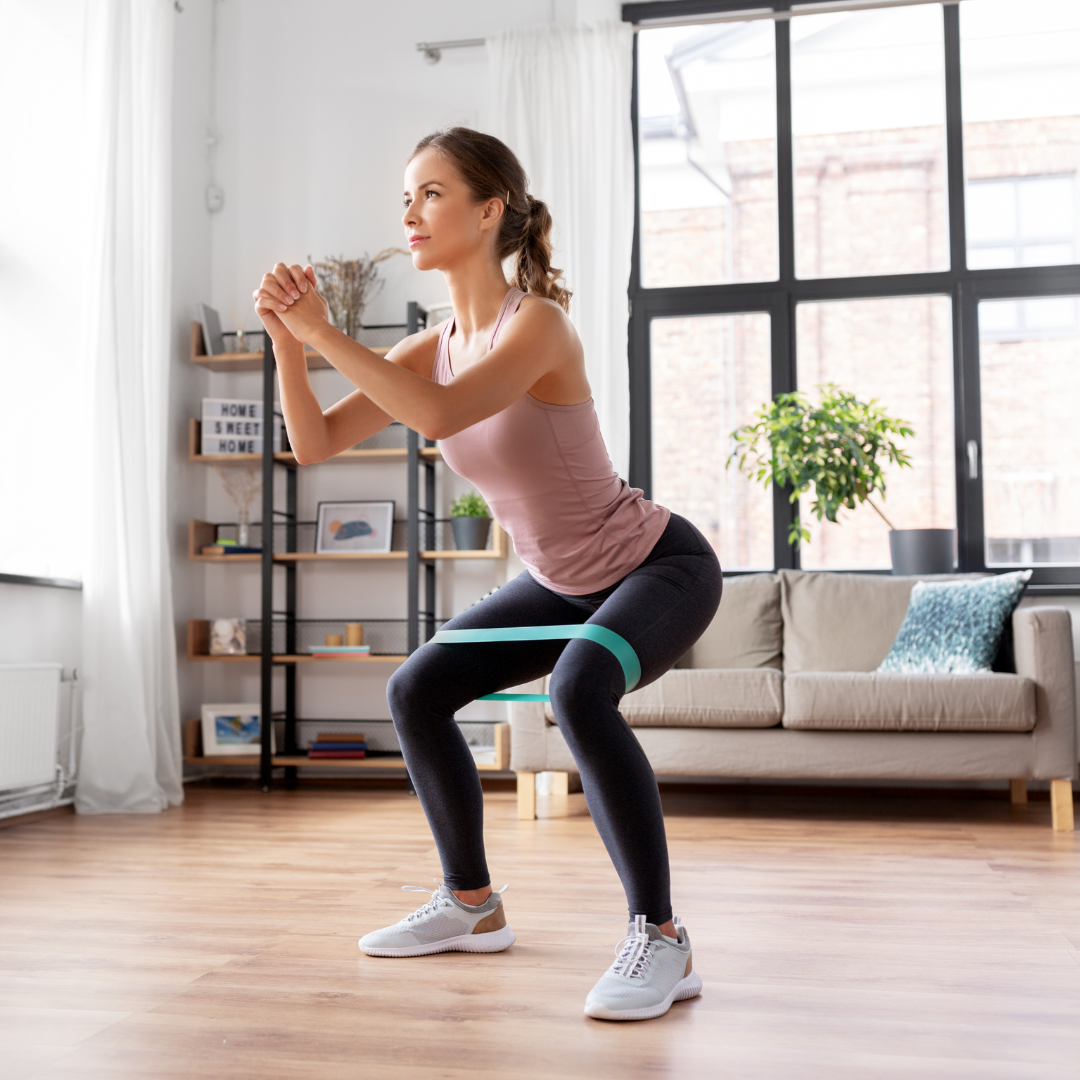
Beginner Body Sculpt Foundations (Bands)

Beginner Body Sculpt Foundations (Weight Training)
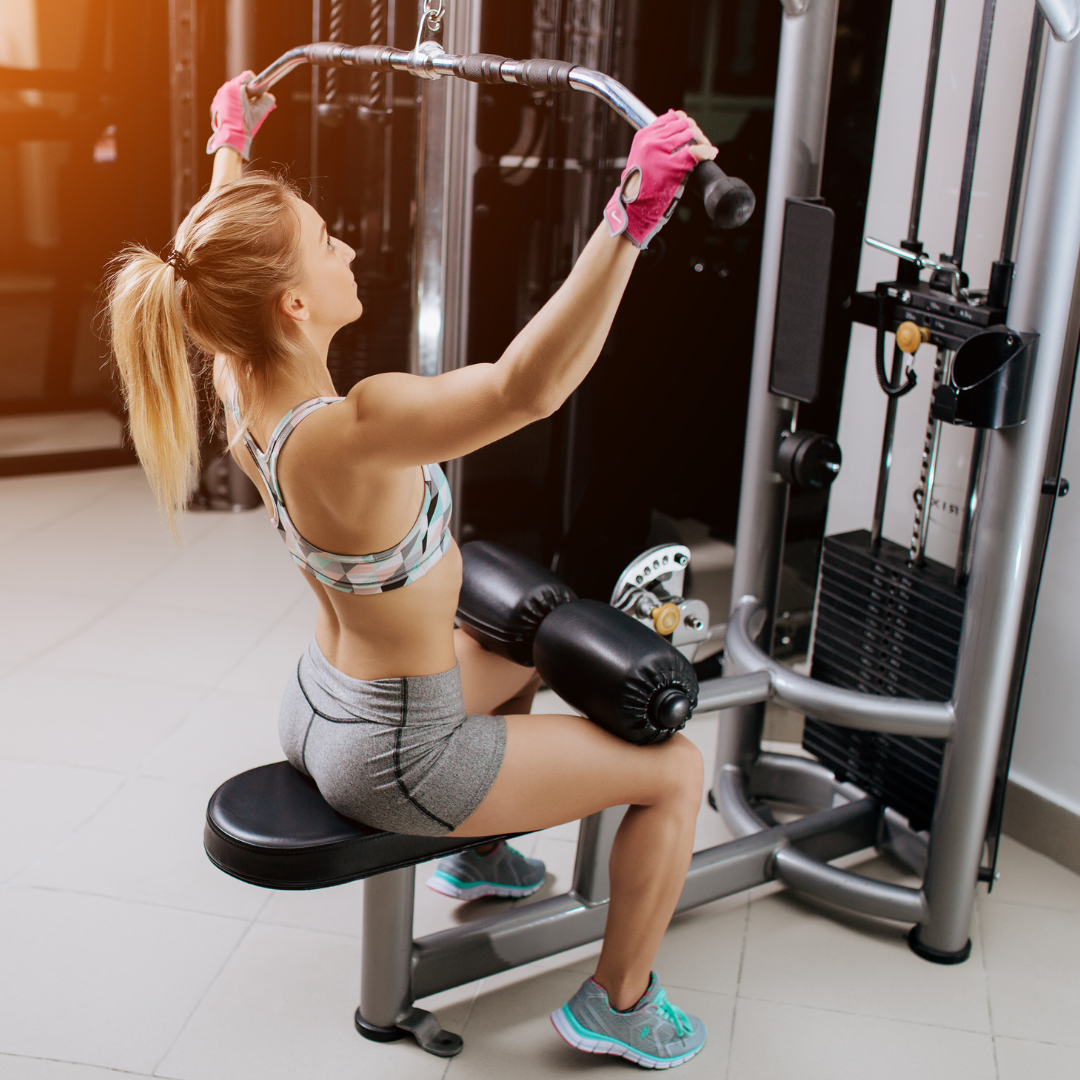
Beginner Body Sculpt Foundations (Full Gym)
ABOUT JAYD HARRISON
Jayd Harrison (Jaydigains) is a personal trainer and content creator. She helps people to build muscle, burn fat, and clean up their diets with her online coaching programs and social media content. Check out some of Jayd’s coaching videos on Youtube, or join Jayd live on Twitch and follow on social media:
Sign up for updates ✉️
Sign up to get notified whenever new episodes drop. Opt in for more tips on training, fat loss, and nutrition by filling out the form below:
Your privacy is important to me! I will never share your information with any third party. Unsubscribe from the email list at any time.
Episode 7: Tips for Building a Home Gym
Build your home gym one step at a time with my equipment suggestions. Start with resistance bands and progress to weights over time.
Build your home gym one step at a time with my equipment suggestions. Start with resistance bands and progress to weights over time.
I don’t know about you, but I’m not a big fan of big-box gyms. They seem to often be crowded and noisy—whereas I prefer to work out on my own in a quiet space. For this reason, a few years ago I turned my living room into a home gym and filled it with the equipment that I love to use in my workouts.
In this podcast episode, I give tips to help you build your own home gym as a beginner. You don’t have to go all-out like me and get a squat rack, barbell, weights, and cardio equipment immediately. In the beginning of your fitness journey, you can start building strength at home with relatively inexpensive equipment that doesn’t take as much space. Check out the episode and equipment list below!
Resistance Bands
The first thing I recommend you get for your home gym is resistance bands. These are relatively inexpensive and don’t take up much space.
if you don’t have much space available in your home, bands are a great option. You can just store them away in a drawer when you’re not using them—so you don’t need a dedicated “gym” room or area in your home.
Bands are also a great option if you’re a beginner to fitness. They provide a relatively safe way to learn resistance training exercise technique while building foundational strength.
Intermediate and advanced exercisers can also benefit from using bands—especially for muscle-building and strength accessory exercises.
There are 3 main types of resistance bands I recommend you stock up on: mini bands, tube bands, and superbands.
Mini Bands (Loop Bands)
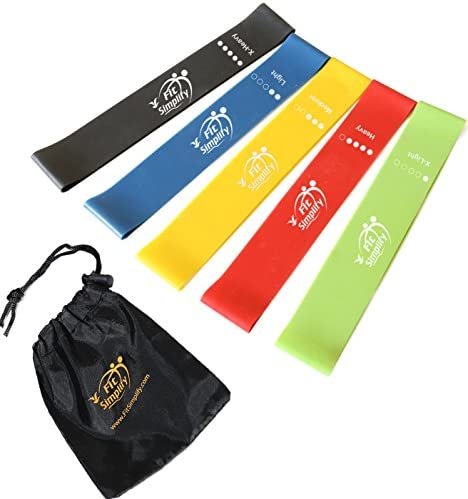
These small, loop-shaped bands are great for exercises like monster walks, banded squats, and my favorite rear delt exercise—the single-arm high row.
I recommend getting a set that is graded for different resistance levels so that you can track your progress over time. Personally, I almost always recommend the Fit Simplify 5-pack of mini bands to start with. These bands are rated for different resistance levels, which allows you to better track your progress as you get stronger.
Tube Bands (Handle Bands)

Tube bands are great for many upper-body exercises. You can anchor the band to a door or hook in the wall for exercises like lat rows, chest presses, and pull-downs.
There are many brands and varieties of tube bands, however I recommend getting a set that is graded for different resistance levels. For instance, the set that I use is labeled from lightest to heaviest according to weight equivalence (10lb, 20lb, 30lb, etc). This will allow you to track your progress as you get stronger as over time you’ll need to use heavier bands.
Superbands (Monster Bands)
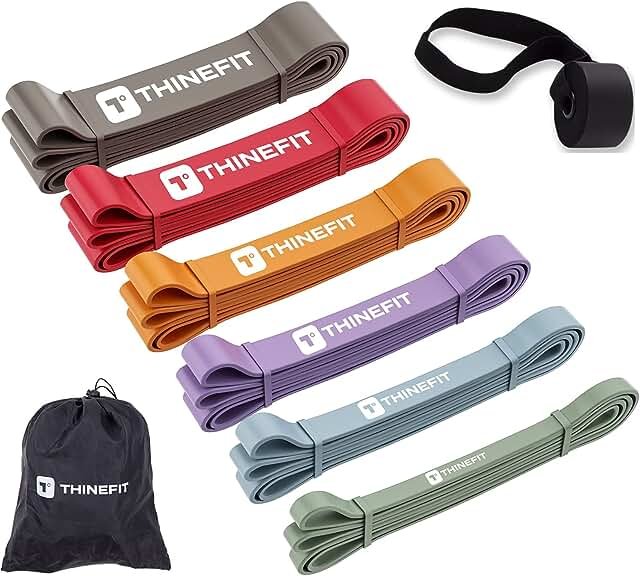
Superbands are long loop-shaped bands that are great for a variety of exercises like kickbacks, good mornings, deadlifts, and mobility exercises. You can also use them as support for pullups and other hanging exercises.
As with the other bands, I recommend getting a variety set of superbands that are rated for different levels of resistance. Some exercises you’ll need lighter bands whereas others will require heavier bands.
Floor Mats
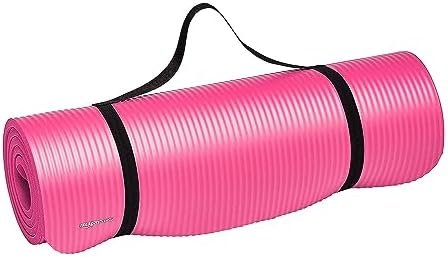
Another great piece of equipment to include in your beginning home gym is an exercise mat. I recommend getting two types of exercise mats. First, you should have one that is thick and squishy to give some cushion to your body while doing exercises on the floor like crunches, bridges, and planks. Second, you should also have a thinner yoga mat that will provide some grip to your hands and feet—especially if you plan to do standing balancing exercises or work out barefoot.

Dumbbells
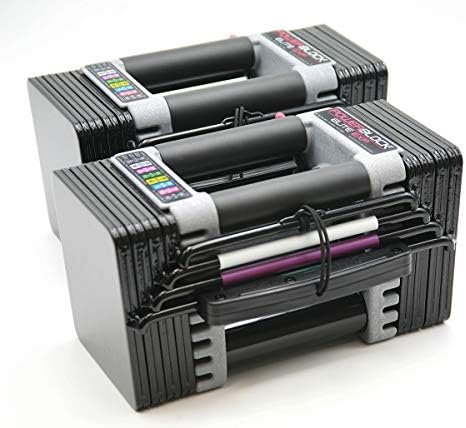
Dumbbells are my go-to recommendation for beginners to weight training. These handheld weights allow you to perform various exercises for your upper body and lower body, like dumbbell chest presses, rows, lateral raises, goblet squats, Romanian deadlifts, and weighted lunges.
For many exercisers, dumbbells are a staple equipment item that allows you to target different muscle groups for bodybuilding and strength accessories effectively.
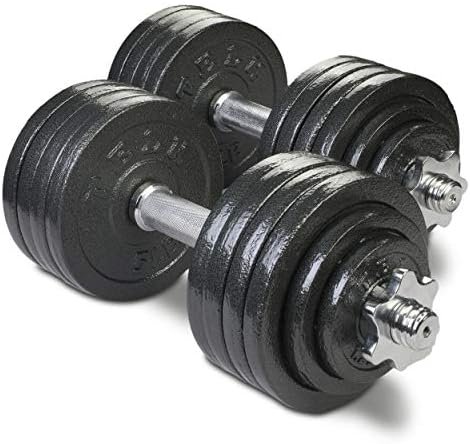
I suggest starting your home gym with an adjustable set of dumbbells like power blocks or spin-lock weights. These don’t take up much room and will allow you to progressively overload your muscles with heavier weight over time.
Personally, I use spin-lock dumbbells, but I also have several clients who use some variation of powerblocks. The spin-lock weights are a little more time-consuming to adjust, but they do tend to be more solid than powerblocks.
Bench

It’s also a good idea to invest in a sturdy, adjustable bench. This allows you to perform exercises like chest presses, chest flys, and box squats.
I always recommend that my clients get a bench for their home gym that can lay flat or go into an incline or decline. This will give you more options for variations of exercises that will allow you to target different muscle groups.
Barbells & Plates
As you get more into intermediate and advanced training, having a good-quality barbell will be important for making gains in your home gym. The bands and dumbbells alone should provide enough resistance for you as a beginner to build muscle and get stronger for the first 3-6 months.
Eventually though, you’ll need more resistance to keep your muscles challenged. Barbells like the one featured below allow you to add significantly more weight to exercises by adding plates to the bar. You can use the barbell for exercises like barbell deadlifts, back squats, and bench press.
When you’re ready to get a bar, I recommend investing in a few sets of barbell plates as well. Start with 2 of each: 2.5lb, 5lb, 10lb, 25lb, and 45lb plates. This will allow you to progressively overload your exercises by adding more weight to your exercises up to 220lb total.
Make sure to also invest in a set of plate collars (also called locks or clamps). These secure the plates onto the barbell to keep your lifts safe and sturdy. I use a variety of collars, including plastic clip-ons as well as stainless steel weighted ones.


Squat Rack/Power Rack
Some barbell exercises (like squats and bench press) are much easier to do if you have a squat rack or power rack to hold the weight between sets. The Fitness Reality squat rack is a surprisingly inexpensive and good-quality rack that can be ordered from Amazon. Make sure to also get a set of J Hooks to hold the weight between your sets.

ABOUT JAYD HARRISON
Jayd Harrison (Jaydigains) is a personal trainer and content creator. She helps people to build muscle, burn fat, and clean up their diets with her online coaching programs and social media content. Check out some of Jayd’s coaching videos on Youtube, or join Jayd live on Twitch and follow on social media:
Sign up for updates ✉️
Sign up to get notified whenever new episodes drop. Opt in for more tips on training, fat loss, and nutrition by filling out the form below:
Your privacy is important to me! I will never share your information with any third party. Unsubscribe from the email list at any time.
Episode 4: How to Stay in Shape When Life Gets Busy
When our schedules get hectic and disrupt our regular routines, fitness and nutrition often take a back seat. During these times, it's easy to fall into the trap of self-criticism, which only makes it harder to get back on track. For several years, I've been guiding my clients in breaking free from this cycle through a strategy I've named the MVP, which stands for the Minimally Viable Plan.
Struggling in an on-again, off-again relationship with fitness? You’re not alone!
It’s difficult for many people to make consistent gains, thanks to the demands of everyday life.
Whenever life gets busy and disrupts our normal routines, fitness & nutrition are the first things to go out the window. When this happens, it can be tempting to get stuck on the self-shaming cycle—which only makes it more difficult to start up again.
For several years, I have helped my clients break out of this cycle with a concept I call the MVP: the Minimally Viable Plan (MVP).
The MVP is your bare minimum, “nothing but the basics” plan for exercise and nutrition that you fall back on when you’re struggling to keep up with your normal plan. In this episode, I go over the importance of having an MVP for your fitness and how to create your own MVP.
In general, your personal MVP just needs to hit the basic requirements for health & fitness:
Follow the Healthy Plate Model
Hit a Daily Movement Goal
Total Body Resistance & Mobility Training 2x per week
The MVP allows you to scale down your nutrition and exercise plan to something simpler and more manageable. It allows you to keep some momentum going in your fitness journey and avoid a full stop. This, in turn, will make it much easier to scale your efforts back up when you have the availability in the future.
This episode was recorded during a group coaching call with my clients. Group coaching calls happen in my Coaching Corner Discord server on the 4th Sunday every month at 4:00pm EST. You can attend the group coaching calls by subscribing as a Supporter+ in the Discord or as a Tier 3 subscriber on Twitch. Personal Training Clients and DIY training program subscribers are also free to attend!
Sign up for updates ✉️
Sign up to get notified whenever new episodes drop. Opt in for more tips on training, fat loss, and nutrition by filling out the form below:
Your privacy is important to me! I will never share your information with any third party. Unsubscribe from the email list at any time.