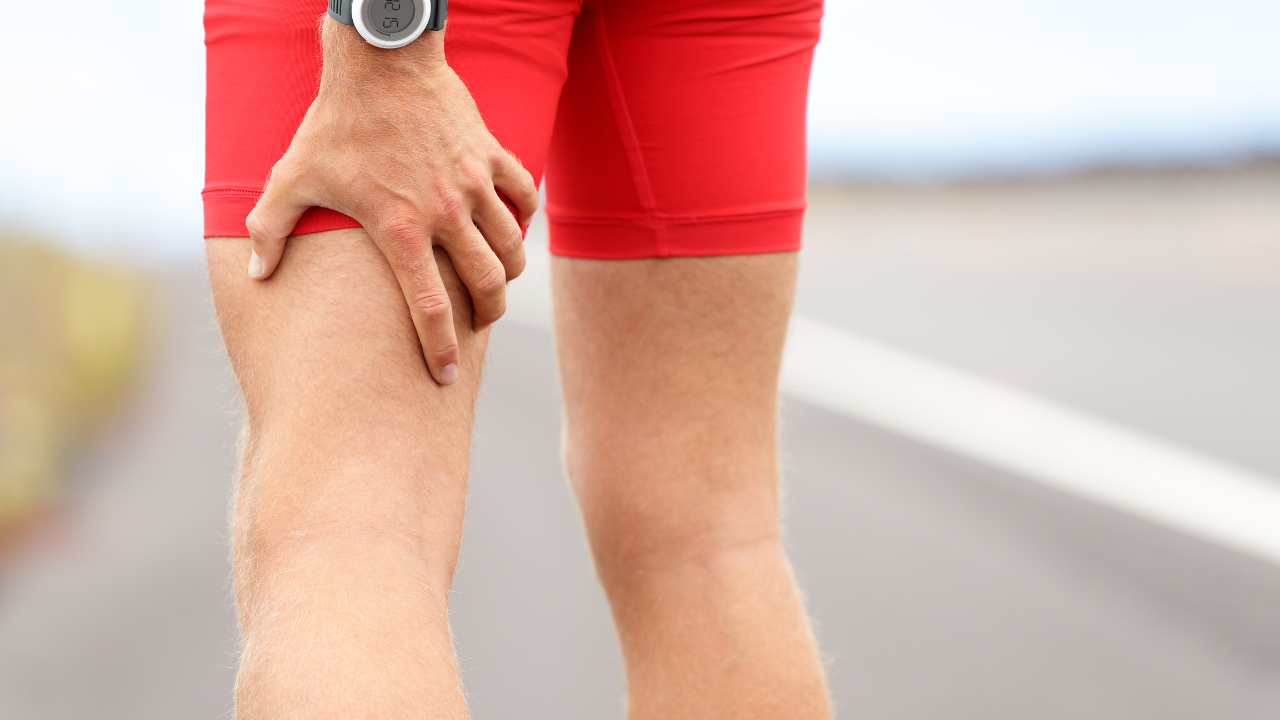
Do you sometimes feel sore after your workouts? It’s totally normal!
If you push your muscles close to failure in your resistance training (like you should), microscopic tears will form along the muscle fiber walls.
These tears send a signal to your body that it needs to repair and fortify the tissue to make it stronger. So while you’re resting, your body will flood the muscle with fluid, blood cells, protein, and hormones.
All of this “stuff” puts pressure on your nerves—which causes the muscles to feel tender, stiff, or painful.
This type of soreness is usually worse during the first day or two after a hard workout, so we call it Delayed Onset Muscle Soreness (DOMS).
DOMS tends to affect people most during the first week or two at the beginning of a new program. The more you stick with your training program consistently, the better your body will get at recovering.
You should experience less DOMS over time—at least until you change up your workout routine again.
A certain amount of soreness is to be expected, especially when you first start resistance training or begin a new program.
However you shouldn’t be totally debilitated in the days following your training. You should still be able to walk around and do your everyday activities.
If, however, you feel intense pain even at rest, or if your soreness lasts more than a few days after your workout, it may be a sign that you pushed too hard in your previous workout.
Next time, bring it down a notch by either doing fewer reps or using less resistance/weight. If the soreness persists past a few days or a week, you may need to see a physician to rule out any possible injuries.
Note that muscle soreness is different from the sharp pain that you might experience in your the joints or other tissues as a result of injury. Again, you shouldn’t feel intense, unbearable pain. Never “push through” sharp pain in your workouts. If you experience this, you should see a healthcare provider.
If you’re feeling a normal level of soreness, it’s totally fine to work out again. In fact, exercising might give you some relief by loosening the muscles and increasing blood flow to the area (which flushes out cellular waste).
You can also reduce your soreness by drinking lots of water and eating a high-protein diet.
For immediate relief, you can try alternating hot and cold compresses. Applying heat (e.g., using a heating pad or taking a hot bath) can helps increase blood flow and loosens tight muscles. An ice pack can help reduce pain by decreasing inflammation in the affected area.
Some people also take inflammation-reducing drugs like ibuprofen, but it’s best to check with your doctor first before taking any medication (even if it’s over the counter).