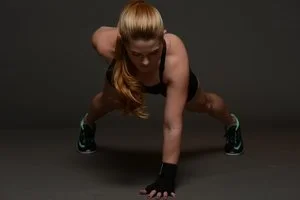
Ep 87 | Is Functional Training Better Than Bodybuilding?
If you've scrolled through any fitness content on social media or youtube, you've probably come across the term "functional fitness." Or maybe someone at your gym made a comment that made you feel like what you're doing isn't "real" training. Or maybe you're just genuinely curious what the term means and whether it should change how you train.
In this episode of the coaching corner podcast, I’m breaking down what functional fitness means, how to train functionally, and whether or not you should be concerned about including functional training in your workout routine.
Where "Functional Fitness" Actually Came From
The concept of functional training has its roots in physical therapy and rehabilitation. The original question was simple and practical: can this person do the things that daily life requires of them?
For a physical therapist working with an elderly patient recovering from hip surgery, or someone rehabbing a knee injury, "functional" means training movements that transferred directly to real life — getting up off the floor, climbing stairs, carrying groceries, or reaching overhead without pain.
In that context, the distinction that matters is movement patterns vs. muscle isolation.
Traditional bodybuilding-style training often focuses on isolating individual muscles — a leg extension machine targets the quads in a way that doesn't require your body to coordinate multiple muscle groups. Bicep curls isolate the elbow joint to train the biceps muscles without having to coordinate the shoulder and other joints in motion.
Training with a focus on movement patterns often centers around compound exercises that mimic movements of everyday life—squats are a movement you perform whenever you get up from or sit down on a chair or the toilet. Bending over to pick something up from the floor includes the hip hinge and pulling movement patterns. Training these movement patterns in your workouts can help you to perform these everyday movements with better posture and reduce your risk of injury.
So functional training, in its original form, meant: train the patterns your body actually uses. Squat, hinge, push, pull, carry, torso rotation. Those are the foundational movement patterns that show up in daily life, and building strength in those patterns builds capacity that transfers outside the gym.
That's a genuinely useful framework — and it's one worth understanding.
How It Became an Ideology
Here's where things got complicated.
As functional fitness concepts moved out of rehab settings and into mainstream gym culture — largely through the rise of CrossFit in the 2000s and the explosion of wellness content online — the term picked up a lot of ideological baggage it didn't start with.
The implicit (and sometimes very explicit) narrative became: compound, "natural" movements = serious, purposeful, real training. Machines and isolation exercises = vain, shallow, gym-bro nonsense.
Functional training got positioned as the antidote to bodybuilding. And bodybuilding — training with the goal of changing how your body looks — started to carry a whiff of something suspect. Like it was somehow less legitimate than training for performance.
If you've ever felt a bit embarrassed about wanting to build bigger glutes or sculpt your shoulders, this cultural framing is probably part of why. There's a deeply embedded idea in fitness spaces that training for aesthetics is shallow, and training for "function" is noble. And a lot of people have internalized that without realizing it.
The truth is that this trend is really one of the latest manifestations of the toxic urge for people to draw arbitrary lines to position themselves as being a member of an “in group” that they deem “better” than others (who they view as on the outside). People love to feel special and look down their noses at others, and the marketing for this trend capitalizes on that urge.
For some people, feeling like they’re part of a special “better” group is their prime motivator for training. I’m not personally a fan of this style of motivation for a couple reasons:
For one, this mindset is not rooted in self-love, whereas I believe exercise and eating healthy should be an act of self-care. We nurture our bodies with exercise and nutrition out of love and gratitude for everything our bodies do for us.
Instead, this way of thinking is rooted in shame. There’s a long history of shame-based tactics being used in the fitness industry (fat shaming, skinny shaming, etc). Thinking this way, where you look down on other people because of how they choose to train, not only makes you an asshole, but it will eventually sabotage your own gains. Because shame always turns inward. If you shame others, you likely will shame yourself—which will sabotage your motivation, making it harder for you to stay consistent, and will likely steer you away from training styles that can actually benefit your body.
Because here’s the thing:
Both isolation training and movement-pattern training are functional.
The Part the Marketing Leaves Out
Here's what the functional fitness discourse tends to gloss over: for healthy people, all strength training is functional.
When you build stronger legs through a combination of squats, Romanian deadlifts, and yes, leg press and leg extensions — your knees become more stable, your daily movement becomes easier, your risk of injury goes down. The muscle you build doing isolation work is real muscle. It supports your joints. It improves your metabolism. It makes you more resilient.
Perfect example: One of my clients recently transitioned into a block of training where we’re including a lot of isolation exercises for the muscles in her hips and legs. She’s doing hip abduction and adduction exercises with the machines, as well as leg extensions and curls. I recently added heavy leg presses back into her program after a few months away. And this is what she said in the notes of her workout:
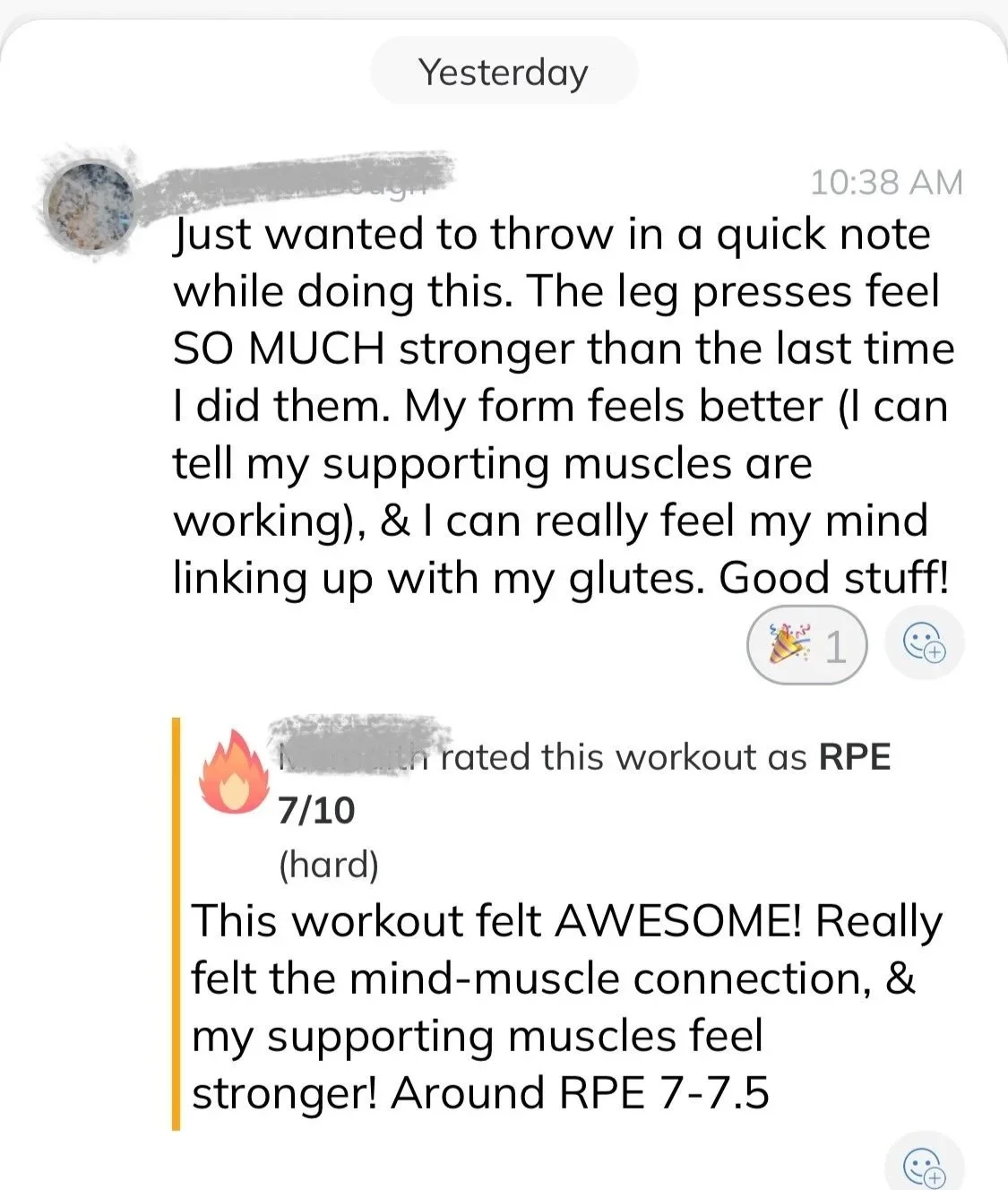
Adding in the isolation work to target her glutes and all the muscles around her hips helped her to feel stronger, more stable, and more coordinated while doing her compound exercise on the leg press.
Isolation exercise aren’t just about aesthetics—although there’s absolutely nothing wrong with training for aesthetics. I often use isolation exercises to help my clients increase their mind-muscle connection, especially for those pesky muscles in the shoulders and hips that are important helpers during compound exercises but are notoriously difficult to connect with (e.g., the external shoulder rotators, rear delts, and gluteus medius). In these cases, the isolation exercises serve the function of helping my clients to improve their proprioception (i.e. mind-muscle connection), which further serves to help them to do their “functional” movement pattern with more control, coordination, and lower risk of injury.
Side note: like I said above, there’s absolutely nothing wrong with doing bodybuilding training for aesthetics. If trying to build a big booty gets you to the gym and exercising, I call that a win. As a personal trainer, my main concern is that people are exercising and taking care of their bodies. I don’t care what motivates them to get there, as long as it’s a healthy mindset that keeps you consistent. If you want big juicy shoulders, I love that for you. If you just want to be able to carry all the groceries in one trip, I love that for you too. If it gets you in the gym building muscle and improving your heart health without hating yourself, then go for it.
But here’s the thing: the research doesn't support the idea that “functional training” is categorically superior to bodybuilding-style training for people who aren't rehabbing an injury. And even then—the physical therapists in the office that I work in still use isolation exercises to help their rehab clients build strength and improve coordination.
So all in all, in my professional opinion, it’s a silly distinction to make calling compound exercises functional and treating them as though they’re superior to isolation exercises. Both have their place in developing a well-rounded physique and functional strength.
The more useful question isn't "is this exercise functional?" It's "does my program address my actual needs?"
Someone with a desk job who sits for eight hours a day and has developed anterior pelvic tilt probably does need more posterior chain work and hip mobility work — not because machines are evil, but because their body has developed specific imbalances that a well-designed program should address. That's a different thing from "isolation exercises are bad."
Isolation exercises are also one of the primary ways to address muscular imbalances that often pop up during “functional” compound movements. Years ago I dealt with a lot of instability in my knees when I was practicing back squats. A good buddy of mine asked, “how often do you train your hamstrings?” The answer to his question was, “um, never.” At that point I was basically just doing compound exercises, focusing on powerlifting. He could tell from looking at my legs that my quadriceps were way more developed than my hamstrings because my body at that point was very glute dominant. So during deadlifts and squats, my glutes and quadriceps were doing the lion’s share of the work for the movement—meanwhile my weak hamstrings were just squeaking along barely making it by.
Once I started doing leg curls as part of my weekly routine—BOOM! My knees got so much more stable and I started being able to lift more weight.
I can think of tons of examples in my own fitness journey and that of my clients where isolation exercises helped improve movement patterns and decrease joint pain during training.
Aesthetics and Function Are Not Opposites
This is the reframe I want you to carry with you: training for how you look and training for how you feel are not in conflict.
Building muscle — real, intentional hypertrophy work — is one of the most functional things you can do for your long-term health. Muscle mass is directly tied to metabolic health, insulin sensitivity, bone density, joint stability, and longevity. The things that make your body look strong are largely the same things that make your body be strong.
This is actually the philosophy at the core of the Body Sculpt Program. It's a 24-week progressive hypertrophy program built around both compound and isolation work, because both matter. Compound lifts build the foundation — they train movement patterns, develop coordination, and recruit multiple muscle groups at once. Isolation work fills in the gaps, addresses imbalances, and allows you to develop specific areas with intention. Together, they build a body that is genuinely strong, resilient, and capable — and yes, one that reflects that in how it looks.
If you've been going to the gym consistently and feel like something is missing — like you're working hard but not quite getting the results you want, or like you don't fully trust that what you're doing is right for your body — that's exactly the gap a structured, thoughtful program is designed to close. Apply to work with me by clicking the button below:
So Is Your Workout "Functional"?
Probably, yes. If you're moving, building strength, and training consistently, your workout is doing something real and valuable.
The more useful question to ask is whether your program is designed well enough to get you where you actually want to go. Are you progressing over time? Is it addressing your specific body and its specific needs? Do you have a structure you trust, or are you piecing things together and hoping for the best?
Those are the questions worth sitting with — and they're the ones a well-built program answers for you.
Links:
Subscribe for Updates ✉️
Sign up to get notified whenever new episodes drop. Opt in for more tips on training, fat loss, and nutrition by filling out the form below:
Your privacy is important to me! I will never share your information with any third party. Unsubscribe from the email list at any time.