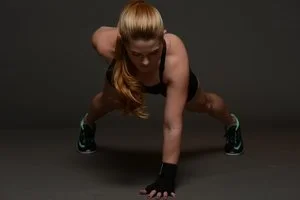
Ep 75 | Why Balance Training is the Missing Piece in Your Workout Routine
When most people think about working out, they think about lifting weights, cardio, or maybe stretching after a long session. But there’s one type of training that’s often overlooked—and it could be the missing piece in your fitness routine: balance training.
Balance training is one of the most important (and underrated) styles of exercise you can incorporate into your weekly workouts. Whether you’re a beginner, intermediate, or advanced exerciser, adding balance-focused movements can help improve your strength, stability, coordination, and overall athletic performance. It can even protect you from injuries both in and out of the gym.
In this post, we’ll break down:
Why balance training matters for your health and fitness
The three main types of balance training exercises
Practical ways to incorporate them into your workouts
-
Jayd (00:00):
Balance training is one of the most important styles of training that you can incorporate into your weekly workout routines, but it is sadly a style of training that I don't actually see a lot of people using, but it is so effective in so many ways regardless of whether you're a beginner, intermediate, or a more advanced exerciser. Doing balanced training exercises can help improve so many aspects of your fitness, athleticism, and overall health. Welcome to the Coaching Corner podcast. I'm Jayd Harrison, AKA Jaydigains. I've been a personal trainer for about 10 years, and I've created the Coaching Corner podcast to share with you tips and tricks to help you get lean and get strong without shame and without burnout. In today's episode, we're going to talk all about balance training exercises and why you should be incorporating them into your weekly workout routine to help reduce your risk of injury, improve your overall coordination and core strength, and get even more gains from the exercises that you're already doing.
(01:12)
We're going to cover why balance training is so important. I'm also going to tell you about the different types of balance training that there are, ranging from beginner friendly exercises to more advanced exercises, and then I'll end with some tips on how to incorporate balance training into your weekly workout routine. Now, before we get into the episode, make sure to like this video if you're watching on YouTube and subscribe to the channel so you always get the latest videos as soon as they drop. If you're listening to this podcast, thank you so much. Make sure to follow the channel so that you always get the latest episodes delivered right to your device. And don't forget that I am currently enrolling new clients into my fat loss transformation program and this 90 day program, I'm going to teach you how to eat and exercise in a way that helps you to get lean, burn fat, and keep it off for good. So whether you want to lose five pounds or 30 pounds, this coaching program is perfect for you. I'll give you a custom training program with workouts that are customized to your unique body, the exercise equipment that you have available, and I'll also give you a customized meal plan to help you to stay on track with a healthy diet. You can find more information on that in the link that is in the video description below if you're watching on YouTube or in the show notes. Without further ado, let's get into the episode.
(02:37)
Balance training exercises or stability training exercises are exercises that challenge your balance, that force you to really have to fight to keep your body in a certain position, whether that's standing on one leg, holding a plank, or performing an exercise on just one side of your body. These types of exercises are really effective for helping you to improve your core strength and also improve your overall mind muscle connection. That is your ability to control your muscles and how they contract and extend when you have good balance. This can translate over into much higher levels of strength and your big lifts like squats, bench deadlift, and overhead press. It can also help you to stay safe in your exercise technique and in your overall movement and mobility of everyday life. The better your balance is, the more easily you can catch your balance when you trip or bump into things because after all, as we get older, balance is one of the first things that begins to decline if you don't train it and strengthen your muscles.
(03:42)
So it's really important to develop your balance so that you can move about your everyday life more comfortably and with a reduced risk of injury and so that you can improve your overall gains stability and balance training exercises are also one of the most effective styles of training for improving your posture. So if you have a tendency to slouch while you're at work or you experience neck or shoulder pain or back pain when you're exercising because you have poor posture, doing balance training exercises is a great way to address that. So there's many reasons to do balance training. There's three main families of balance or stability training exercises. Number one is static balance exercises. These are exercises where you're not really moving very much and you're just focusing on holding your body in a fixed but unstable position. A really good example of that is just standing on one leg.
(04:39)
Many yoga poses are static balance exercises like holding a warrior one, warrior two or warrior three pose. Tree pose is also a good example of a single leg balance training exercise. The goal of all of these exercises is to hold your body in this position for an extended period of time. Now, just because you're not moving a whole lot doesn't mean that you're not working really hard. If you've ever done yoga or tried to hold one of these poses, you'll know that your muscles get really, really tired because they have to fight against gravity and they have to constantly fire up all around your body to keep you balanced in space. When I'm holding a balance training exercise, I like to think of my body as like a spaceship. So a spaceship or a space station has a lot of little thrusters that fire up to kind of adjust and keep the spaceship in position in space, and that's kind of what happens with your muscles when you're holding a static balancing pose.
(05:39)
All of the little muscles around your body kind of have to stay sort of fired up and then ready to really fire up if you start to fall one way. So for example, if you're standing on one leg and you start to fall over to the outside side of your body, your gluteus medias muscle is going to have to fire up on that side to bring your body back toward the center line of your body. On the other hand, if you start to fall to the other side, your adductor muscles are going to have to light up to push you back to the other side so you don't actually get any kind of rest. Your muscles are constantly fired up to a small degree and then they fire up a lot when you start to fall one way or another. So this is a great way for you to one, challenge your muscles without having to carry a lot of weight.
(06:24)
There's a pretty low risk of injury here because you're not going to be moving with a lot of weight in an uncontrolled position. You're literally just standing or holding a pose. So it's pretty gentle on your joints, but it can definitely kick your butt and be pretty challenging. Another type of balance training exercise is dynamic balance exercises. This involves having to maintain your balance while you're also moving in a controlled way. So a good example of this would be like the heel to toe walk like you're walking across a balance beam, but you also might do forward or walking lunges. I have my clients do a variety of different styles of lunges to lunge and then return to single leg balance or walking lunges where they might be taking really big steps in having to balance on one leg, walking planks, plank pushups or bear crawls, and different varieties of bear crawls are other really great dynamic balance exercises.
(07:23)
Now, this includes all of the benefits of the static balance training exercises, but you add an extra layer of difficulty by adding motion into the exercise. And then finally, we have the reactive balance training exercises. These are exercises where you have to react to some kind of stimulus that might throw you off. So say you're standing on one leg and eye as your trainer throw a medicine ball at you and you have to catch it and stay standing on one leg. There's also a variety of equipment that you can use to add an element of instability to exercises that you're already doing. For example, if you do planks or pushups, you might try using a bosu ball or a stability ball to add a degree of instability either under your feet or under your hands. Balance boards are also really helpful for challenging your balance while standing still, or performing exercises like squats or deadlifts.
(08:23)
Sometimes you can add an element of instability just by performing an exercise with your eyes closed or with one eye closed so that you're not able to use the visual data to balance yourself, and instead you have to tap into your muscles and how you feel to keep your body fixed in space. So there's lots of different types of balance training exercises. In general though, if you want to treat it as a way to progress, I would recommend beginning with your static exercises and then progressing to more dynamic challenge exercises for balance, and then using the reactive balance exercises as sort of an advanced level. Now, there's lots of different ways that you can incorporate balance training into your workouts. One, you can use it as part of your warmup or your core training, and many of my introductory blocks for my clients, I will include balance training at the beginning of their workout to help my clients to connect with their muscles and take that mind muscle connection with them into the harder part of the workout later on.
(09:25)
It's a great way to gently fire up all of the muscles in your body and get your mind connected to them and improve your coordination. This is a great option, especially for beginners. Now, you can also incorporate balance training as an active recovery between your strength sets or as a way to finish off the challenge to a muscle group after you have just worked it. So for example, if you've just completed a set of squats, you could immediately follow up with some kind of single leg balancing exercise like just standing on one foot for 15 seconds or doing some kind of a lunge to single leg balance for a few reps. This will help you to really fatigue those muscles and build muscle and will also help you to keep your heart rate up and improve your overall endurance through the course of the workout.
(10:15)
You can also use balance training exercises as progressions to advance exercises that you're already doing. This helps in a number of different ways. On the one hand, it allows you to increase the load on one side of your body without necessarily having to increase the amount of weight that you're holding. So for example, if you have been performing Romanian deadlifts and you have a limited amount of weight that you can work with, performing a single leg Romanian deadlift and shifting your weight over into one leg using the same amount of weight that you were using with both feet on the ground is a great way to increase the challenge to the muscles on the standing leg because the standing leg is now going to have to work against twice as much force without you necessarily having to hold twice as much weight. There are many exercises that you do with both feet on the floor or closed chained that you can switch over into a staggered stance or a balancing single leg stance.
(11:16)
You can try single leg squats, pistol squats, single leg deadlifts, or what I call drinking birds, which are single leg deadlifts where you reach the lifted leg back behind you for common upper body weight training exercises like chest presses. You can try performing these while laying back on a stability ball to keep your core fired up and make your lower body muscles have to work to keep you stable while the weight is in motion. Instead of performing a plank with your hands or your feet all on the floor, you could put your feet or your hands on a bosu ball or a stability ball or a balance board. This will level up the challenge and the difficulty of the exercise because your muscles never really get a break at any point in the set throughout the eccentric phase and the concentric phase of the exercise, all of your muscles have to stay somewhat fired up to keep you balanced in space so that you don't fall down so you can really fatigue those muscles, which can help to yield more hypertrophy, more muscle growth, more strength gains, and better coordination.
(12:23)
It also can help you to improve your technique in your regular exercises without the balance challenge. Another thing that these types of exercises really help with is the benefit of unilateral training. It's really not uncommon for most people to have a side of their body that is stronger or weaker than the other, and it doesn't necessarily even have to be the same side. Some people find that their right leg is stronger than their left leg, but their left arm is stronger than their right arm. So performing unilateral exercises or balance training exercises where you're putting more of your weight on one side or one side is having to do the work. This can help you to actually even out the imbalance of your strength. I recommend performing the exercise to the weaker side first and performing a set where you feel the weaker side muscles getting fatigued and stopping when you feel like you can only do one, two, or maybe three more repetitions, and then you perform the exact same number of repetitions with the exact same amount of weight on the stronger side, you'll notice that the stronger side doesn't get quite as tired, but that's the point.
(13:27)
By training this way, you actually can help catch the weaker side up to the point where they begin to have an equal amount of challenge for both sides of the exercise after you've been practicing this type of training for a few weeks or a few months. Now, you can also use balance training exercises as a dedicated finisher at the end of your workout. So for example, at the end of a chest day for a bodybuilding workout, after you've done some chest press, some flies, and all of these other variations of chest exercises, you might decide to hold a plank on a stability ball to challenge the chest muscles and the shoulder muscles to hold your position while they're already fatigued to finish them off and make sure you're walking out of the gym with pretty tired pecs by the end. You can also do just standalone balanced training exercise days.
(14:19)
A great option for that would just be to do a yoga workout where you practice holding various yoga poses. You can also use it as an entire sequence at the beginning or the end of your workout, like as a warmup or as a cool down. And finally, you can also integrate balance training exercises into your daily activities like standing on one leg while you brush your teeth. When you get up from the couch or sit down throughout the day, you could shift your weight over into one leg and practice doing that movement on one leg. Regardless of how you're integrating your balance training exercises, you will get a lot of benefit from doing them. So give some of these balanced training exercises a try by incorporating them into your personal weekly workout routine.
(15:05)
Thank you so much for watching or listening to this episode of The Coaching Corner podcast. Again, I'm Jayd Harrison, AKA Jaydigains. Let me know in the comments below this video if you're watching on YouTube, what balance training exercises you are going to incorporate into your weekly workout routine, and let me know if you need any help or tips, and keep in mind that I do incorporate balance training exercises into all of my programs for my clients. And if you are interested in working with me, check out the links below for my coaching programs. Right now, I am accepting clients into my fat loss transformation program, but if you are looking at building some strength, building some muscle, I've got some coaching programs ready for that as well. Check out the links in the show notes or in the video description below. I'll see you in the next episode. In the meantime, make sure to eat your veggies, eat your protein, drink some water, prioritize your self-care, and I will see you soon.
Why Balance Training Matters
Think about the last time you tripped or stumbled—did you catch yourself quickly, or did you go down hard? Balance is what keeps you upright and moving smoothly. Unfortunately, it’s also one of the first things to decline as we age if we don’t actively train it.
Here’s what balance training can do for you:
Reduce your risk of injury by strengthening stabilizer muscles.
Improve coordination and mind-muscle connection, making your main lifts (squats, deadlifts, bench press, etc.) more powerful and efficient.
Enhance posture, helping to ease back, neck, and shoulder discomfort.
Level out strength imbalances between your right and left sides.
Boost everyday mobility, making it easier to move with confidence in daily life.
And yes—balance training can even help you build more muscle. When stabilizer muscles stay “switched on” throughout an exercise, they increase the overall challenge to your body, which can mean better results from your workouts.
The Three Types of Balance Training
Not all balance work looks the same. You can progress through three main categories depending on your fitness level:
1. Static Balance
These exercises involve holding your body in a fixed but unstable position. Think standing on one leg, tree pose in yoga, or a plank.
Even though you’re not moving much, your muscles are firing constantly to keep you steady—kind of like little thrusters on a spaceship adjusting its position in space. This makes static balance surprisingly tough, while still being low-impact and joint-friendly.
2. Dynamic Balance
Here, you’re maintaining balance while moving in a controlled way. Examples include:
Heel-to-toe walk (like walking a balance beam)
Walking lunges
Bear crawls or plank pushups
Dynamic balance builds on the benefits of static holds by adding motion, which makes it more challenging and functional.
3. Reactive Balance
This is the advanced level, where you respond to an outside stimulus that throws off your balance. For example:
Standing on one leg while catching a medicine ball
Doing pushups with hands or feet on a BOSU ball
Using a balance board or stability ball during lifts
You can even challenge your balance simply by closing your eyes during an exercise—removing visual cues forces your muscles to do more of the work.
How to Incorporate Balance Training into Your Workouts
The best part? You don’t need to dedicate an entire workout to balance (though you can if you’d like). Here are some simple ways to fit it into your routine:
Warm-up or Core Work: Add balance drills at the start of your session to wake up your stabilizers and improve mind-muscle connection.
Between Strength Sets: Use them as active recovery between heavy lifts. For example, follow squats with a 15-second single-leg balance hold.
Progressions: Turn regular exercises into balance challenges. Try single-leg deadlifts instead of Romanian deadlifts, or do pushups with your feet on a stability ball.
Finishers: End your workout with balance holds like a stability-ball plank for an extra burn.
Daily Life: Stand on one leg while brushing your teeth or practice sitting/standing with one leg engaged.
Balance training is endlessly adaptable—whether you’re just starting out or you’re ready for advanced challenges.
Final Thoughts
Balance training isn’t just for yogis or athletes—it’s a powerful tool for anyone who wants to move better, get stronger, and stay injury-free. From boosting your posture to unlocking more gains in the gym, it deserves a spot in your weekly routine.
Start small: add one or two balance exercises into your warmup or between sets. Progress to more dynamic and reactive movements over time. The results will surprise you.
So, what balance exercise are you going to try this week?
And if you’re ready for a structured plan that weaves balance, strength, and fat loss strategies together, check out my 90-day Fat Loss Transformation Program. You’ll get custom workouts, a meal plan tailored to your goals, and the accountability to finally get lean and strong—without shame or burnout.
Subscribe for Updates ✉️
Sign up to get notified whenever new episodes drop. Opt in for more tips on training, fat loss, and nutrition by filling out the form below:
Your privacy is important to me! I will never share your information with any third party. Unsubscribe from the email list at any time.