Have you reached a point in your fitness journey where the scale has stopped going down? For many people, this can be stressful and confusing—especially if you are noticing other signs of fat loss (like your clothes fitting looser). It can be disheartening to feel like you’re making progress, but your body weight doesn’t reflect that progress.

When this happens, does it mean that you aren’t making progress? Absolutely not! It just means that you are likely in a recomp.
“Recomp” is short for recompositioning, which means that the amount of your body weight that is fat versus muscle is changing. In general, as you burn fat, your body typically gets lighter and smaller. But as you build muscle, your body weight may go up as you become more dense and strong. As a result, you may see very little change on the scale for an extended period of time.
For some people, this can be extremely distressing—especially if you have used the scale as the primary measure of your fitness progress for a long time. When your body is recompositioning, however, you need to look to other more accurate measures of progress (we’ll talk more about these below).
Recomp vs Bulking & Cutting
Many gymgoers have the goal of recompositioning their body (building muscle and burning fat to improve their overall physique).
Some people prefer to accelerate their progress by alternating between periods focused on either muscle-building or fat loss.
In a muscle-building phase (i.e., a “bulk”), an exerciser will eat a calorie surplus of about 20% above their maintenance level of calories for anywhere between a few weeks to several months. Eating a calorie surplus gives the body energy it needs to maximize muscle growth and strength gains. This often comes at the cost of fat loss, however, since the body primarily burns fat when you eat a calorie deficit (that is, below your maintenance level of calories). Some people may even see an increase in their body fat percentage while in a bulk, which they plan to trim off later when they transition into a “cut” phase.
During the “cut” phase, an exerciser will gradually reduce their calories to a level below maintenance in order to prioritize fat loss. It’s normal to lose some muscle during a cut phase since your body will break down both fat and lean muscle tissue to access energy stored there. To preserve as much muscle as possible, someone in a cut will continue to do resistance training every week and eat a lot of protein. By the end of their cut phase, the exerciser’s goal is to trim as much fat while retaining as much muscle as possible.
The downside of doing focused bulking and cutting phases is that, in order to prioritize one change (e.g., building muscle or burning fat), you have to be ok with not making progress in the other for a while. Some people struggle with this, especially going into a bulk if they have been focused on fat loss for a long time.
For these folks, a great solution might be to focus on recomping, doing both at the same time. During a recomp, progress towards either muscle-building and fat loss will be slower than cycling between bulking and cutting. Many people, however, find this approach to be more sustainable, less stressful, and more suited to how they want to approach their fitness lifestyle.
How to Tell If You’re In a Recomp
To track stay motivated during your recomp, I suggest looking to these 9 signs of progress:
1. Changes in Body Measurements
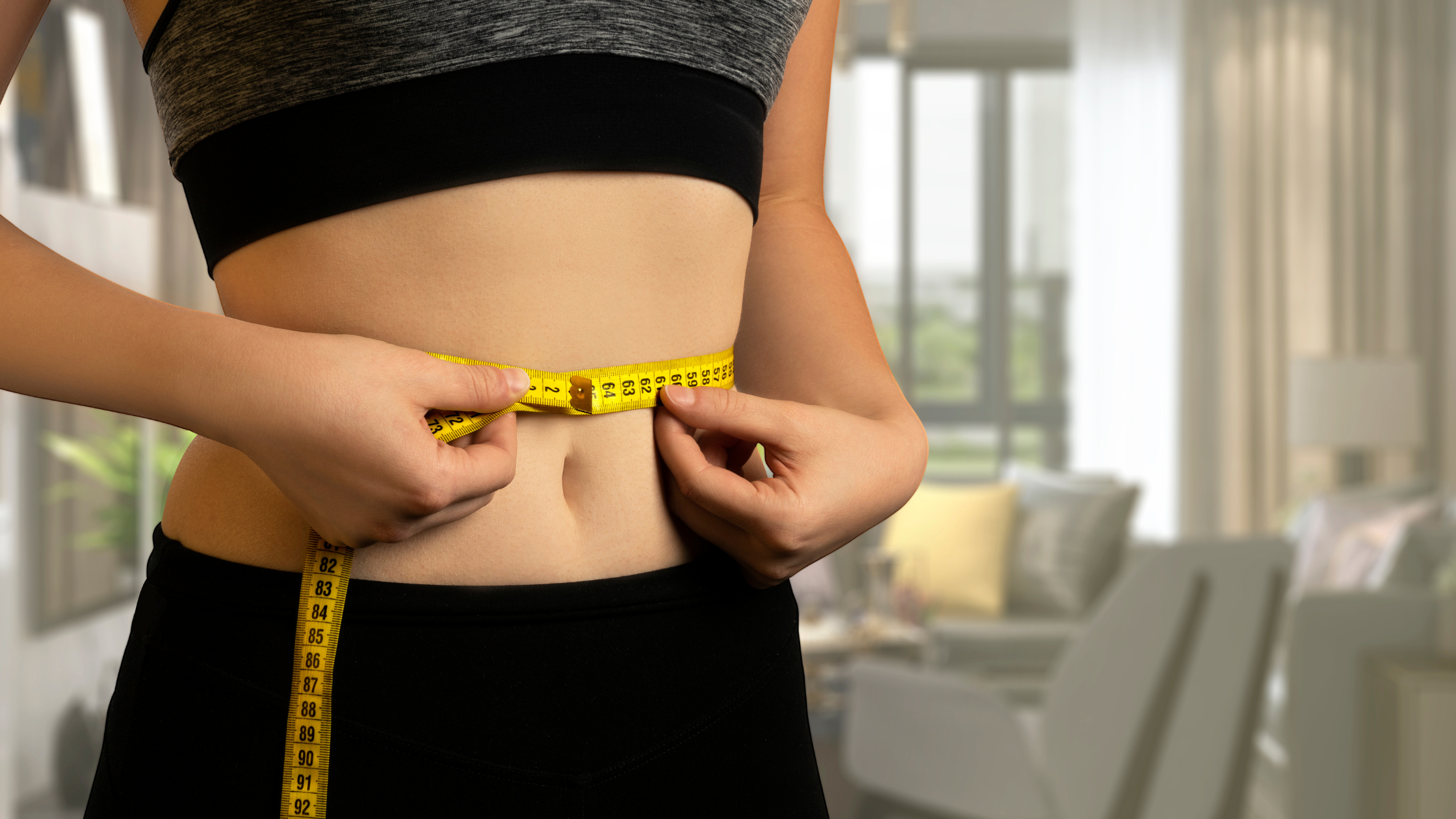
While the scale might not change much during a recomp, other body measurements such as waist circumference and hip circumference should reflect fat loss by getting smaller.
To measure your waist and hips, place a tape measure around your waist at the smallest point (usually around the belly button). Then measure around your hips at the widest point. Divide the number of inches (or centimeters) of your waist by the number of inches (or centimeters) of your hips.
If you are in a recomp, you should see this number getting smaller over time. Good goals to shoot for in your waist-to-hip ratio are:
0.85 or less for women
0.9 or less for men[WHO]
You may also notice that your clothing fits more loosely, especially in the midsection. You likely will need to buckle your belt at a tighter point. All of this is a good sign that your body is burning fat—even if you aren’t seeing changes on the scale.
Read more: Check out this article from Medical News Today on the importance of waist-to-hip ratio as an indicator of health and fat loss.
2. Increased Muscle Definition
Another great sign that your body is in a recomp is that you notice more muscle definition—especially in your arms and legs. You may start to see more separation between the muscles or even striations across a muscle (i.e., tiny grooves of muscle under the skin, seen especially in the chest area). Veins may also become more visible as your body fat decreases. All of this is a great indicator that your body is doing both building muscle and burning fat.
3. Stable or Slightly Fluctuating Scale Weight
If you notice the first two signs above, but the scale isn’t moving much—that’s a really great sign that your body is in a recomp. Unlike traditional bulking or cutting, the scale may not move much (or may fluctuate within a small range).
4. Strength Gains in the Gym
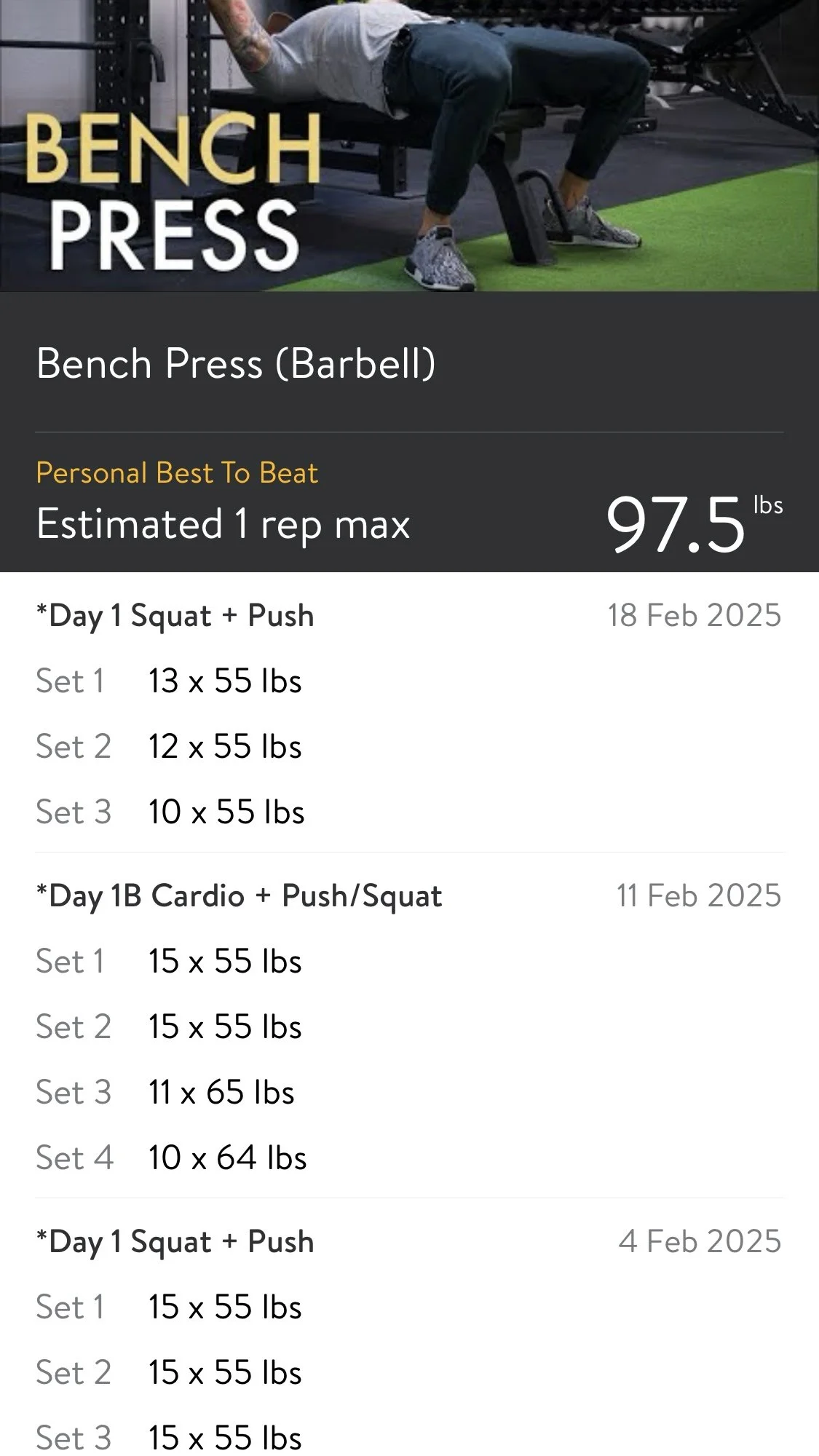
Keeping an eye on your performance in the gym is a great way to track your progress as your body goes through its recomp. If you’re building muscle, you should be able to progressively lift heavier weights or perform more reps with the same weight. You should also see some improved performance in bodyweight exercises (e.g., more push-ups, better pull-ups).
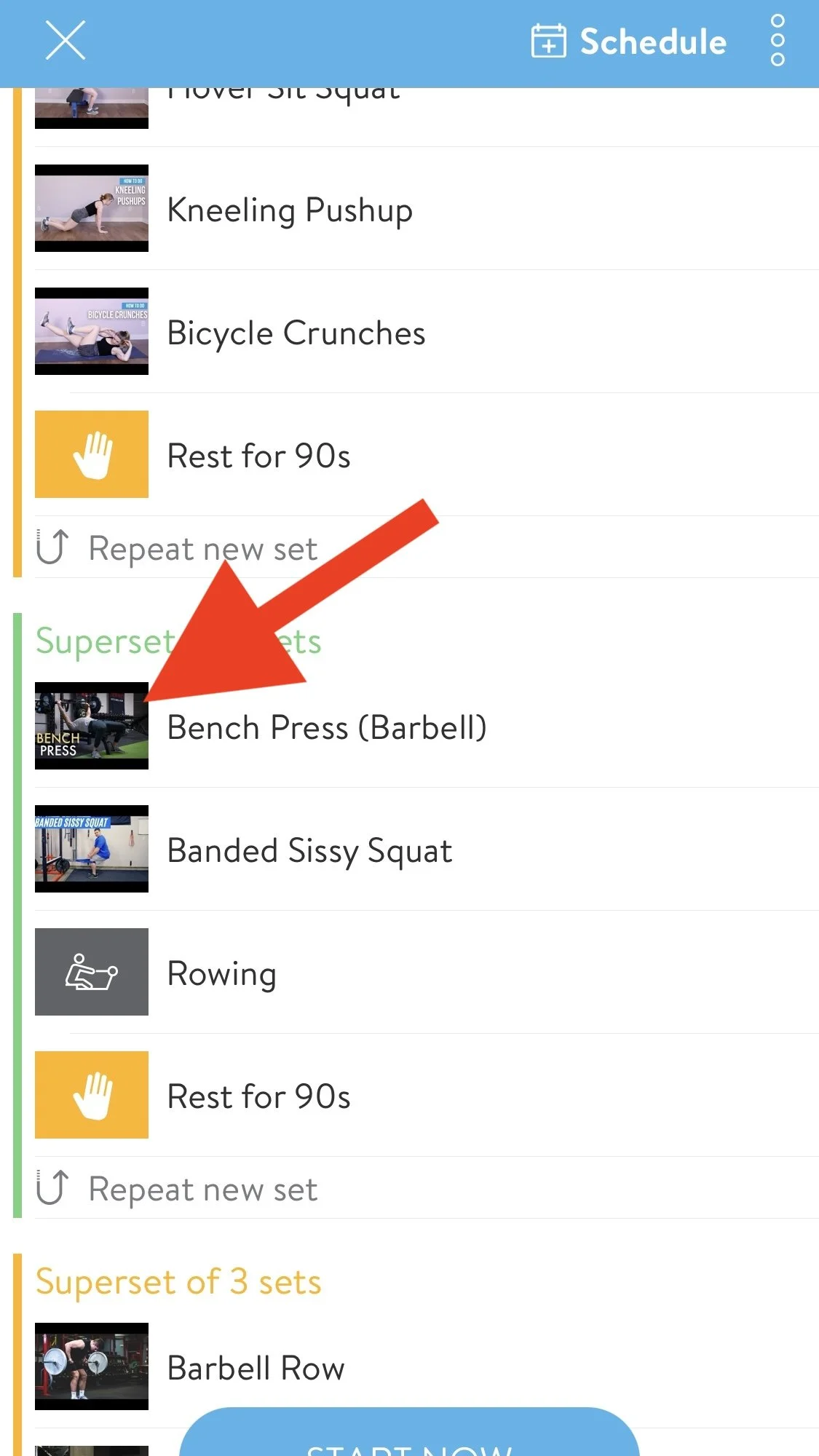
This is why it’s so important to track your workouts, no matter what stage of your fitness journey you’re in. If you’re doing one of my online programs, use the ABC Trainerize app to track how much weight you use, how many reps you do in each set, or how long you do an exercise every time you train. You can see your progress over time in a given exercise by clicking on it in your workout. This will show you an at-a-glance record of how much weights/reps you’ve done previously:
If you’re working out on your own, you can keep track of your workouts in a workout journal or other workout-tracking app.
Look back on your previous performance frequently to see how much stronger you’ve gotten over time.
Check out the paperback fitness journals that I’ve designed, which can be purchased on Amazon:


5. More Energy & Better Recovery
Another great thing to track in your fitness journal is how good you feel and how much energy you have on a daily basis. If you have more energy and you're recovering better from your workouts, these are good signs that you’re in a recomp. You may also experience less soreness after you're working out. You might also feel really strong. This is a great indicator that your body has enough energy to perform and build muscle effectively.
This is, of course, opposed to how people often feel while in a cut phase. It’s not uncommon to feel tired and have a harder time performing and recovering after training when your body is in a caloric deficit. If you’re in that sweet spot of a recomp where your body is doing both burning fat and building muscle, you shouldn’t feel quite as crappy.
6. Changes in Progress Photos
If you’re feeling uncertain about your progress while in a recomp, take a look at your most recent photos and compare them to photos taken a few weeks or months ago. In more recent photos, you should be noticeably leaner and have more muscular definition, even if your weight is the same in both photo sets.
7. Lower Body Fat Percentage
Tracking body fat percentage is a great way to gauge your progress while your body is in a recomp.
You can measure your body fat percentage by using set of calipers to measure skin folds on different parts of the body. With this method, you use calipers to measure the skin and subcutaneous fat thickness at selected sites around your body. This method is generally more accurate when it’s properly performed by an experienced examiner (such as a trainer at a gym or health care professional), with a standard rate of error of about +/- 3.5%. However it takes a great deal of time, practice, and proper training to develop accurate technique. Use the VeryWellFit guide to measure your body fat percentage using skinfold calipers.
Some smart scales can give you an estimate of your body fat percentage via bioelectrical impedance analysis (BIA). This is also the same method used by handheld Omron monitors. BIA estimates the percentage of lean muscle tissue versus fat in your body with a mild electrical current. BIA has a standard rate of error of roughly +/- 3.5-5%, and can be affected by things like the humidity and temperature in the room as well as how hydrated you are. So don’t sweat it if you see your body fat percentage change by between 1% and 3% day-to-day. Instead, keep an eye on general trends in your body fat over the course of a few weeks or months.
If you're tracking your body fat percentage, a decrease in fat with stable weight indicates muscle gain and fat loss.
8. Improved Endurance & Conditioning
Because you have more energy than you would if you were in a cut phase, during a recomp you will likely notice that your cardio workouts feel easier and your stamina improves steadily over time. You may find it less daunting to do long cardiovascular activities like hiking and running, and higher intensity workouts like circuits and HIIT become more manageable.
9. Health Markers Improve
Finally, a great indication that you’re making progress in your fitness while in a recomp is that your health markers like resting heart rate, blood pressure, blood sugar, and cholesterol levels all improve. It’s a good idea to keep a record of these measurements throughout your fitness journey so that you can track your improvement over time. This will help you to feel like you’re making gains, even when the scale isn’t moving.
Struggling Mentally with the Recomp?
In my ten years of working as a personal trainer, I’ve found that clients who are recomping often struggle mentally with seeing the number on the scale not moving. Many of them have used the scale as a sign of progress for so long that they feel like a failure when their weight stops going down.
Breaking free from scale obsession can be tough, especially when you’ve relied on it for so long. If that describes you, here are some strategies that might help:
1. Shift the Focus to Performance Wins
If you’re having trouble getting past the number on the scale, I suggest focusing your energy on performance wins in your workouts like lifting heavier, doing more reps, better endurance, hitting new personal bests, etc.
Performance wins happen on a much quicker basis than slower gains like fat loss and muscle gains. Again, make sure that you’re tracking your workouts and noting trends over time. And take the time to really celebrate your non-scale improvements.
2. Use Progress Photos & Measurements
Take progress photos regularly so that you can compare the changes in your body throughout your recomp. Take these once a week or once a month, wearing the same (or similar) clothing, from the same angles and using the same lighting. If you’re using the ABC Trainerize app, select “Photos” from the add menu, then follow the prompts for entering your progress photos in the app:
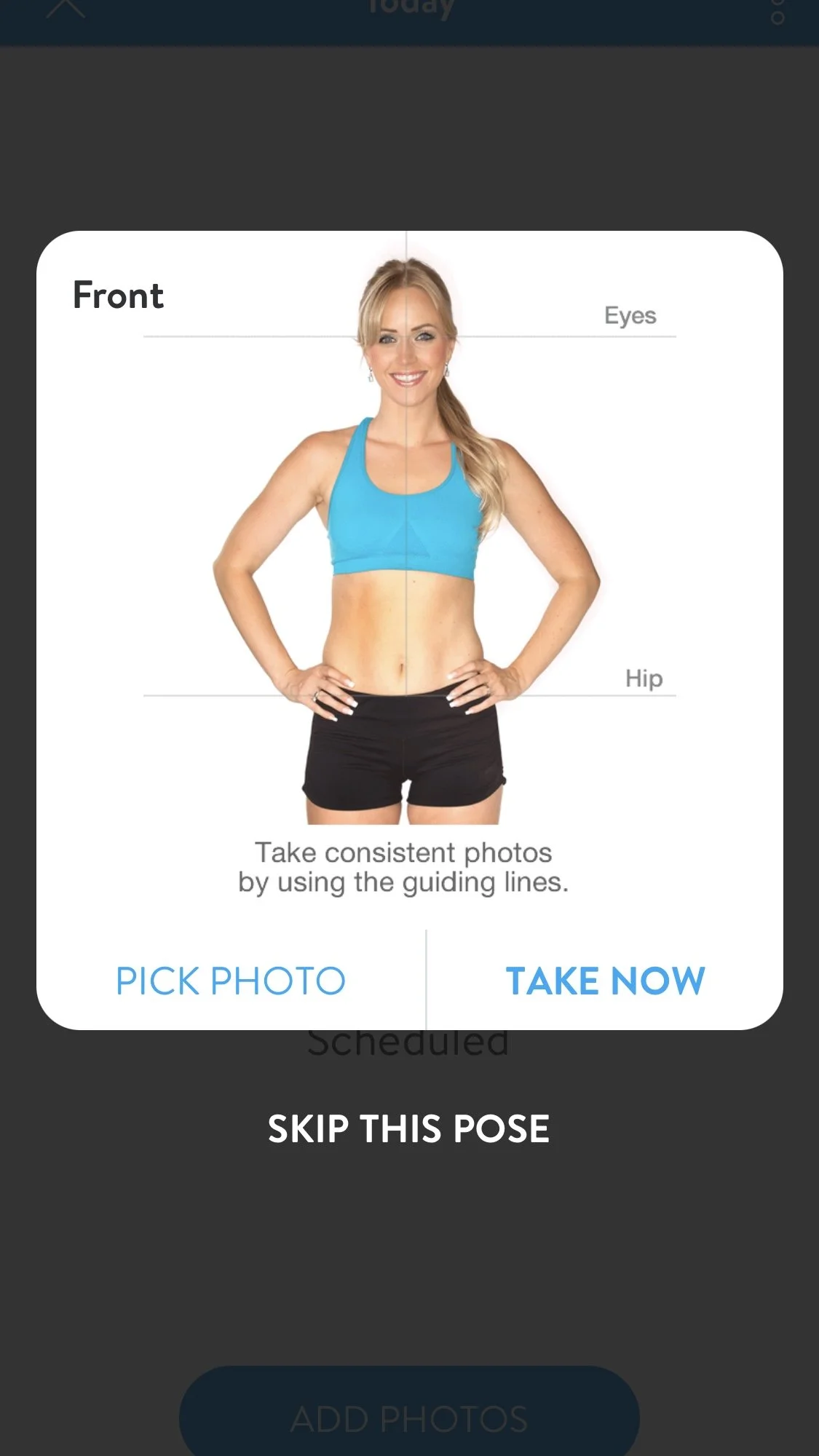
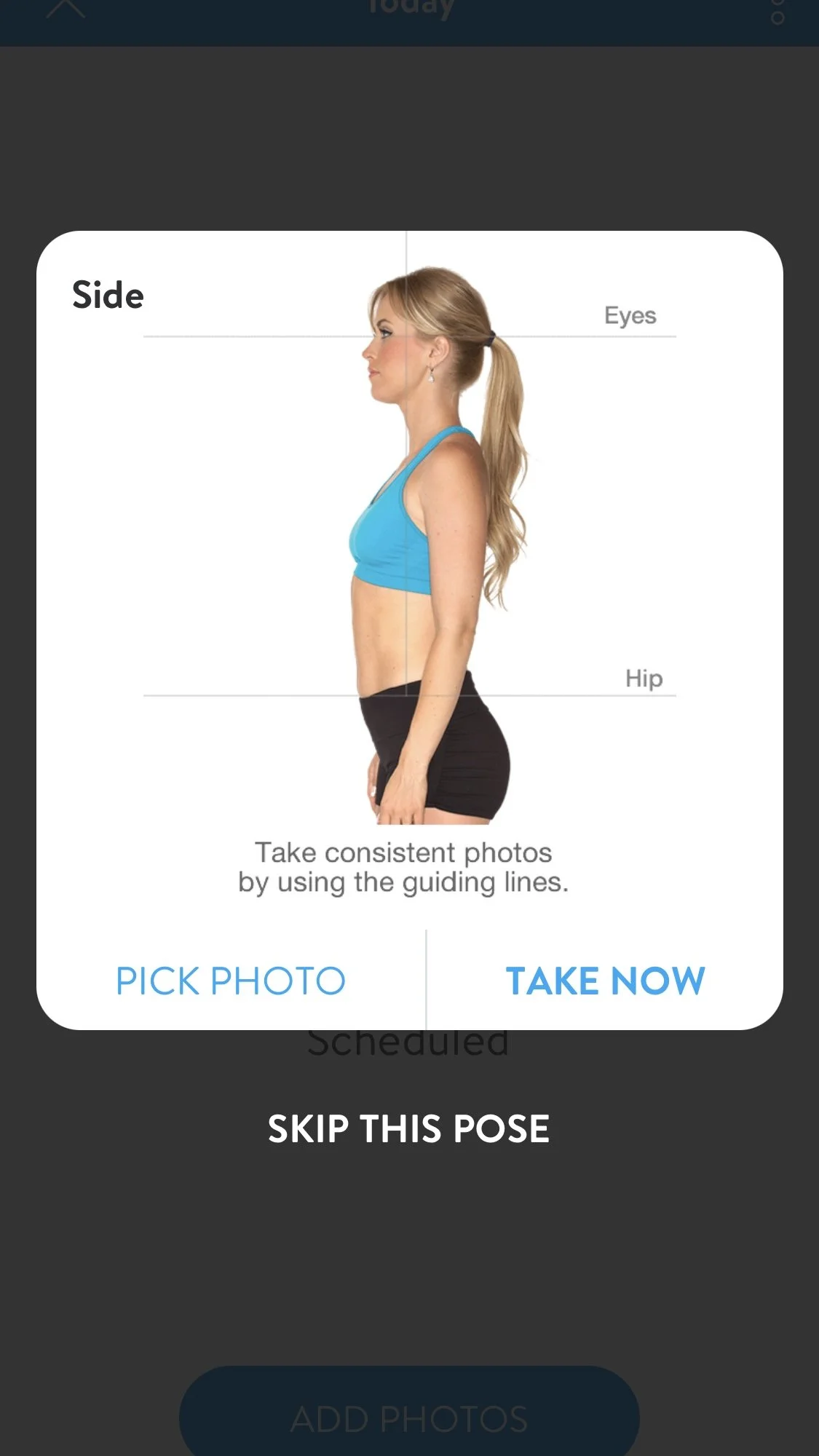
Also make sure to regularly track your waist, hips, and other body measurements. These measurements have a tendency to change even when your weight stays the same when you’re recomping. In ABC Trainerize, select “Body Stats” and follow the prompts to enter your measurements.
3. Learn More About Body Composition Changes
Knowledge is power. So if you’re struggling to see yourself as progressing in your fitness journey, you probably need to learn more about how exactly the body burns fat and builds muscle. Learning more about these processes will help put your mind at ease and allow you to focus on other, more important indicators of success besides body weight. If you’re reading this, that means you’re in the Gains Club—which is a great place to do just that. Stay tuned and continue to learn more about how our bodies change over time in response to working out and burning fat.
4. Normalize Scale Fluctuations
Try to keep in mind that it’s totally normal to see your weight stay the same while your body is in a recomp.
It’s also normal to see fluctuations on the scale—from one day to another you may see the scale go up or down as much as one to five pounds. This is because our bodies can weigh more or less depending on how much water we retain.
Water retention is impacted by what we eat (i.e., lots of salt or carbohydrates cause more water retention), hydration levels (being dehydrated causes your body to retain water), and hormonal shifts (such as pms-ing or being on your period causing water retention).
For example, I usually see some weight gain just before I’m about to start my period. Probably because my body naturally is retaining water thanks to the hormones, but also because I tend to crave more sweets and salty food when I’m pms-ing. As my body stores the extra carbohydrates and salt with water, this can make me feel like a water balloon! After I drink plenty of water, exercise, and wait a few days for my period to start, my weight usually goes back down to normal.
Rather than panicking if you see the scale go up or down a few pounds, focus instead on your average weekly body weight to get a better sense of your body’s actual weight.
5. Mindset Shift: Non-Scale Gains
While you’re in a recomp, it’s super important to focus on your health and fitness gains that have nothing to do with body weight. As I mentioned above, I recommend keeping a fitness journal and tracking your workouts. At the end of every week, write down 3 non-scale wins for the week (e.g., feeling stronger, clothes fitting better, improved energy).
Non-scale wins can be outside the gym too! Hitting your protein goal, steps goal, getting outside and active for a few days—all of these are gains too that should be celebrated. Regardless of what your body weighs, living a healthy lifestyle is the most important win of them all. So celebrate that!
6. Reduce Scale Dependency
If you find yourself obsessing over the number on the scale, one of the best things you can do is start to reduce your dependency on it. Cut back on the number of times you step on the scale to once a week or once every two weeks.
Heck, if you’re seeing the other markers of success that we talked about above, you probably don’t even really need to use the scale to track your progress. In this case, you may benefit more from taking a complete break from the scale for a period. This will allow you to focus on the measurements that matter.
Journaling for Success
Journaling is a powerful tool for shifting your mindset away from the scale and toward a more positive, holistic view of progress. I’ve created a few printable guides to help you explore your thoughts, challenge limiting beliefs, and celebrate your non-scale victories. Click the button below to download the guide, and try answering a few prompts each week (or whenever you need a mindset reset):